

Choosing a 300-hour certified yoga instructor course is a different decision than choosing your first teacher training. You already understand the basics. You know how it feels to commit time, money, and energy to a program. This next step is about depth, refinement, and long-term direction.
A strong 300-hour course should sharpen how you teach, how you understand bodies, and how confidently you lead students.
The questions below are designed to help you choose the right 300-hour YTT for you. Not to mention, you want to be sure you are personally ready to take this big step toward becoming the best teacher, entrepreneur and leader you can be!
If you are looking for a 300-hour training that prioritizes depth, clarity, and real teaching skill, you will find it at Blue Osa.
Learn more about the curriculum and see how the program supports your growth as a teacher while helping you refine how you show up on the mat and in the classroom.

1. Why am I doing a 300-hour yoga teacher training right now?
Timing matters. Some students enroll because they feel stuck in their teaching. Others want to specialize, teach more safely, or deepen their understanding of biomechanics, philosophy, or pain-free movement.
A 300-hour course will get you the best results when it responds to a clear need, not vague dissatisfaction. If you cannot articulate why now is the right moment, slow down before committing.
2. What do I want to do differently as a teacher by becoming a certified 500RYT?
If you’re wondering how to choose a yoga teacher training, consider this:
A strong program should be able to explain, in practical terms, how it will improve your yoga teaching, from clearer cueing and intentional sequencing to adapting posture for injuries and diverse bodies.
At Blue Osa, you’ll enjoy all the benefits of yoga teacher training while also leaving a more educated instructor if you do decide you want to continue teaching.
And if you’re still a little confused on what all the courses mean, be sure to check out our guide to understanding the difference between 200 hour, 300 hour, and 500 hour YTT.
3. What gaps from my 200-hour yoga teacher training do I want this course to fill?
Many 200 hour yoga teacher training programs move quickly through biomechanics, philosophy, and teaching practice in order to cover the basics. Whether your foundation came from an in-person program or a 200-hour online yoga teacher training, you might find you still have questions.
A well-designed 300-hour course should clearly address those gaps by going deeper into advanced physiology, intelligent sequencing, injury prevention, pranayama, meditation, ethics, and teaching methodology.
Strong programs also expand beyond technique to include leadership, lifestyle, and the practical realities of teaching, especially for students who plan to register with Yoga Alliance at the 500-hour level.
If the curriculum simply repeats familiar material without adding depth or new teaching frameworks, it may not justify the investment.
4. Is the certified yoga instructor curriculum specific and clearly structured?
Ask to review the curriculum. You should be able to see how time is divided between anatomy, asana labs, philosophy, teaching practice, and assessment.
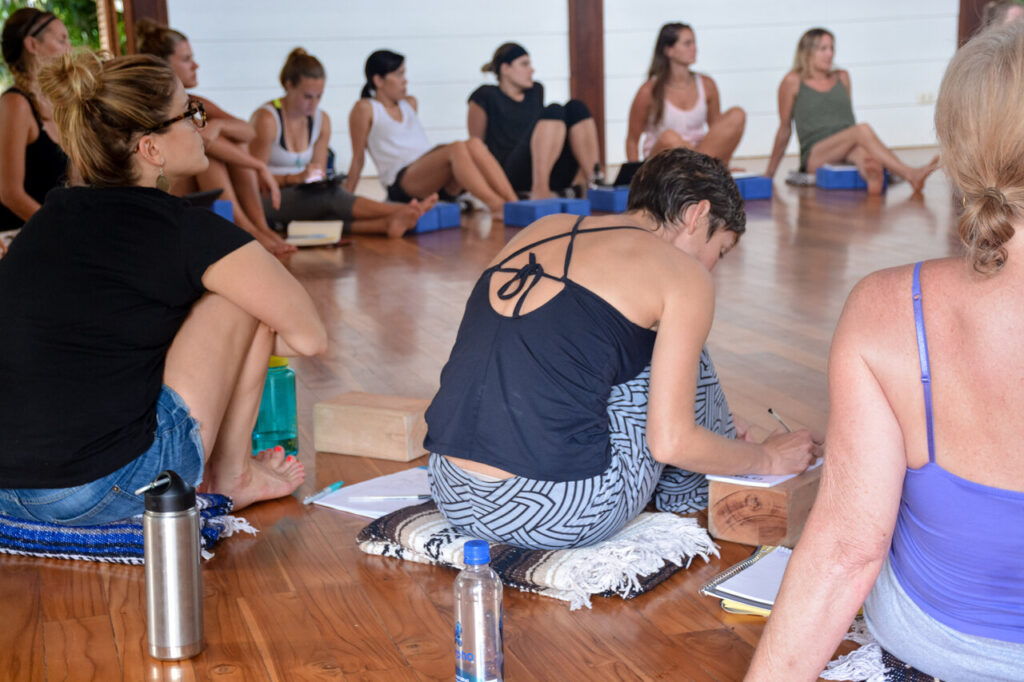
When shopping around, the school you choose should be able to offer you full details on exactly what content is in the curriculum and how much of the 300 hours will be spent learning what.
Depending on what you are looking for, your 300-hour teacher training should be focused in the areas you want to become stronger in as a teacher and a yogi.
Programs that rely on vague descriptions often lack rigor. Specific structure helps both students and instructors stay accountable.
What should be included in a strong 300-hour yoga teacher training curriculum
A strong 300-hour curriculum builds depth in each area — not just a repeat of foundational 200-hour content
5. What style and teaching approach is this 300 hour course built around?
Every training has a lens. Some are alignment-focused. Others emphasize flow, spirituality, biomechanics, or therapeutic movement. None of these are wrong, but mismatch leads to frustration.
Take some time to research the lead teachers for the programs you are looking at. What yogic disciplines do they focus on? What style of yoga is their main focus?
For example, Yogi Aaron is the owner and lead facilitator of the Yoga Teacher Training programs at Blue Osa Yoga Retreat + Spa in Costa Rica. With more than three decades of study, mentorship, and teaching experience, he is known for his fun, knowledgeable, and accessible approach to yoga, alignment, and pain-free movement.

Yogi Aaron is also the creator of Applied Yoga Anatomy + Muscle Activation™ (AYAMA) — a revolutionary methodology designed to help students build strength, improve stability, and move with greater confidence while reducing pain and injury risk.
If your favorite classes to teach are hot power classes, you most likely do not want to take a 300-hour yoga instructor course that is more restorative-focused.
Make sure the core approach aligns with how you teach or how you want to teach. You should not need to abandon your teaching voice to complete the program. Know yourself and where you want to take your practice and your own curriculum.
6. Who are the lead instructors for the yoga teacher training journey, and how do they teach yoga?
Teaching students and training teachers are different skills. Look at how long the lead instructors have been training teachers, not just teaching public classes.
Do a little digging to find out who your teachers are, how long they have been teaching, how long they have been training other teachers, and a bit of their backstory and what led them to yoga in the first place. This is the only way to be sure you end up with the best possible leader for you personally.
Strong programs clearly explain their methodology, their educational philosophy, and how they support students through the learning process. Reviews should mention feedback, clarity, and mentorship, not just atmosphere.
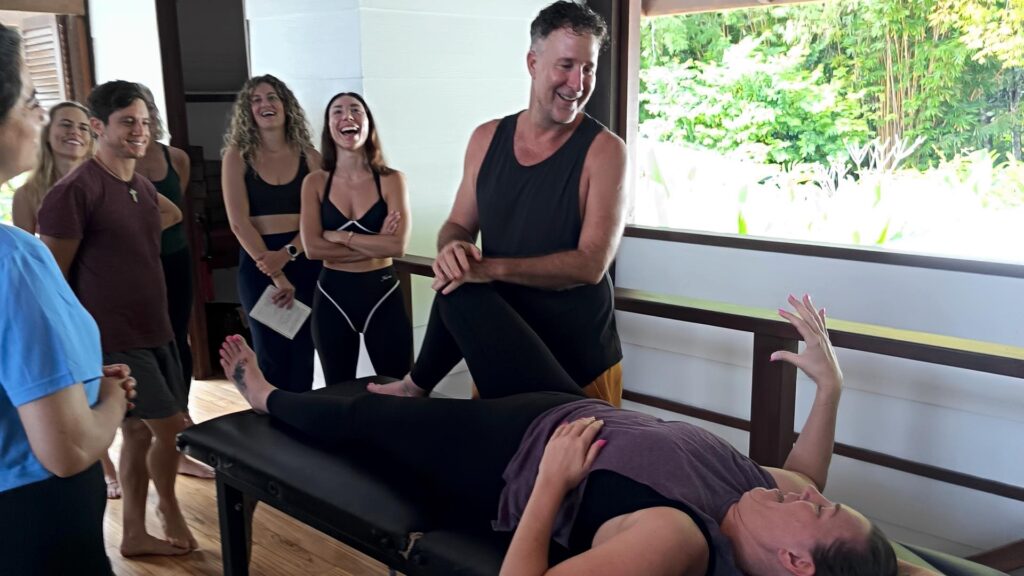
Together, Yogi Aaron’s decades of teacher training experience and the AYAMA methodology clearly define Blue Osa’s approach to yoga education, with an emphasis on alignment, muscle activation, and sustainable, pain-aware teaching.
7. How much teaching practice and feedback will I receive to support my yoga career?
Real practice teaching yoga is a non-negotiable benefit of the 300-hour level. You should teach regularly, receive direct feedback, and understand how you are evaluated.
Ask who gives feedback, how often, and what standards are used to assess readiness. Teacher to student ratio is important. The school you choose should be aware of this so that each yogi gets enough individual attention. You want your experience to be thorough and supportive.
A certification without assessment does not build confidence.
8. What are the 300-hour prerequisites and expectations to become a certified yoga teacher?
Beyond a completed 200-hour YTT, programs may require teaching experience, applications, interviews, or preparatory work. Physical expectations should also be clear, especially for immersion-style trainings.
Requirements vary by school, so confirm whether prior training must come from a specific lineage or Yoga Alliance–registered program.
Blue Osa only requires a 200 hour YA certificate, though many of our students do choose to complete both their 200 and 300 hour trainings through our beachfront yoga school in Costa Rica.
9. Do I have the time, energy, and support to truly learn how to teach during this training?
Since you have been through a 200-hour yoga teacher training guide, you know what kind of time and funding you need. But do you have the mental resources? Are you ready to become a student again, really go deep, and do the work?
Beyond time and finances, consider whether you have the mental, emotional, and physical capacity to return fully to student mode.
10. What is included in the tuition to get certified, and what is not?
Cost alone does not determine value. Ask what is included in tuition, such as manuals, materials, assessments, mentoring, lodging, or meals.
Be smart and do your financial research as well. Make sure you are getting your money’s worth, and that there will not be any surprises when you get to your training.
Especially if you are looking at a fully immersive YTT experience like we offer here at Blue Osa, check it out and see what is included in your tuition and what is not. It’s likely that things like room and board will be included, but flights and free day activities are not.
Also ask about additional fees, payment plans, refund policies, and what happens if circumstances change. Clear policies signal professionalism. Know before you go.
11. What format and environment will help me learn best as an instructor today teaching yoga classes?
Some students thrive in immersion formats where learning is concentrated and distractions are minimal. Others prefer modular or hybrid formats that allow integration over time.
Some schools offer an immersive two week to one month experience, but other schools may offer smaller, module-style trainings that allow you to piece together workshop-type sessions to work up to your 500-hour certification. You know yourself best. Pick the approach that will work best with the way you learn, and according to the time and financial resources you have available to you.
Be honest about how you learn. The best curriculum cannot compensate for an environment that does not support focus or recovery.
Comparison of 300-hour yoga teacher training formats: immersive, modular, and hybrid programs
Immersive
28 days
Modular
6 – 12 months
Hybrid / Online
Flexible
12. What is the environment like? Is it conducive to deep study for being certified to teach yoga?
If you’re thinking about a local studio, visit your place of study before you invest in it to see what it’s like to actually be there. You will be spending lots of time here (300 hours, to be exact), so you want to be sure you vibe with your surroundings.
If an in-person tour is not available, do as much sleuthing as possible. Look at pictures and see if there is a virtual tour. Read their About Story, reviews of guests and students and read a blog if they have one. The more thorough you are, the better you can feel about your investment of time, money and self.
Located on the Osa Peninsula, Blue Osa Yoga Retreat + Spa sits within one of the most biodiverse regions in Costa Rica, surrounded by rainforest, ocean, and a slower pace that naturally supports focused study.

The setting allows students to settle into a consistent rhythm of practice, learning, rest, and integration. For many trainees, our unique beachfront setting in Costa Rica is a highlight of their training experience.
13. Is the program well-respected to become a certified yoga instructor and 300-hour Yoga Alliance affiliated?
Do your research and make sure the school you pick is respected within the yoga community as well as the local area surrounding it. You want to be sure that your school is committed to its students and that it has a peaceful, collaborative relationship with its neighborhood and not just doing what they do to turn a profit.
Make sure the school you choose is accredited by the Yoga Alliance. This ensures you can maintain your registration and access their valuable directory and resources. You can easily check a school’s affiliation on the Yoga Alliance website.
Certification matters most if you plan to register at the 500-hour level or teach in studios that require it. The quality of education still matters more than the credential alone.
14. Where are the former students now? Is feedback available from them?
Alumni can be one of the best resources you have when considering school for your 300-hour yoga teacher training. Reading about others’ experiences or being able to talk to them directly can make it much easier to see if a school aligns with your purpose and intention or not.

A big part of being a yoga teacher is the community of yogis you get to be included in. Choosing a place like Blue Osa for your 300-hour yoga teacher training will automatically guarantee that you will make lifelong connections with your fellow students and your teachers. You will have support and collaboration with them for years to come.
Red flags to watch for in a 300-hour certified yoga instructor course
Be cautious if a program avoids specifics, offers little teaching practice, has unclear assessment standards, or leans heavily on inspirational language without explaining how learning happens. Large class sizes and vague promises often dilute the experience.
The training you choose should make you feel refreshed, excited and motivated.
Red flags and green flags when choosing a 300-hour yoga teacher training program
Blue Osa’s 300-Hour Yoga Teacher Training: What Makes It Different
Blue Osa’s 28-day beachfront immersion on Costa Rica’s Osa Peninsula combines RYT 300 certification with exclusive AYAMA (Applied Yoga Anatomy + Muscle Activation) training.
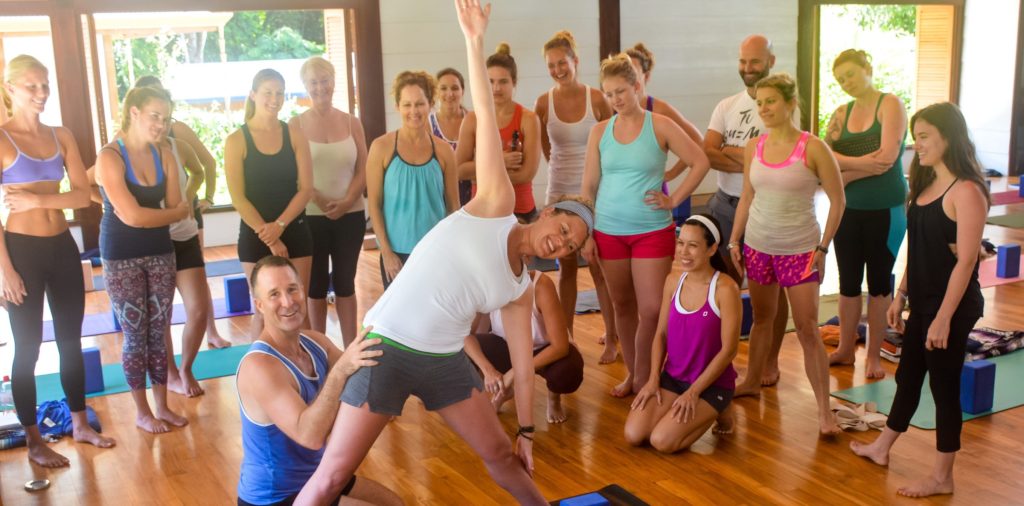
You’ll study with Yogi Aaron, a master teacher with over 30 years of experience, learning a pain-free yoga methodology available nowhere else.
The all-inclusive program covers beachfront accommodations, three daily farm-to-table meals, and lifetime alumni support.
You receive personalized attention while building lasting connections. Upon completion, you’ll hold dual RYT 300 and AYAMA certifications, positioning yourself as a teacher who understands how to prevent injuries and create sustainable practices for students at any level.
Learn more about Blue Osa’s 300-hour YTT.
Why immersion-style trainings appeal to many 300-hour students
Immersion environments appeal to students who want to become certified through focused, uninterrupted study rather than fitting training around daily life. By removing competing demands, these programs create space for deeper learning that builds a strong foundation across sequencing, cueing, and applied teaching skills that translate directly into a yoga studio setting.
A well-designed immersion should offer a well-rounded yoga education that includes yoga history, philosophy, and hands-on teaching practice, whether delivered in person or through a comprehensive online format.
If you are considering an immersion, look closely at how the program supports physical recovery, mental focus, and integration. The environment should reinforce learning and embodiment, not distract from it.

Frequently Asked Questions
Do I need Yoga Alliance certification for a 300-hour course?
Yoga Alliance certification matters most if you plan to continue on to the 500-hour level or work in studios that require registration.
A 300-hour program that is recognized by Yoga Alliance as a registered yoga school can count toward becoming a registered yoga teacher and is often expected for formal teacher training certification.
That said, alliance as a registered yoga body functions primarily as an industry registry, not a governing authority over yoga education.
The real value of a 300-hour course comes from the depth of yoga philosophy and anatomy covered, the quality of instruction, whether or not you receive personalized feedback, and how well the training prepares you to teach asanas safely, thoughtfully, and confidently.
All YTT programs at Blue Osa are Yoga Alliance certified.
Can I take a 300-hour training if I do not plan to teach full time?
Yes. Many students enroll after completing a foundational 200-hour program to dive deep into their yoga experience, even if full-time teaching is not the goal.
A 300-hour course often builds directly on a 200 hr ytt or ryt-200, helping students refine technique, understand the body more clearly, and teach with greater confidence in smaller or occasional settings.
The right program is thoughtfully designed to support different paths. Whether you plan to teach part time, assist classes, or simply strengthen your personal practice, the course provides advanced education, mentorship, and support from a team of yoga educators who understand varied goals.
For many, this depth creates the confidence to launch teaching opportunities at their own pace, without pressure to turn yoga into a full-time career.
How much anatomy should be included in a 300-hour certified yoga instructor course?
A strong 300-hour course goes far beyond memorization and focuses on application, safety, and adaptability in real bodies so teachers can lead a safe and effective class.
Anatomy should build on what was introduced in a 200-hour ytt, then expand into biomechanics, injury considerations, and how biomechanics informs sequencing, breathwork, and cueing across different bodies and abilities.
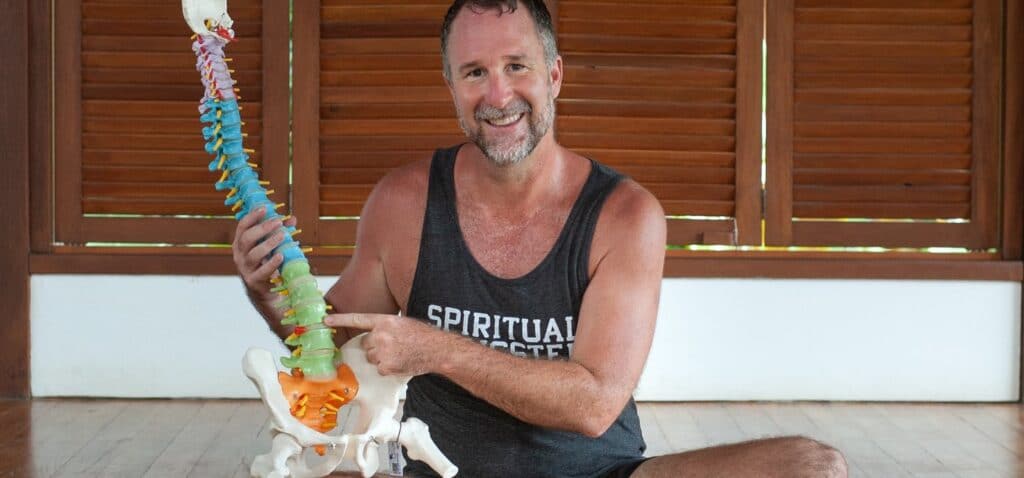
The best programs treat anatomy as part of a comprehensive yoga education that also integrates history and philosophy, teaching methodology, and practical skills for vinyasa-style yoga classes and other formats.
When a course is designed this way, students gain the ability to confidently lead students every step of the way, adapting poses and progressions in a way that supports long-term health and a sustainable yoga practice.
This depth is often what makes a 300-hour training truly transformative, both for teaching and for personal growth.
Final thoughts on a 300-hour certified yoga instructor course
It can be quite an undertaking deciding where to put your money, time, and heart during your 300-hour yoga teacher training.
A 300-hour certified yoga instructor course should make you a clearer, safer, and more confident teacher.
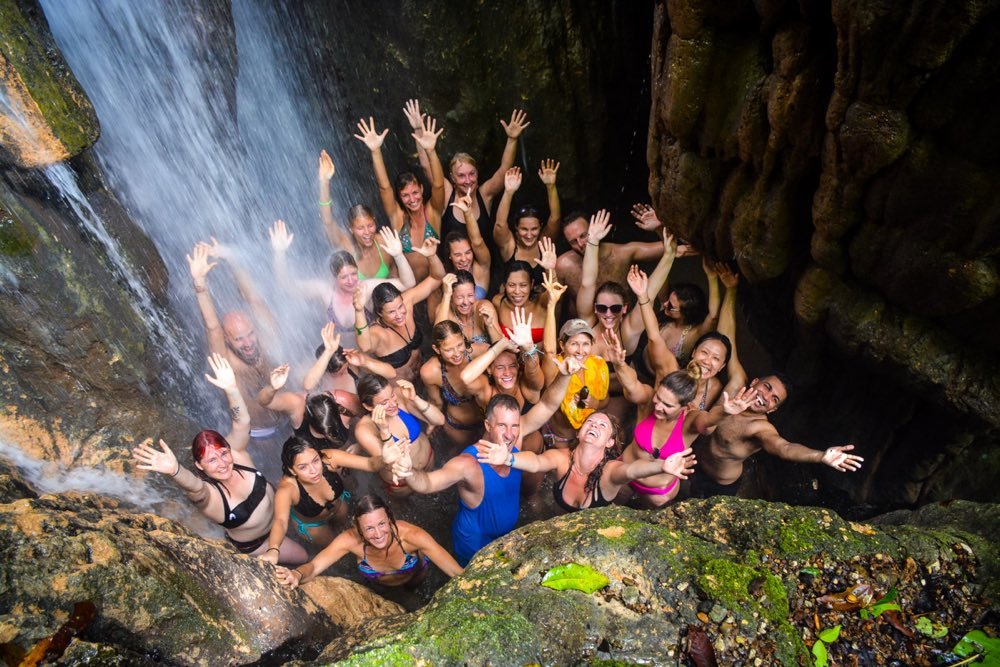
When you research certification programs, look for registered yoga schools that are transparent about curriculum, expectations, and outcomes. A strong YTT program will answer every question in this guide clearly and confidently. If a certification course avoids specifics or relies on vague promises, that tells you everything you need to know.
A 300-hour certified yoga instructor course should leave you teaching with greater clarity, safety, and confidence. Use these questions to compare programs honestly, focus on substance over promises, and choose the training that aligns with how you want to teach moving forward.
About The Author, Yogi Aaron

Yogi Aaron is the founder and creator of Applied Yoga Anatomy + Muscle Activation™ (AYAMA), a revolutionary methodology that challenges conventional approaches to yoga. Using a science-backed approach, he prioritizes muscle activation over traditional stretching.
With over three decades of dedicated study, mentorship, and hands-on experience, he has established himself as a leading expert in yoga therapy, alignment, and pain-free movement.
As owner and operator of Blue Osa Yoga Retreat + Spa in Costa Rica, Yogi Aaron leads transformative programs that combine his expertise in yoga instruction, retreat facilitation, and wellness business operations. His work spans both in-person immersive experiences and digital education through The Yogi Club online platform and the AYAMA™ Certification Program.
Yogi Aaron’s teaching methodology represents a paradigm shift in modern yoga practice. AYAMA focuses on activating and engaging muscles to enhance range of motion, build strength, improve stability, and optimize alignment—while reducing pain and injury risk. This evidence-based approach has positioned him as a thought leader challenging the status quo in the yoga community.
His mission extends beyond the mat: to liberate individuals from chronic pain and guide them toward discovering yoga’s authentic purpose through intelligent, body-informed practice.
Learn more about training opportunities with Yogi Aaron at Blue Osa Yoga Retreat + Spa.
Check out these other popular posts!

Book/Inquire Now
Got pain? This will help you!

YOU DESERVE TO LIVE PAIN-FREE...
Receive 7 short, simple, and effective practices to alleviate knee, hip, low back, neck, shoulder pain, and more!
All you need is 5 minutes per lesson and it's FREE!
This revolutionary approach to yoga is new, and no one else is teaching this! Since I created Applied Yoga Anatomy + Muscle Activation™ and started teaching it consistently, I've witnessed students heal long-standing injuries, access yoga postures they never thought possible, and tell me over and over again how their body just feels better.
I hope you'll join me on this journey!
~Yogi Aaron
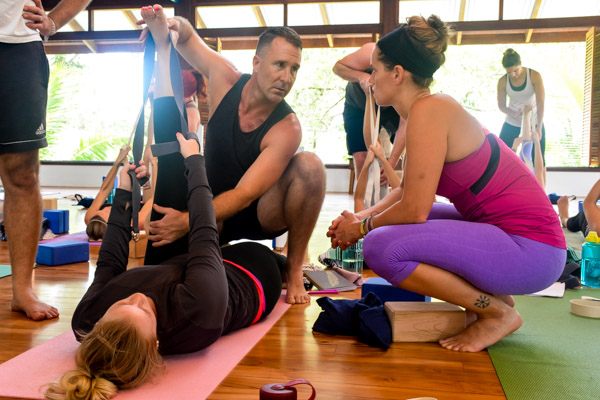
Is Yoga Teacher Training Right For Me?
We Created This FREE 5 Part Series So You Can Get All The Information To Make The Right Choice.
In this series, you will learn:
-
- Am I a candidate for yoga teacher training??
-
- What will I learn in a YTT?
-
- Do I need to have a perfect downward dog to attend YTT?
14-Day 200-Hour Yoga Teacher Training in Costa Rica
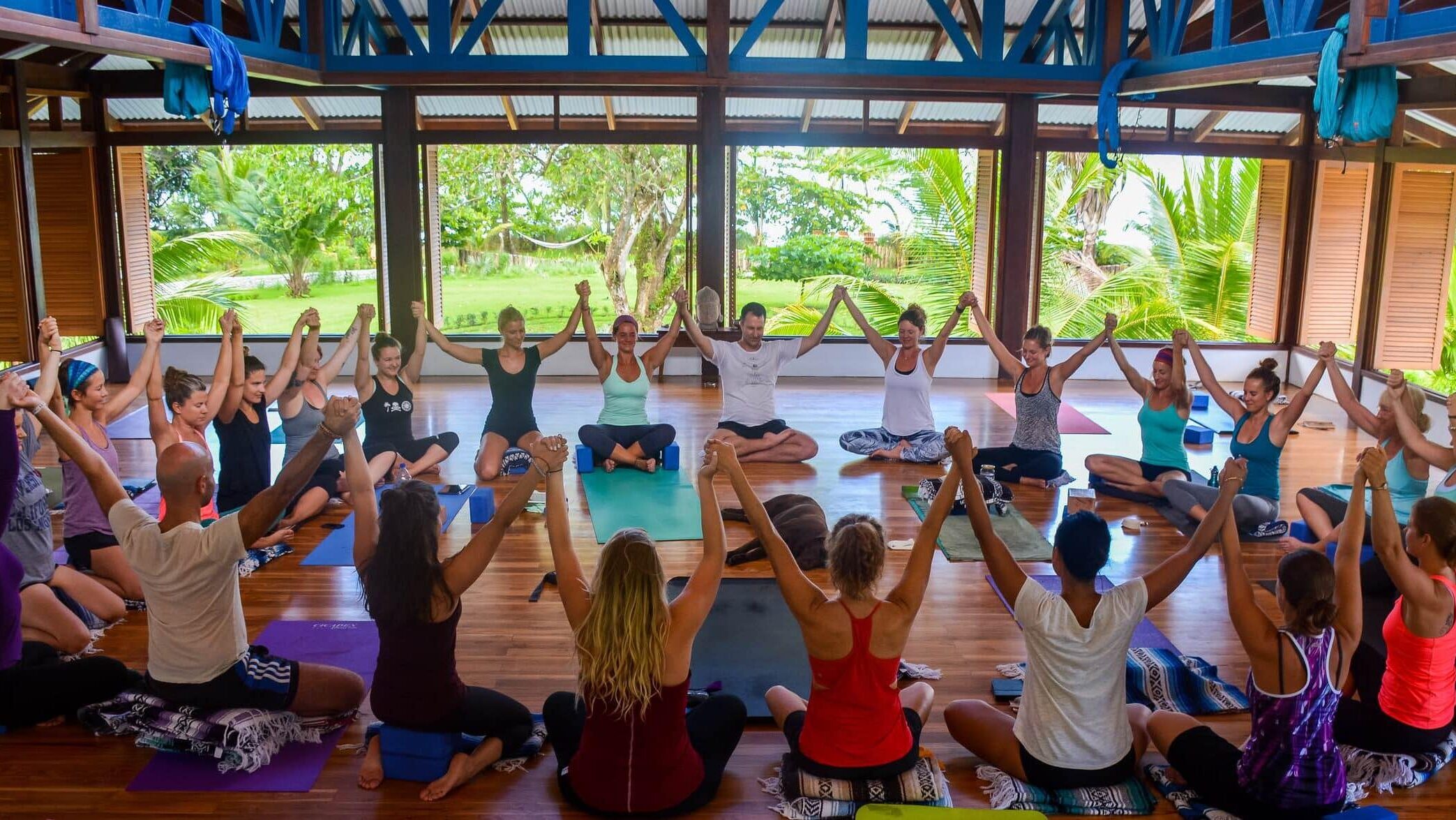
If you are looking for a 14-day 200 hour Yoga Teacher Training Costa Rica Immersion, you have landed in the right place. Join the next one!
300-Hour, 28-Day Yoga Teacher Training
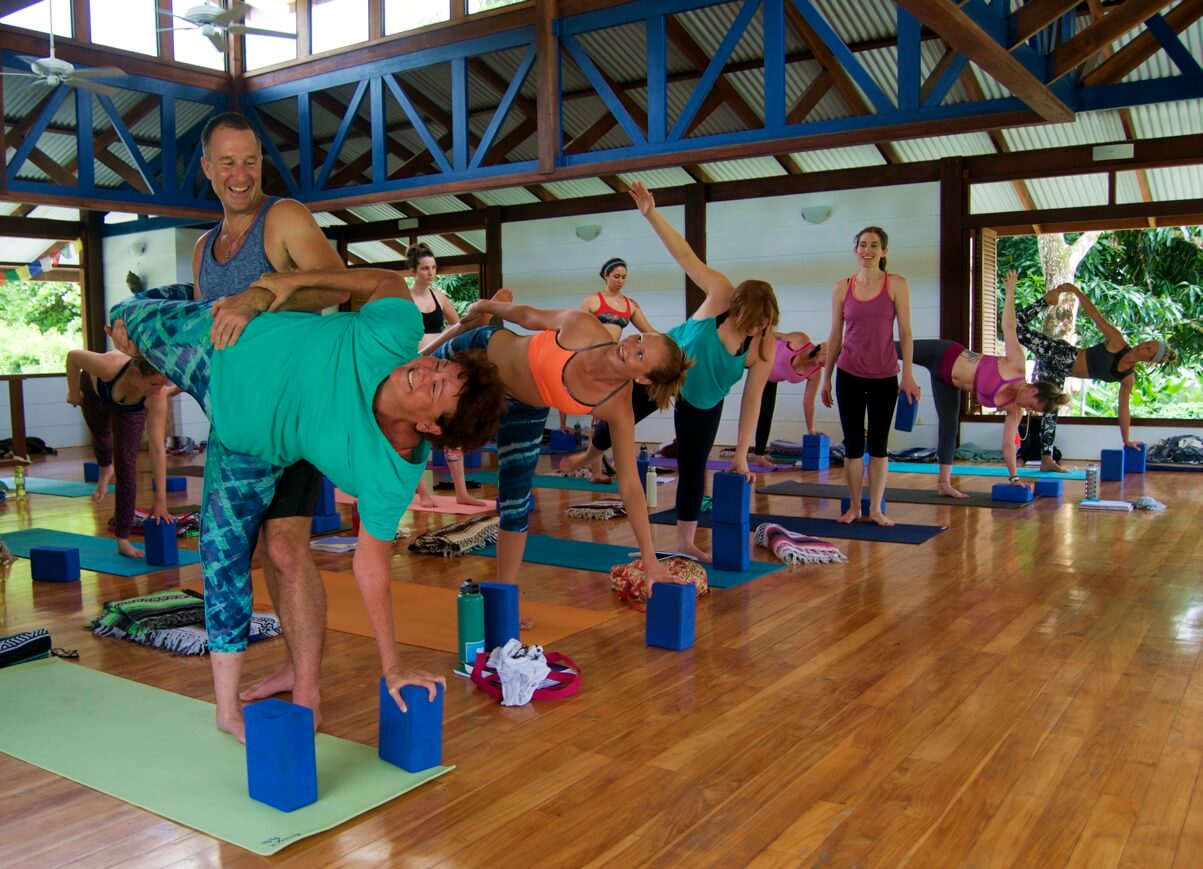
Do You Feel Called To Something Greater?
This 300-Hour Yoga Teacher Training immersion training at Blue Osa will immerse you in yoga for one month.
You will have the specific transformational skills and yogic practices you need in order to connect with your higher purpose.
And more! You will be able to offer these transformative skills to others!
