

“Yoga is a journey of the self, through the self, to the self” – Krishna The Bhagavad Gita
Shadow work isn’t about dwelling in darkness or making yourself miserable. It’s about honest self-awareness that leads to freedom. You don’t have to do this work alone, and you don’t have to do it all at once. Meeting your shadow with compassion, not judgment, is the practice itself.
Have you ever cried in savasana without knowing why? Found yourself competing with the person on the next mat even though you “don’t care about comparison”? Avoided certain poses because they bring up uncomfortable emotions?
This is your shadow speaking, and it’s exactly where your deepest transformation lives. Modern yoga has become synonymous with tight bodies, expensive leggings, and “good vibes only” energy. But the authentic yoga was never about feeling good. It was about remembering we are whole. And wholeness requires facing what we’ve learned to hide, even from ourselves.
One truth unites every human: we will all face suffering. How we respond to that suffering, whether we use it for transformation, determines contentment and the trajectory of our lives and require facing your fear. Facing your darkness.
Across every culture and belief system, humans have sought meaning and evolution. We’ve created religions, philosophies, and spiritual practices to answer the same fundamental question: How do we grow through our pain? The spiritual yoga practices may be dissolving in popular culture, but have answered this question time and time again throughout all of time.
Yoga emerged as one of humanity’s oldest technologies for transformation. Dating back thousands of years through the sacred texts of the Vedas and the Upanishads (the last Veda). Some even believe that perhaps yoga practices go as far back to the last Ice Age based off of symbolism of cave drawings!
A spiritual yoga practice then was very different from what it is now. It focused on only one pose, a comfortable seat (sukhasana), from which the other practices were performed. Yoga was about transcending human suffering and finding “enlightenment” through various energy practices and mediation. Modern neuroscience has caught up to what ancient yogis knew all along. That the multidimensional practices of yoga can physically rewire our brains for physical and emotional healing fostering spiritual growth.
Why a Surface Level Yoga Practice Isn’t Enough for True Transformation
Modern yoga has watered down this rich layered approach by focusing primarily on the physical poses, (asanas), only one of the eight limbs outlined in Patanjali’s sacred text of The Yoga Sutras. When we incorporate all eight aspects of authentic yoga we find a framework for healthier living. The Yamas and Niyamas outline five personal restraints and five personal observances to live yoga through ethical interactions with the world and take care of ourselves responsibly with daily habits and rituals, teaching that yoga is a state of being not an exercise on the yoga mat.
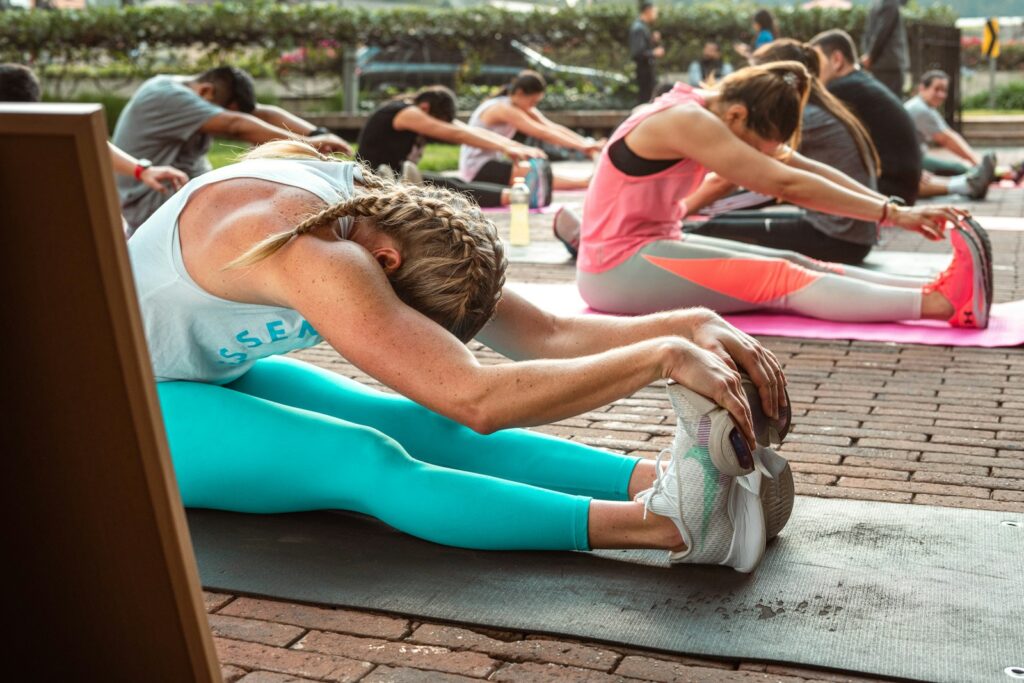
Some studios, teachers, and yoga teacher training schools uphold these traditional studies, but unfortunately some do not, which when missing, robs the student of the powerful personal transformation that happens when we go deeper than the body and go inward to our own darkness.
Surface level yoga has replaced authentic yoga offering physical exercise based off of yoga poses and creates a danger to changing our understanding (and even the very definition) of it. Spiritual bypassing the shadow side of ourselves and of life, popularizing phrases (seen on yoga attire and merchandise) like Positive Vibes Only, Namaslay, and Love and Light.
Over thousands of years, the a spiritual yoga practice has shifted from an inward journey of self-discovery to an outward exercise obsessed with dangerous aesthetics of being skinny and hyper-flexible.
Today’s yoga often ignores its true purpose: to help us confront our pain, awaken our consciousness, and recognize our deep interconnection with all beings, all life on this planet.
The Real Work of Yoga: Confronting Your Shadow Self
Our shadow self contains the parts of us we’ve learned to suppress, deny or disown, that often shows up not as a dark or dramatic energy, but more as a subtle pattern of behavior, or internal dialog of the subconscious mind. It’s the operating system quietly running in the background of all we do.
The shadow reveals itself in each conversation we have in our head. Through an authentic yoga practice, or class, we open to this awareness and learn how all we encounter on the yoga mat can be mirrored into life for transmuting past pain, break through current fears, and live with better balance, in a purposefully aligned life.
What Is Shadow Work in Yoga Practice?

There are endless ways the darkness of the human shadow shows up on the mat in an authentic yoga class or studio. Offering students contemplative pairings to the physical postures provides an opportunity to meet the shadow on the mat that will directly correlate to the challenges we face off the mat aiding in our transformational journey.
We are all so vastly different, and everyday can feel so different, each day we come to the mat is a unique experience, however, underneath all the eclectic expressions of our identities, we strip down to a bare humanity where personal challenges boil down to similar roots. It is important to understand the difference between traditional yoga and modern yoga. Let’s look into some of the common struggles we face in our shared humanity.
Comparison & Performance
You might notice yourself, or others, checking out other bodies in the room, especially when there are mirrored walls. This might lead you to push past your various edges to “achieve” a pose (or to look like the instructor or neighboring student) hurting yourself to fight feeling inadequate. This reflects our shadow feelings around worthiness, competitiveness, or the belief that love or belonging is earned.
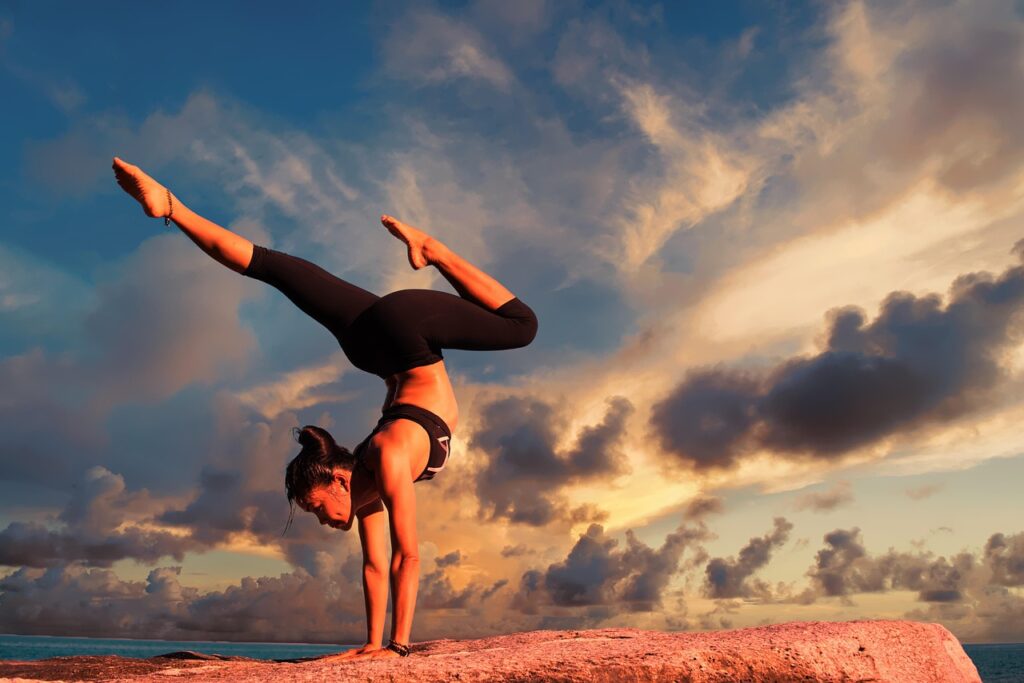
Spiritual yoga is about presence, not performance, giving humans tools to personal evolution and transformation. Not about advanced poses like handstands.
Avoidance of Sensation
A good instructor will discuss moving our bodies within healthy boundaries (edges). Finding the right edge is different everyday on the mat, requiring our presence. When we stay in a healthy range of discomfort, without physical pain, our body becomes a great teacher, and invites us into the shadow. If we only do poses that feel good or ones we are good at, we limit our potential, thus only reinforcing our pattern of avoidance.
Yoga is about meeting ourselves where we are, not running from the unpleasant aspects of life.
Over-efforting or Collapse
When we ignore signals and sensations of the body to adhere to a false perception within our beliefs, we abandon ourselves, and perpetuate painful shadow patterns. When we give up or not try something, we limit our growth through the shadow of helplessness and self-doubt. Conversely, when we push through pain and go beyond an edge, we reveal an attachment to control and perfectionism.
A spiritual yoga practice is about honest listening and putting the appropriate amount of energy and effort into the practice to understand our strengths and weaknesses. Both valuable as necessary parts to personal development.
Resistance to Stillness
We are shaped by modern culture’s obsession with productivity, stimulation, and constant self-optimization. We are conditioned to equate stillness with laziness, inefficiency, or even failure. When the body becomes still, the mind searches for a distraction to escape from the thoughts becoming louder. We get restless, fidgeting in savasana (corpse pose) and want to scroll our phones in those quiet moments before or after class.
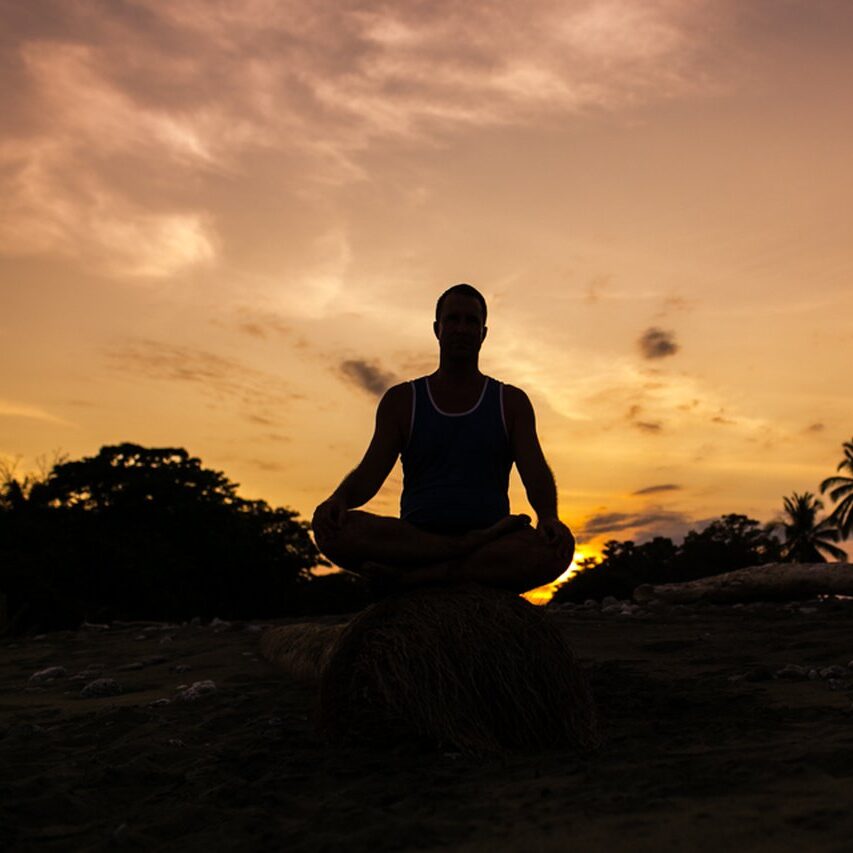
Stillness will remove our usual defenses.
Spiritual yoga is about meeting our resistance, our unexamined fear, unresolved emotions, unanswered questions, or simply the unease of not understanding who we are, when nothing is required of us.
Emotional Release or Numbness
Unexpected tears, irritation, frustration, or emotional numbness can arise at any time in our practice, often taking us by surprise. Yoga opens more than the muscles of the body, it creates fluidity to soft tissues of joints and creates more freedom throughout fascial lines, releasing “issues stuck in our tissues” unleashing the stuff we avoid deep into our shadow.
Those moments of detachment, when we don’t feel much of anything at all and become numb can point to a place we have disconnected from, usually a mode of protection that allowed us safety during a past threat. Awareness of this void can allow us to stop guarding and step into our power.
Spiritual yoga is about creating space to expand, making the unconscious, conscious, giving us a deeper understanding of self in the process.
Judgement Toward Self or Teacher
We have all been there, cursing silently on the inside, either at ourselves in harsh judgement, or criticizing the teacher’s irrational cueing, sequencing, or annoying voice or other qualities we resist in ourselves. These strong reactions are examples of how we project our personal judgements onto others, and see how criticizing others reflects our own harsh internal narratives and negative self-talk.
Spiritual yoga is about providing a mirror, where we see how we talk to ourselves in destructive ways.
The Myth That Awareness Alone Creates Change
Everytime we come into a moment of stillness on our mats we gain a level of awareness. The path of yoga requires us to sit with discomfort. To unite our layers through the breath. We cannot evolve spiritually by ignoring what stirs beyond the surface layer of the body.
When we stop trying to be a “better yogi” and begin practicing as an honest one, the shadow becomes an ally, revealing where wholeness is waiting to be reclaimed. Authentic yoga is not about fixing what we find in the darkness, but about meeting it with presence.
Part of the teachings of authentic yoga includes the stories of Hindu Deities helping relate the struggles we encounter in our daily lives as householders through their epic battles of dark verses light.
Why Conscious Action Matters More Than Awareness
There are several books used in the authentic yoga education required in yoga teacher trainings, that can be useful for any yoga student to more deeply connect to the depth of yogas wisdom. The Bhagavad Gita offers a framework for this integration through three paths of authentic yoga: Karma Yoga, the practice of conscious action, choosing curiosity over correction and showing up even when it’s uncomfortable; Bhakti Yoga, the path of devotion, softening the breath, allowing rest, and surrendering control with humility and trust to a power greater than ourselves; and Jnana Yoga, the path of wisdom, cultivating awareness through inquiry and discernment.
Together, these paths support svadhyaya, or self-study, reminding us that every choice, pause, and posture, including asana itself, becomes a doorway to integration, wholeness, spiritual awakening, and healing.
Awareness is the first step to change, we have to be aware of the physical limitations, the link our thought processes and limiting beliefs bring to them. We have to explore not only how we feel in our body, but in our mental spaces; what we desire, where our healthy boundaries in relationships are, or are not, and then put action into motion in order to support a better balance and live a more joyous and fulfilling life.
Bhagavad Gita Wisdom: Karma Yoga
“Shed your fear and stand up and fight.” – Krishna

Yoga is not a path of passive reflection, it is a path of bold, intentional action. In the Bhagavad Gita, Karma Yoga teaches that transformation arises through conscious action, not withdrawal from life. Rather than escaping difficulty or waiting for clarity to arrive, the Gita reminds us that change unfolds when we act with integrity, devotion, and discernment while releasing attachment to outcomes. True freedom is found not in inaction, but in moving through the world with purpose, allowing effort itself to become a path of awakening.
Bhagavad Gita Wisdom: Bhakti Yoga
“Whoever offers me with devotion a leaf, a flower, a fruit, or water, I accept it.” – Krishna
This verse distills Bhakti Yoga into something deeply accessible in our modern life: devotion is not measured by grand gestures or spiritual perfection, but by intention and sincerity. The Gita reminds us that even the simplest offerings; our attention, effort, care, or presence, become sacred when given with love. In a world that rewards achievement, this teaching gently reorients devotion toward the everyday moments where meaning is found in the subtle connections we have with source (god, nature, universe).
When we can surrender to a higher power (our god of choice) we practice one of the Niyamas (second of the eight limbs of Patajali), Isvara Pranidhana. Referring to the devotion, trust, and the willingness to offer one’s actions (and efforts) to something greater than the ego. Rather than requiring a specific belief system, it invites humility, releasing the illusion of control and allowing life to move through us.
Bhagavad Gita Wisdom: Jnana Yoga
“In this world, there is nothing so purifying as knowledge.” – Krishna
This verse points to the heart of Ynana Yoga, the path of knowledge, wisdom and discernment. The Gita teaches that liberation arises through clear seeing, by questioning assumptions, dissolving illusion, and recognizing what is real, beneath conditioned identity. In modern life, Jnana Yoga invites inquiry over certainty and awareness over reactivity, reminding us that insight itself, has the power to transform how we experience ourselves and the world as the essential first step to growth. Knowledge is power and critical thinking is essential for personal development and a good sense of self in the world.
The Inner Battle Every Serious Yogi Must Face
Mahatma Gandhi once said, “The real battle I face is within myself.” Such a powerful statement to not only inspire people to lean into the shadow, but to bring action into life in order to keep fighting for a better environment, not only for self but for others, by living authentically. Authentic yoga does not ask us to become perfect, just progressive.
Too many of us attempt to change the world while avoiding the messy work of transforming ourselves. But yoga is not about pretending, it’s about radical self-honesty and the courage to do the inner work. The best thing we can do for our loved ones, our interpersonal relationships, and the world at large, is to do our own inner work.
What the World Needs Authentic Yoga: Authentic Yogis, Not Perfect Ones
The world is in desperate need of grounded, real, courageous yogis, those who are willing to stop pretending and start truly living. Not performative yoga, but transformative yoga will bring us back to understanding and practicing authentic yoga. We are called not to hide our shadows, but to bring light to them through conscious awareness, devotion, and action.
Through consistent, dedicated practice, yoga invites us to awaken our unconscious self. This is what sets a true yogi apart, a deep readiness to journey inward, into both light and shadow, with courage and radical honesty.
How to Practice Authentic Yoga
Take a Yoga Pilgrimage: Facing Your Fear on a Yoga Retreat to India
India is the birthplace of yoga, you can’t find a better place to experience authentic yoga. Blue Osa’s Journeys recently went to India for a two week retreat led by owner Yogi Aaron who’s expertise gave his guests in-depth wisdom on the history and philosophy of yoga to aid in facing their darkness.
It can be scary to travel half way around the world to a foreign land, language, and lifestyle than what we are accustomed to. It can equally be uncomfortable to land in an authentic yoga class without prior knowledge or even with the false pretense of yoga being more of a physical exercise than a path to personal transformation.
Do some research, seek out authentic yoga teachers, follow the recommendations from friends who have practiced for a while. Come to Costa Rica (a bit closer and less complicated than India perhaps) for an immersive yoga retreat led by expert teachers.
How the Winter Solstice Reveals Our Inner Darkness

At the time of a winter solstice, when daylight recedes, nature offers a quiet invitation inward. The lengthening nights mirror an ancient rhythm, one that calls attention to what has been overlooked, unexpressed, or hidden beneath the surface. In this seasonal descent into darkness, it becomes evident that the deeper work of yoga is not solely about cultivating light, ease, or transcendence, but about developing the courage to sit with fear, uncertainty, and the untamed, often painful aspects of being human.
Just as the earth rests and regenerates beneath frozen ground, the solstice reminds us that wholeness is born not from bypassing the shadow, but from meeting it with presence, compassion, and willingness.
How to Begin Shadow Work in Your Yoga Practice
On the Mat:
- Notice resistance, judgment, or avoidance during practice
- Stay with uncomfortable sensations (within safe boundaries)
- Ask: “What is this pose revealing about my patterns?”
- Practice stillness even when it feels unbearable
Off the Mat:
- Journal after practice about what arose
- Notice where yoga mat patterns mirror life patterns
- Work with a teacher trained in traditional yoga philosophy
- Consider therapy alongside yoga for deeper work
At Blue Osa:
Our immersive retreats and yoga teacher training programs integrate shadow work through traditional teachings, self-inquiry practices, and supportive community.
Experience Transformative Yoga at Blue Osa Costa Rica Retreats
At Blue Osa, we hold space for yogis ready to go deeper. Our immersive Costa Rica retreats and trainings are designed for those brave enough to face their shadows, embrace the duality within and outside ourselves, and emerge as agents of change. The world needs the real, raw you, are you ready to answer the call?
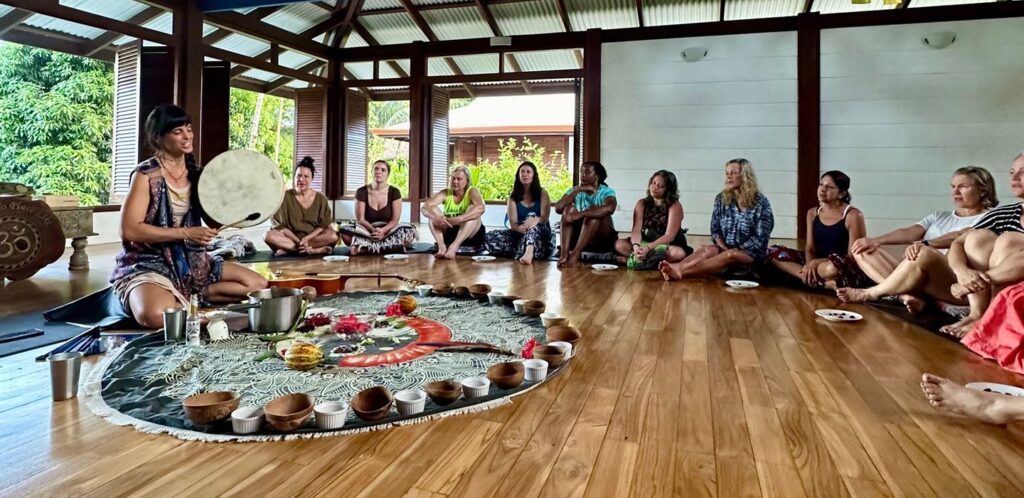
Authentic Yoga vs Modern Yoga FAQ
What is shadow work in yoga?
Shadow work in yoga is the practice of confronting suppressed emotions, unconscious patterns, and denied aspects of self that arise during yoga practice. It goes beyond physical poses to address the psychological and spiritual dimensions of transformation.
How is shadow work different from regular yoga?
Regular yoga often focuses primarily on physical postures (asana), while shadow work yoga incorporates self-inquiry, emotional awareness, and the full eight limbs of Patanjali’s yoga sutras to address unconscious patterns and foster deep personal transformation.
Do I need therapy to do shadow work in yoga?
While yoga can support shadow work, it’s not a replacement for therapy. For trauma or serious mental health concerns, work with a licensed therapist. Yoga complements therapeutic work by providing embodied practices for self-awareness.
What are the eight limbs of yoga?
The eight limbs outlined in Patanjali’s Yoga Sutras are: Yamas (ethical restraints), Niyamas (personal observances), Asana (postures), Pranayama (breath control), Pratyahara (sense withdrawal), Dharana (concentration), Dhyana (meditation), and Samadhi (enlightenment).
Why does shadow work in yoga feel uncomfortable?
Discomfort arises because shadow work asks you to confront avoided emotions, limiting beliefs, and suppressed aspects of self. This discomfort is part of the transformative process—meeting resistance with presence rather than avoidance.
Can beginners do shadow work in yoga?
Yes, but it requires willingness to go beyond physical practice. Beginners benefit from teachers who incorporate yoga philosophy, self-inquiry, and emotional awareness alongside asana instruction.
What is Karma Yoga in the Bhagavad Gita?
Karma Yoga is the path of selfless action—taking conscious, intentional action without attachment to outcomes. It teaches that transformation comes through doing, not just thinking or reflecting.
Where can I learn traditional yoga with shadow work?
Blue Osa’s yoga teacher training and immersive retreats integrate traditional yoga philosophy, shadow work, and the eight limbs of yoga for practitioners ready to go deeper than surface-level practice.
About The Author, Yogi Aaron

Yogi Aaron is the founder and creator of Applied Yoga Anatomy + Muscle Activation™ (AYAMA), a revolutionary methodology that challenges conventional approaches to yoga. Using a science-backed approach, he prioritizes muscle activation over traditional stretching.
With over three decades of dedicated study, mentorship, and hands-on experience, he has established himself as a leading expert in yoga therapy, alignment, and pain-free movement.
As owner and operator of Blue Osa Yoga Retreat + Spa in Costa Rica, Yogi Aaron leads transformative programs that combine his expertise in yoga instruction, retreat facilitation, and wellness business operations. His work spans both in-person immersive experiences and digital education through The Yogi Club online platform and the AYAMA™ Certification Program.
Yogi Aaron’s teaching methodology represents a paradigm shift in modern yoga practice. AYAMA focuses on activating and engaging muscles to enhance range of motion, build strength, improve stability, and optimize alignment—while reducing pain and injury risk. This evidence-based approach has positioned him as a thought leader challenging the status quo in the yoga community.
His mission extends beyond the mat: to liberate individuals from chronic pain and guide them toward discovering yoga’s authentic purpose through intelligent, body-informed practice.
Learn more about training opportunities with Yogi Aaron at Blue Osa Yoga Retreat + Spa.
Related Content You May Enjoy



Tags: Yoga Philosophy, Yogi Aaron, empowerment, inspiration
Book/Inquire Now
Got pain? This will help you!

YOU DESERVE TO LIVE PAIN-FREE...
Receive 7 short, simple, and effective practices to alleviate knee, hip, low back, neck, shoulder pain, and more!
All you need is 5 minutes per lesson and it's FREE!
This revolutionary approach to yoga is new, and no one else is teaching this! Since I created Applied Yoga Anatomy + Muscle Activation™ and started teaching it consistently, I've witnessed students heal long-standing injuries, access yoga postures they never thought possible, and tell me over and over again how their body just feels better.
I hope you'll join me on this journey!
~Yogi Aaron
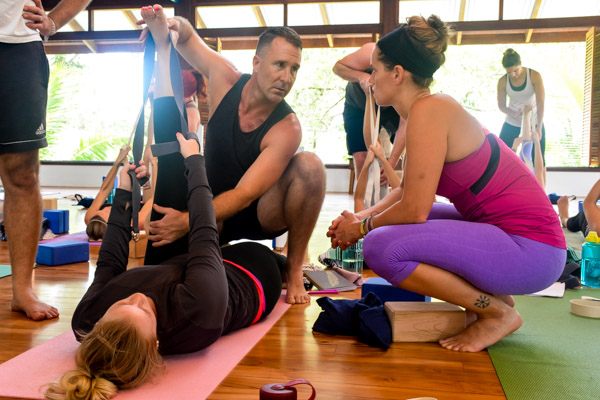
Is Yoga Teacher Training Right For Me?
We Created This FREE 5 Part Series So You Can Get All The Information To Make The Right Choice.
In this series, you will learn:
-
- Am I a candidate for yoga teacher training??
-
- What will I learn in a YTT?
-
- Do I need to have a perfect downward dog to attend YTT?
14-Day 200-Hour Yoga Teacher Training in Costa Rica
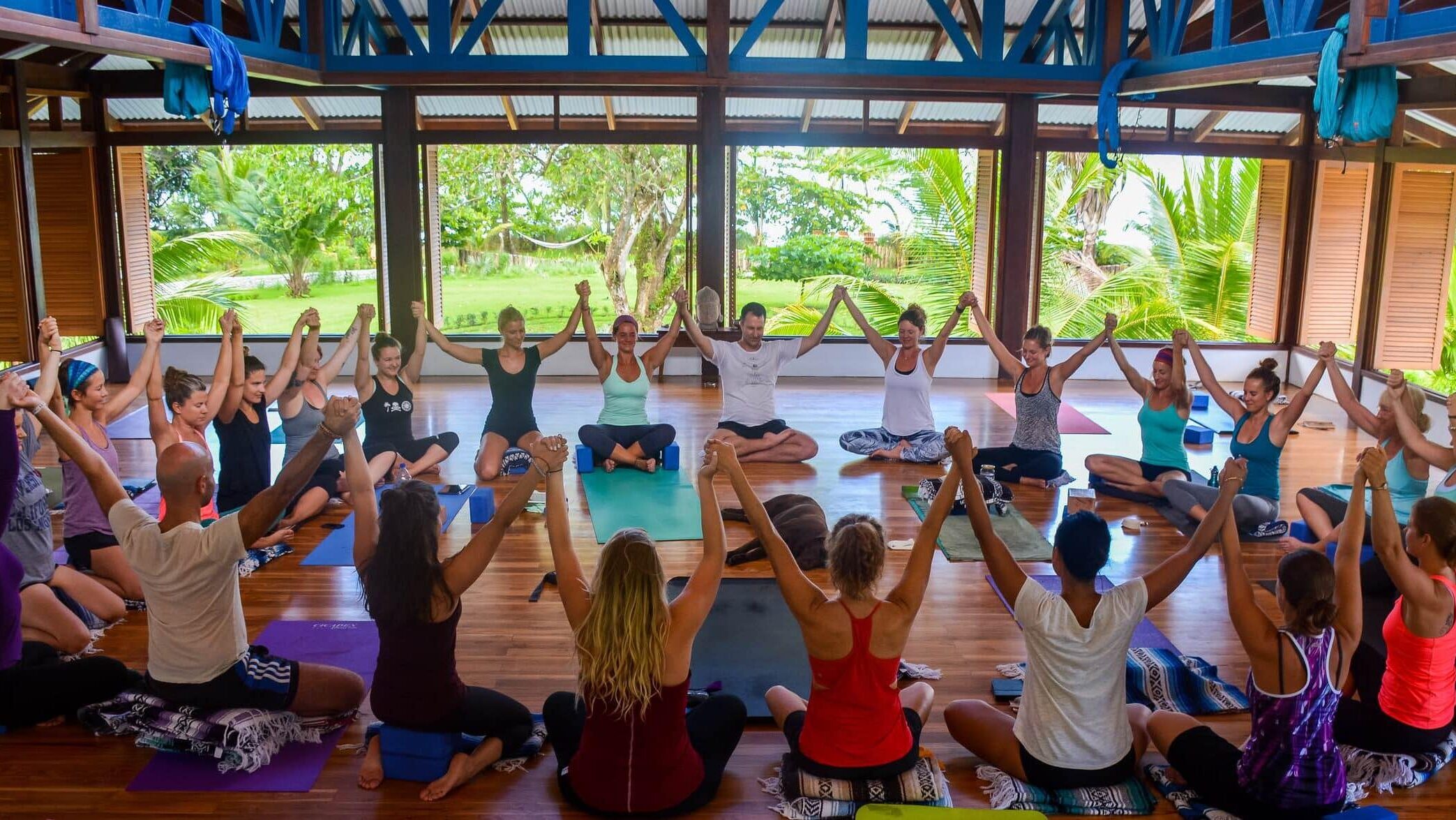
If you are looking for a 14-day 200 hour Yoga Teacher Training Costa Rica Immersion, you have landed in the right place. Join the next one!
300-Hour, 28-Day Yoga Teacher Training
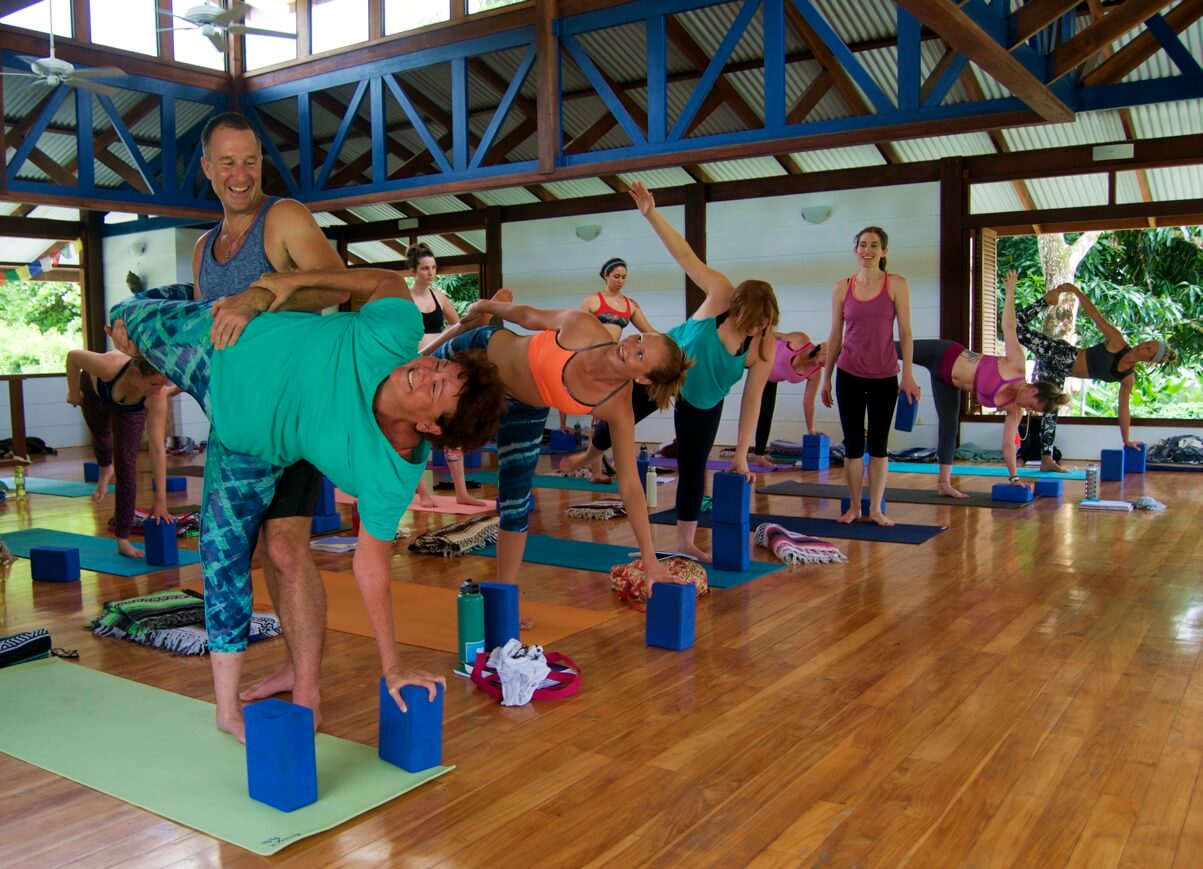
Do You Feel Called To Something Greater?
This 300-Hour Yoga Teacher Training immersion training at Blue Osa will immerse you in yoga for one month.
You will have the specific transformational skills and yogic practices you need in order to connect with your higher purpose.
And more! You will be able to offer these transformative skills to others!
