

You’ve been thinking about it for a while now — a Costa Rica jungle retreat somewhere warm, somewhere green, somewhere that actually slows you down. Not a beach resort where you spend five days horizontal and come home more tired than you left. Something that goes deeper than that. A Costa Rica jungle retreat done right should leave you more restored than when you arrived — not just rested.
The problem is that most “retreat” experiences promise transformation and deliver a packed schedule. You end up rushing from yoga class to guided meditation to group dinner, and somewhere between the morning smoothie and the evening ceremony, you realize you haven’t actually stopped. You’ve just relocated your busyness.
That’s exactly what makes the Osa Peninsula in Costa Rica different — and why it keeps drawing people who’ve tried the other options.
This remote stretch of rainforest in southern Costa Rica is home to Corcovado National Park, one of the most biodiverse places on Earth. National Geographic calls it “the most biologically intense place on Earth.” But what that means in practice — what you actually feel when you’re there — is harder to put into words. The noise in your head quiets. Not because someone told them to. Because the jungle is louder, and more alive than anything you brought with you.
Blue Osa Yoga Retreat & Spa sits at the edge of this wilderness. It’s small, intentional, and built around the idea that restoration happens when you stop filling every moment and start letting the environment do some of the work. Learn more about the healing power of Costa Rica’s nature and what it can do for you.
If you’re in the early stages of figuring out whether a Costa Rica jungle retreat is right for you, this guide will walk you through everything — the wildlife, the trails, the daily rhythm at Blue Osa, and the practical details you need to actually make the decision. No pressure. Just the honest picture.
In this guide:
- Why the Osa Peninsula is unlike any other jungle retreat destination
- The wildlife and plant life you’ll actually encounter
- The best hiking trails near Blue Osa
- What daily life at the retreat looks like
- Everything you need to know before booking
Why the Osa Peninsula Is the Best Costa Rica Jungle Retreat Destination
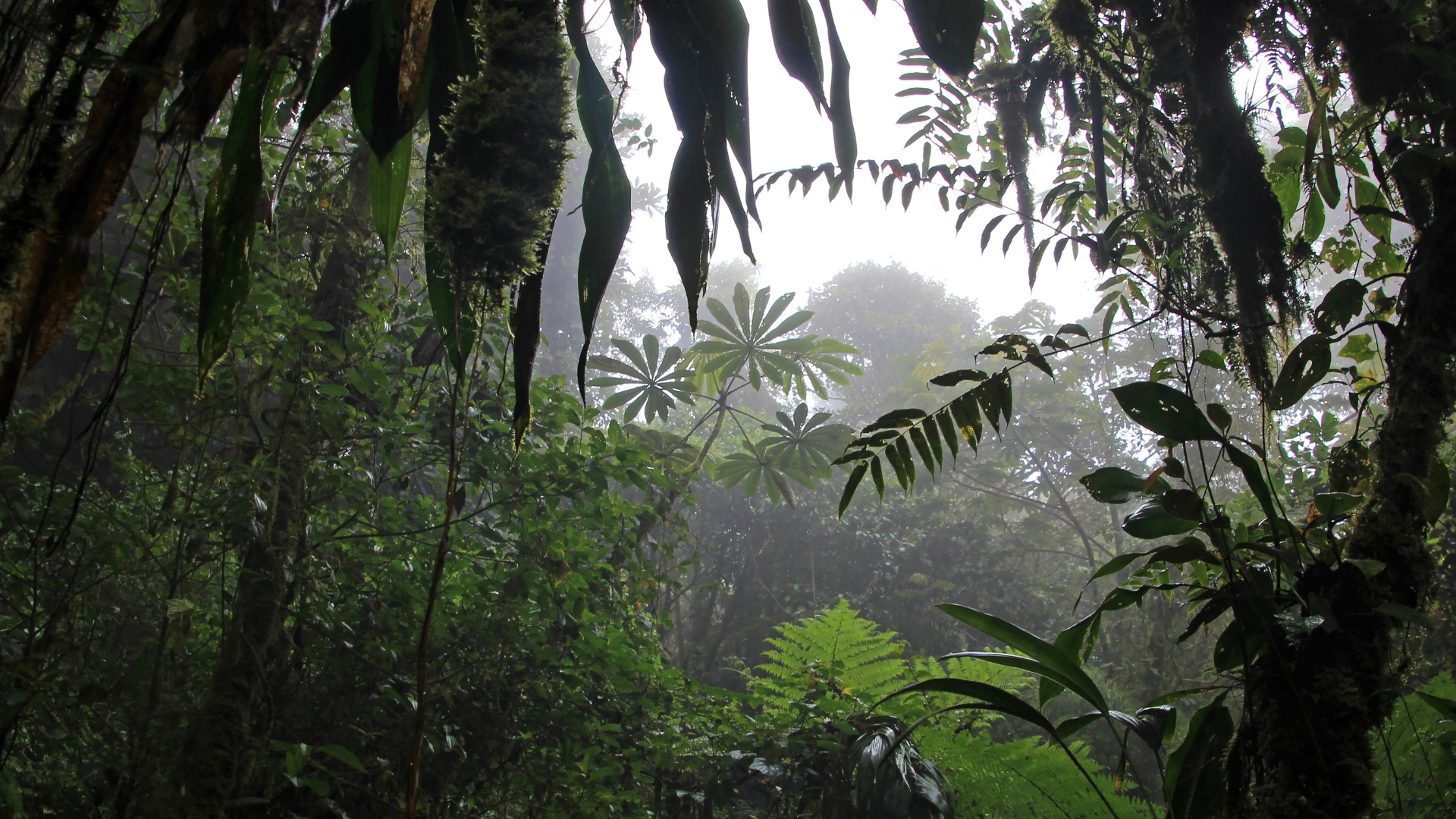
The Osa Peninsula is one of the last truly wild places in Central America. Jutting into the Pacific in southwestern Costa Rica, it holds roughly 2.5% of the world’s biodiversity in an area smaller than the state of Rhode Island. What sets this Costa Rica jungle retreat destination apart is sheer biological density. That concentration of life — mammals, birds, reptiles, insects, plants — is what makes this region unlike any other jungle destination in the world.
Corcovado National Park, located at the heart of the peninsula, covers over 400 square kilometers of primary rainforest — forest that has never been cleared or farmed. What you walk through here is ancient, layered, and intact in a way that most of the world’s remaining rainforests no longer are.
For travelers seeking a meaningful retreat experience, the Osa Peninsula offers something that resort destinations simply can’t replicate: genuine wilderness within reach of genuine comfort.
Getting here is easier than it looks. Most guests fly into San José and connect via a 45-minute domestic flight to Puerto Jiménez or Palmar Sur. Blue Osa arranges transfers from the airstrip, so once you land, the logistics are handled.
Wildlife You’ll Encounter on Your Jungle Retreat
The Osa Peninsula doesn’t offer wildlife sightings the way a zoo does — scripted, guaranteed, sanitized. What you get here is wilder and more honest than that. Animals appear on their own terms: a troupe of spider monkeys overhead, the flash of a scarlet macaw between trees, the stillness that means something large is nearby.
Mammals that roam Corcovado’s rainforest include:
- Jaguars — rarely seen but frequently tracked; even finding pawprints in riverside mud is a genuine encounter
- Baird’s tapirs — the largest land mammal in Central America, often spotted near the Sirena Ranger Station
- Giant anteaters — slow-moving and prehistoric-looking, foraging along forest edges
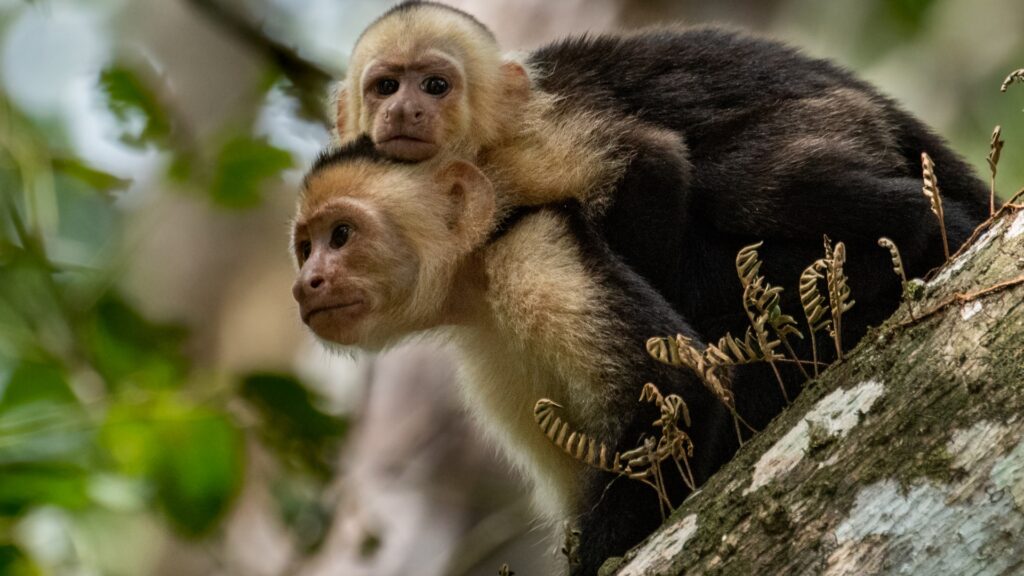
- Four species of monkey — howler, spider, squirrel, and white-faced capuchin, often visible from trails near Blue Osa
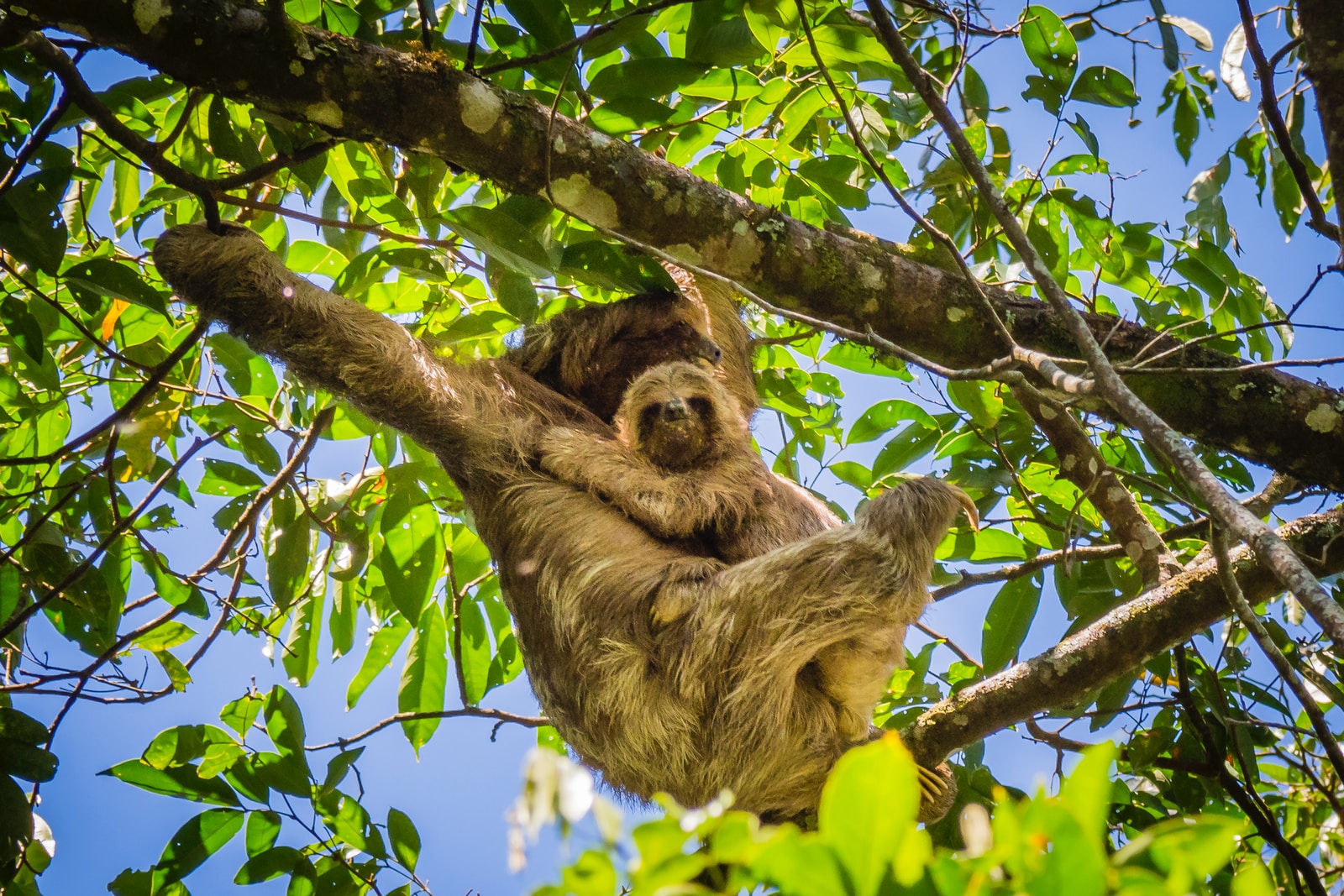
- Two- and three-toed sloths — easy to miss unless your guide knows where to look
Red-Eyed Tree Frogs
The red-eyed tree frog is one of the rainforest’s most iconic residents — small enough to sit on your fingertip, vivid enough to stop you mid-step. Their bright green bodies, scarlet eyes, and electric blue flanks are actually a defense mechanism: the sudden flash of color startles predators just long enough for the frog to escape.
They are nocturnal, so an evening walk dramatically increases your chances of a sighting. Watching one leap between broad leaves in the beam of a headlamp is the kind of moment that doesn’t translate well to photographs but stays with you long after you’re home.
Scarlet Macaws
The Osa Peninsula holds one of the healthiest scarlet macaw populations in all of Costa Rica. These birds are loud, social, and impossible to miss — their red, yellow, and blue plumage cuts through the forest canopy.

Beyond their beauty, macaws are ecologically critical. As primary seed dispersers, they carry fruit across wide stretches of forest and contribute directly to rainforest regeneration. Spotting a mating pair flying in tandem over the beach at Blue Osa — which happens regularly — is one of those experiences guests mention years later.
Birds of the Osa Peninsula
With over 400 recorded bird species, the Osa Peninsula is a serious destination for birdwatchers — but you don’t need to be one to appreciate what’s here. Toucans perch in plain sight at dawn. Hummingbirds hover along Blue Osa’s garden paths. Frigatebirds soar in thermal columns above the Pacific coastline. If you’re considering bringing binoculars, bring them.
Rare Plants and Flora Inside Corcovado National Park
Exploring the raw beauty of the Osa Peninsula rainforest starts at the canopy. The plant life here is not a backdrop — it is the ecosystem. Corcovado’s forest canopy reaches 40 to 50 meters in places, filtering light into shifting patterns on the forest floor below. What grows in that understory is as layered and complex as anything above it.

Highlights include:
- Strangler figs — they begin as epiphytes high in the canopy, send roots to the ground, and slowly encase their host tree over decades
- Heliconia — vivid tropical flowers that serve as feeding stations for hummingbirds and insects
- Orchids — over 700 species recorded in the Osa region, many found nowhere else on Earth
- Medicinal plants — including hibiscus, used traditionally for tea and inflammation, and neem, valued for its antibacterial and healing properties
Walking Trees and Mangroves of the Osa Peninsula
Two of the most visually striking phenomena on the peninsula are walking trees and mangroves.
Walking trees — most commonly the Socratea exorrhiza palm — grow on aerial stilt roots that allow them to slowly shift position over years as they seek light and stable ground. The movement is imperceptible day to day but measurable over seasons, and seeing them up close makes the forest feel genuinely alive in a way that is hard to explain.
Mangroves line the rivers and estuaries threading through the Osa coastline. Their tangled root systems trap sediment, buffer storm surges, and provide breeding habitat for fish, crabs, and juvenile marine species. Kayaking through a mangrove channel is one of the quieter, more meditative experiences available near Blue Osa — and one that rarely appears on anyone’s radar until a guide suggests it.
Best Hiking Trails Near Our Costa Rica Jungle Retreat
One of the practical advantages of staying at Blue Osa is proximity. The retreat sits at the gateway to some of the best hiking in Costa Rica, and guided excursions can be arranged directly — removing the planning burden that stops a lot of first-time visitors from making the most of what’s here.
Trails range from easy half-day walks to full multi-day treks inside Corcovado. Here’s how to think about your options based on fitness level and how much time you want to spend outdoors.
Matapalo Waterfall Hike
This is the ideal first hike for guests still finding their rhythm after arrival. The trail passes through secondary rainforest, offers reliable wildlife sightings — white-faced capuchins and sloths are common along this route — and ends at a waterfall with a natural swimming pool.
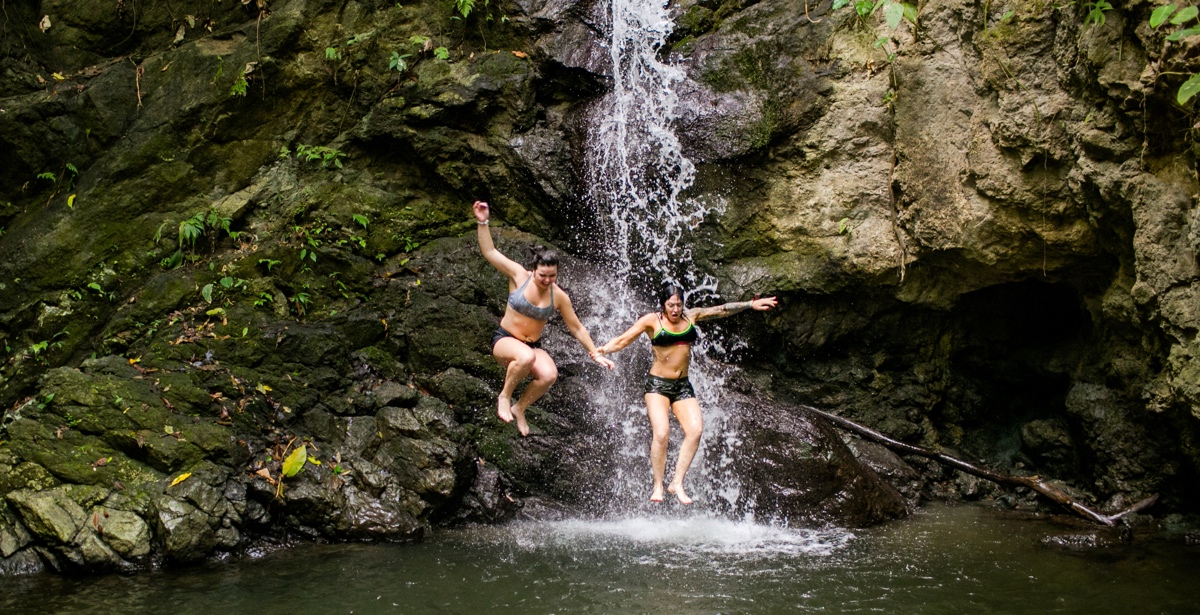
Distance and difficulty make it accessible to most fitness levels. A local guide will point out medicinal plants, animal tracks, and bird species that the untrained eye would walk straight past.
Corcovado National Park Trails
For guests who want the full experience, Corcovado requires a licensed guide (mandatory for all visitors) and advance planning for permits. Trail options inside the park include:
- La Leona to Sirena — a coastal route that crosses river mouths at low tide and delivers you to the most wildlife-rich station in the park
- Sirena Station area trails — the best location in the park for tapir and puma sightings, with overnight camping available for those wanting to go deeper
Blue Osa’s team can help coordinate permits, guides, and timing so this doesn’t become a logistics headache.
Coastal Trails Along the Osa Peninsula
For something less demanding, the coastal trails offer a completely different sensory experience — forest on one side, the Pacific on the other. At low tide, rocky outcroppings reveal tide pools dense with starfish, anemones, and small fish. Dolphins are regularly spotted offshore, and sea turtles nest on several Osa beaches between July and December.
These trails work particularly well as morning or late afternoon walks, when light and temperature make the experience most comfortable.
What Your Senses Experience in the Rainforest
The jungle is a full-body experience, not just a visual one. Here’s what actually hits you when you’re there:
Sight: The density of color is different from anything in a temperate environment. The green is deeper, the flowers more vivid, the quality of light through the canopy constantly shifting.
Sound: Howler monkeys serve as the rainforest’s alarm clock, audible up to three miles away. By midday the forest has its own rhythm — insects, birds, the deep creak of large trees moving in wind.
Smell: Rain on hot soil produces a concentration of petrichor that hits you the moment you step onto a trail. The air near rivers carries a clean, mineral quality that is difficult to describe and easy to remember.
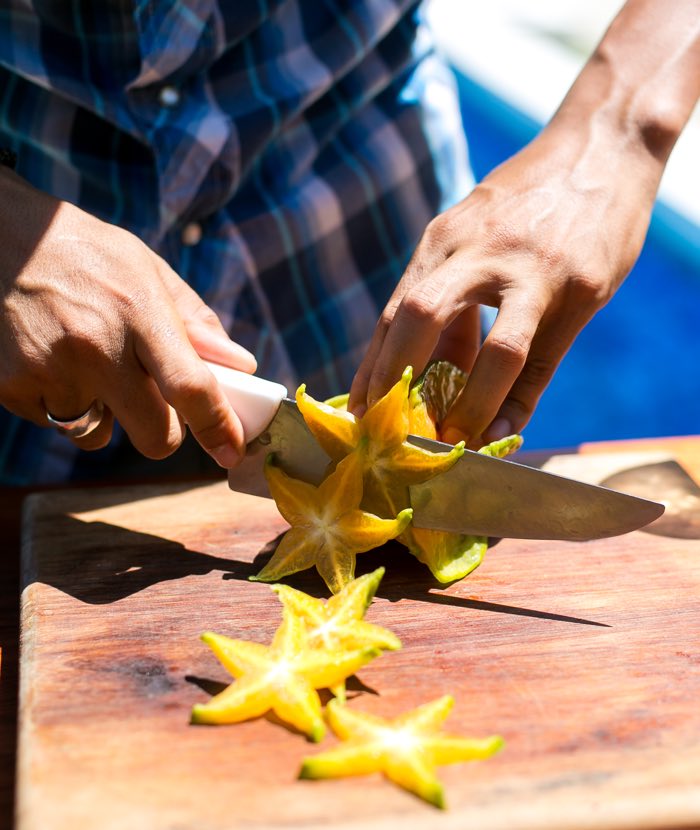
Taste: Star fruit grows near Blue Osa and can be eaten fresh — sweet, slightly tart, and nothing like the refrigerated version you’ve had at home. Noni is an acquired taste, but worth trying once for the story alone.
Touch: The temperature differential between open beach and forest interior can be significant. Stepping from one into the other is its own kind of reset — something guests describe as the moment the trip starts to feel real.
What to Expect at Blue Osa: Yoga, Spa, and Rainforest Living
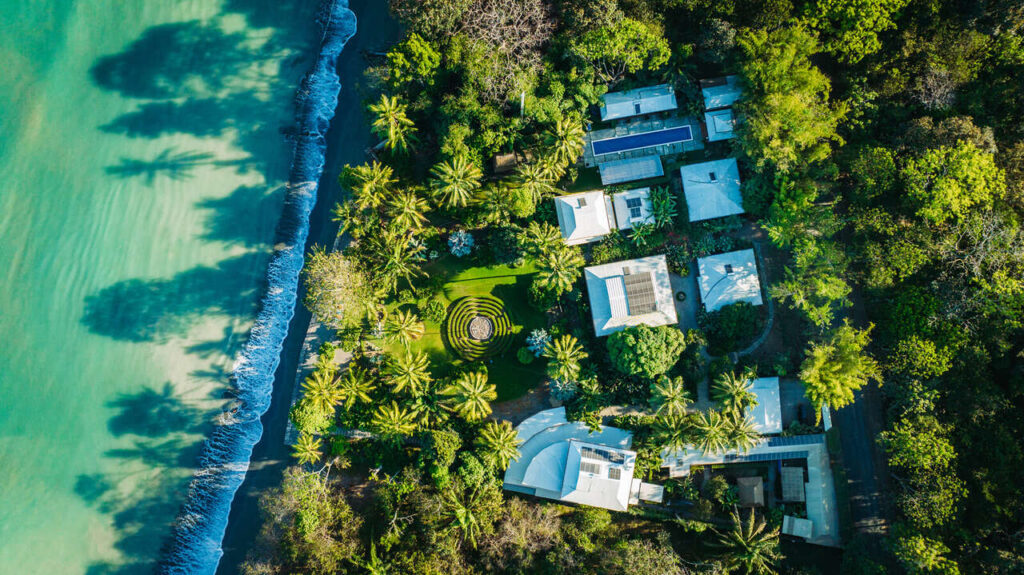
Blue Osa is a small, intentional retreat center — not a resort. The distinction matters. There are no entertainment programs, no pressure to fill your schedule, no performance of wellness. What’s on offer is structure if you want it and genuine space if you don’t. That balance is what separates a genuine Costa Rica jungle retreat from a standard eco-lodge.
The retreat runs on solar power, collects rainwater, and sources the majority of its food from its own garden or local producers. Meals taste different when the ingredients came from twenty meters away.
Here is what makes Blue Osa different from other retreats.
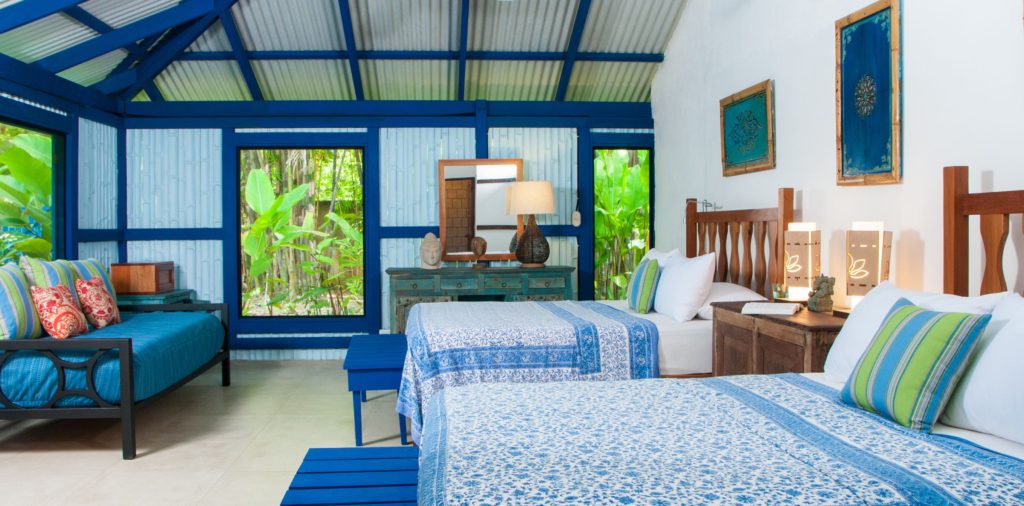
Eco-Friendly Accommodations
Rooms at Blue Osa range from shared options to private bungalows, making the retreat accessible across different budgets and travel styles. All accommodations are designed to blur the line between indoors and outdoors — open-air architecture, natural materials, the sounds of the forest present throughout.
Yoga Retreats in the Costa Rica Rainforest
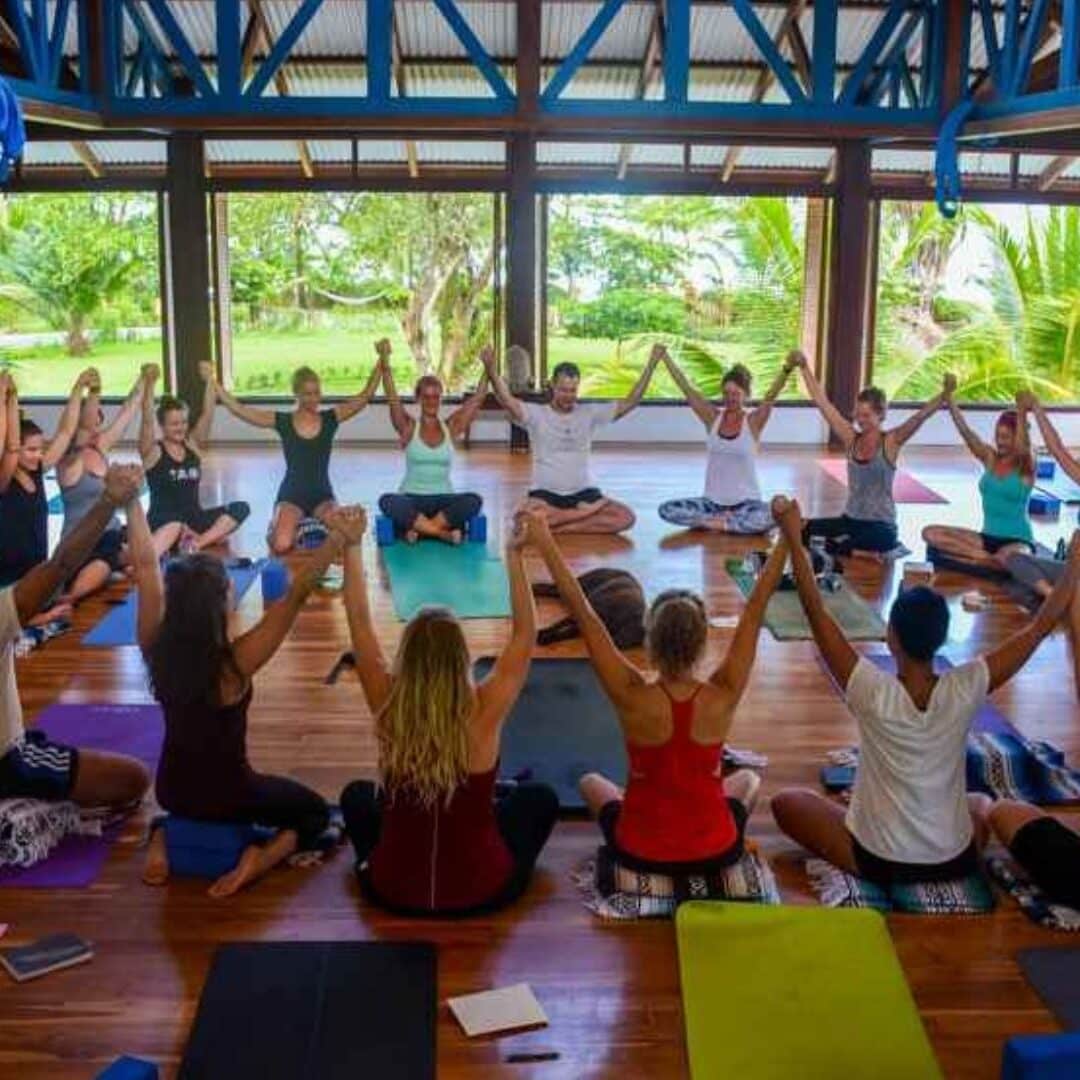
As an award-winning yoga retreat in Costa Rica, Blue Osa’s open-air yoga platform is positioned above the treeline. Sessions run morning and evening, led by visiting teachers whose styles and focus vary across programs.
For guests newer to yoga, the setting removes the self-consciousness that studio environments can produce. There’s no mirror — just a horizon.
For experienced practitioners, the combination of heat, humidity, and natural sound creates conditions that climate-controlled studios don’t replicate.
Blue Osa also hosts dedicated yoga teacher training (YTT) programs throughout the year — an immersive certification experience that combines formal instruction with daily jungle living. If YTT is part of what you’re considering, this environment is worth comparing seriously against studio-based programs.
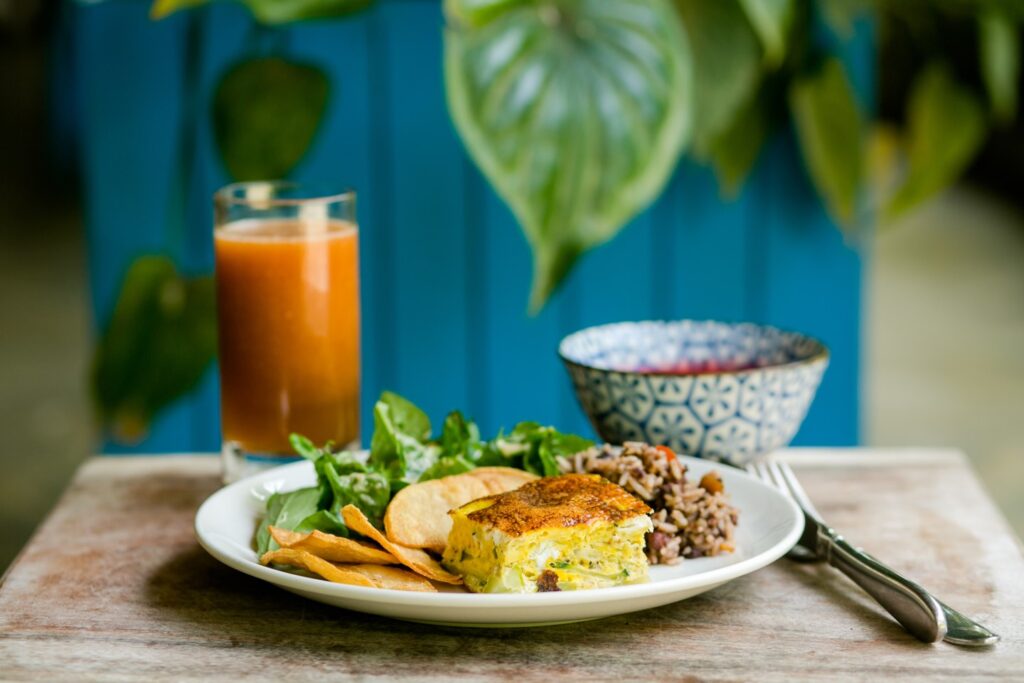
Farm-to-Table Dining at Blue Osa
Three meals a day are included in retreat stays, prepared using produce from the retreat’s garden and locally sourced ingredients. The kitchen accommodates vegetarian, vegan, and gluten-free requirements without making it feel like a compromise.
Meals are communal. The long table at mealtimes becomes one of the retreat’s informal gathering points — where guests from different programs compare notes on the day, share recommendations, and occasionally make plans to hike together the next morning.
Explore the full Costa Rican farm-to-table cuisine that makes meals at Blue Osa a destination in themselves.
Spaces for Reflection and Meditation
Solitude is genuinely protected here. Hammocks along the beachfront, a garden reading area, and quiet platforms throughout the property give guests privacy when they want it — something busier retreat environments struggle to offer.
For meditation practice at any level, the rainforest provides natural sensory anchors that support focus in a way urban environments rarely can. Beginners find it easier to settle. Experienced practitioners find the constancy of the jungle sound supports extended sits.
Read more about reconnecting with nature at Blue Osa and what that experience looks like day to day.
Planning Your Costa Rica Jungle Retreat: What to Know Before You Go
Planning a Costa Rica jungle retreat requires a few key decisions that will shape your entire experience.
Best time to visit:
| Dry Season (Dec–Apr) | Green Season (May–Nov) | |
|---|---|---|
| Weather | Sunny, lower humidity | Rain most afternoons |
| Wildlife activity | Good | Excellent — peak nesting and birthing |
| Crowd level | Higher | Lower, more intimate |
Neither season is wrong — they offer genuinely different experiences. Many repeat visitors prefer the green season specifically for the wildlife and the quiet.
What to pack:
- Lightweight, moisture-wicking clothing
- Quality insect repellent (DEET or picaridin-based)
- Waterproof footwear for jungle trails
- A headlamp for evening wildlife walks
- Reef-safe sunscreen for beach and coastal activities
The retreat provides yoga mats, towels, and basic amenities — you don’t need to pack for a camping expedition.
Physical fitness: You don’t need to be an athlete. Most guests arrive with average fitness and find the activity level comfortable. Corcovado’s longer trails demand more, but those are opt-in excursions, not part of the daily retreat schedule.
Solo travel: A significant portion of Blue Osa’s guests arrive solo, particularly women traveling alone. The retreat’s size and community structure make it one of the safer, more welcoming environments for solo travel in the region.
Frequently Asked Questions
Is the Osa Peninsula safe?
Yes, for travelers exercising standard awareness. The Osa Peninsula is remote rather than urban, and the risks here are environmental — river crossings, wildlife encounters, uneven trails — rather than crime-related. Blue Osa’s guides are experienced in managing all of these safely.
Do I need to speak Spanish?
No. Blue Osa’s staff are bilingual, and English is widely spoken within the retreat. Some Spanish is useful if you plan to venture independently into Puerto Jiménez, the nearest town, but it’s not required.
What is the minimum stay?
Most guests stay a minimum of four to seven nights to get genuine benefit from the retreat rhythm. Shorter stays are possible but often leave guests feeling like they just started to decompress when it’s time to leave.
Can I extend my stay once I arrive?
Subject to availability, yes. It happens often enough that the team is used to the conversation.
What’s included in the retreat price?
Accommodation, three meals daily, yoga sessions, and access to the retreat’s facilities. Guided excursions to Corcovado and other trails are typically available at an additional cost.
Final Thoughts: Find Your Perfect Costa Rica Jungle Retreat
A Costa Rica jungle retreat is not the right choice for everyone — and Blue Osa would rather you arrive knowing that than leave wishing you’d known sooner. This is not a place designed for maximum stimulation. It’s designed for the opposite.
If what you’re looking for is a genuine pause — time in a place where the environment itself does most of the work of slowing you down — the Osa Peninsula is one of the few places left on Earth that delivers that without theater.
When you’re ready to take the next step, the team at Blue Osa is available to answer questions, walk you through program options, and help you figure out whether the timing and format are right for where you are right now.
Whether this is your first Costa Rica jungle retreat or you’ve been before, the Osa Peninsula has a way of surprising you.
Ready to experience the best beachfront yoga retreat in Costa Rica?
Explore upcoming retreats at Blue Osa or discover all-inclusive wellness packages designed for transformation, healing, and deep connection with nature.
Your Costa Rica jungle retreat begins here.
About The Author, Yogi Aaron

Yogi Aaron is the founder and creator of Applied Yoga Anatomy + Muscle Activation™ (AYAMA), a revolutionary methodology that challenges conventional approaches to yoga. Using a science-backed approach, he prioritizes muscle activation over traditional stretching.
With over three decades of dedicated study, mentorship, and hands-on experience, he has established himself as a leading expert in yoga therapy, alignment, and pain-free movement.
As owner and operator of Blue Osa Yoga Retreat + Spa in Costa Rica, Yogi Aaron leads transformative programs that combine his expertise in yoga instruction, retreat facilitation, and wellness business operations. His work spans both in-person immersive experiences and digital education through The Yogi Club online platform and the AYAMA™ Certification Program.
Yogi Aaron’s teaching methodology represents a paradigm shift in modern yoga practice. AYAMA focuses on activating and engaging muscles to enhance range of motion, build strength, improve stability, and optimize alignment—while reducing pain and injury risk. This evidence-based approach has positioned him as a thought leader challenging the status quo in the yoga community.
His mission extends beyond the mat: to liberate individuals from chronic pain and guide them toward discovering yoga’s authentic purpose through intelligent, body-informed practice.
Learn more about training opportunities with Yogi Aaron at Blue Osa Yoga Retreat + Spa.
Check out these other popular posts!

7 Benefits of Yoga Teacher Training (Even When You Don’t Want to Teach)

Why Vacations Are Important
How to Sell Out Your Yoga Retreat: Yoga Business Insider Secrets
Tags: Blue Osa, Costa Rica, Yoga Retreat, inspiration
Book/Inquire Now
Got pain? This will help you!

YOU DESERVE TO LIVE PAIN-FREE...
Receive 7 short, simple, and effective practices to alleviate knee, hip, low back, neck, shoulder pain, and more!
All you need is 5 minutes per lesson and it's FREE!
This revolutionary approach to yoga is new, and no one else is teaching this! Since I created Applied Yoga Anatomy + Muscle Activation™ and started teaching it consistently, I've witnessed students heal long-standing injuries, access yoga postures they never thought possible, and tell me over and over again how their body just feels better.
I hope you'll join me on this journey!
~Yogi Aaron

Is Yoga Teacher Training Right For Me?
We Created This FREE 5 Part Series So You Can Get All The Information To Make The Right Choice.
In this series, you will learn:
-
- Am I a candidate for yoga teacher training??
-
- What will I learn in a YTT?
-
- Do I need to have a perfect downward dog to attend YTT?
14-Day 200-Hour Yoga Teacher Training in Costa Rica
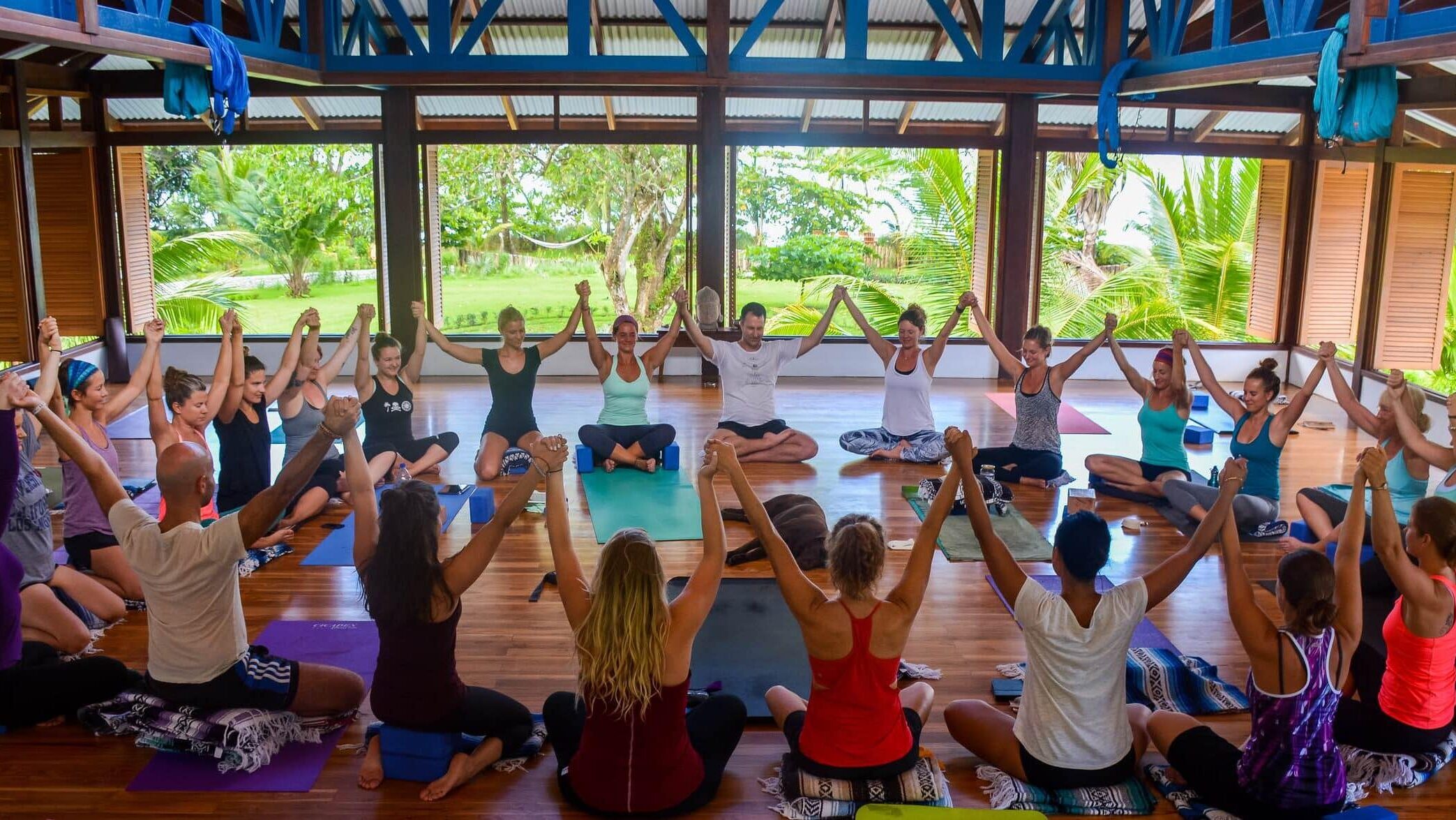
If you are looking for a 14-day 200 hour Yoga Teacher Training Costa Rica Immersion, you have landed in the right place. Join the next one!
300-Hour, 28-Day Yoga Teacher Training
Do You Feel Called To Something Greater?
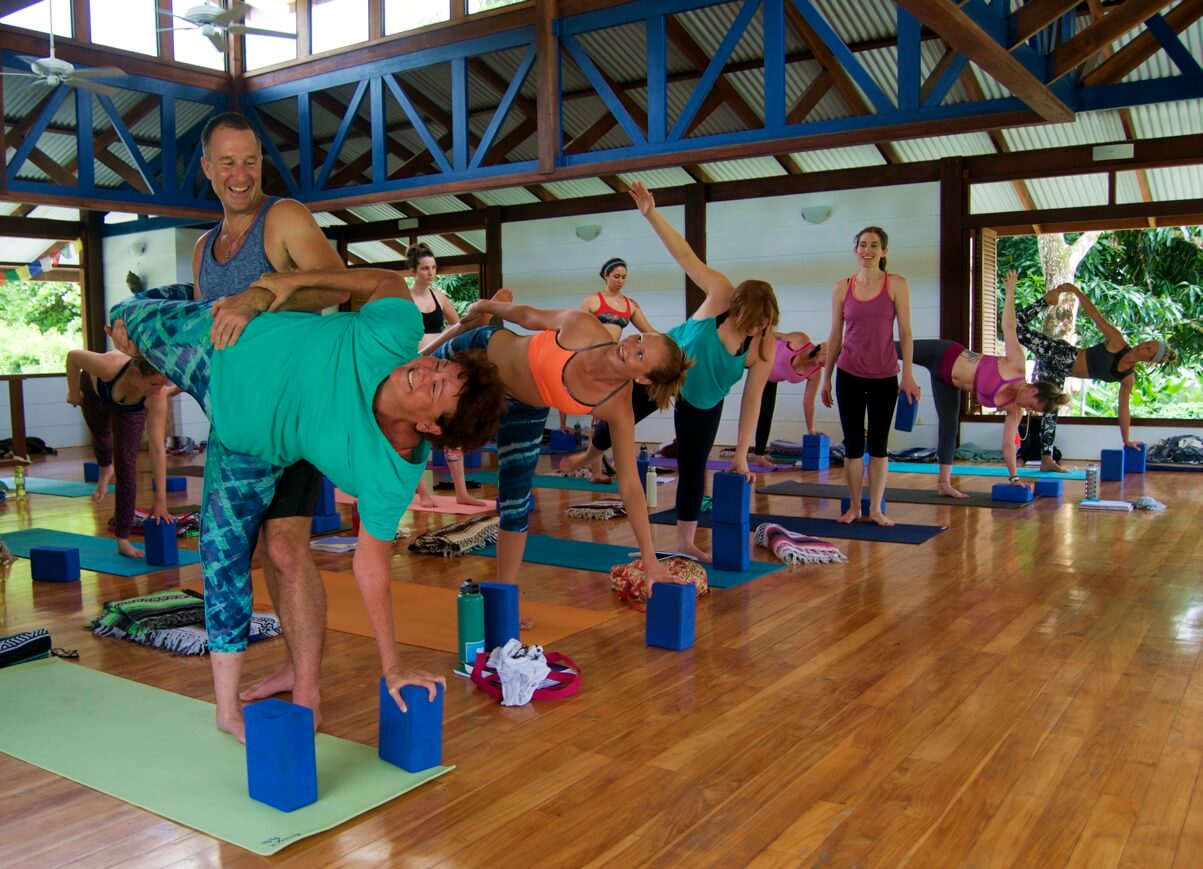
This 300-Hour Yoga Teacher Training immersion training at Blue Osa will immerse you in yoga for one month.
You will have the specific transformational skills and yogic practices you need in order to connect with your higher purpose.
And more! You will be able to offer these transformative skills to others!
