

The beaches of Costa Rica, particularly along the Osa Peninsula where Blue Osa calls home, are vital nesting grounds for some of the world’s most endangered sea turtle species. These ancient mariners have navigated our oceans for over 100 million years, yet today they face unprecedented threats to their survival.
Of the seven sea turtle species worldwide, five nest on Costa Rica’s Pacific and Caribbean coasts, making this small Central American nation one of the most important sea turtle conservation areas in the world. The Osa Peninsula, containing 2.5% of the planet’s biodiversity, plays a critical role in protecting these magnificent creatures.
The sobering reality: Experts suggest only 1 in 1,000 hatchlings will survive to adulthood.
Understanding these remarkable species, and the threats they face, is the first step toward protecting them. At Blue Osa Yoga Retreat & Spa on the Osa Peninsula, we’re committed to ocean conservation and supporting local efforts to ensure sea turtles continue gracing our beaches for generations to come.
Why Costa Rica Matters for Sea Turtle Conservation
Costa Rica’s unique geography, with coastlines on both the Caribbean Sea and Pacific Ocean, provides diverse nesting habitats for multiple sea turtle species. The country has established robust legal protections, designated critical nesting beaches as protected areas, and fostered a culture of conservation that attracts eco-conscious travelers from around the world.
Key Costa Rican sea turtle nesting sites include:
- Tortuguero National Park (Caribbean) – Green and Leatherback turtles
- Ostional Wildlife Refuge (Pacific) – Olive Ridley arribadas
- Playa Grande (Pacific) – Leatherback nesting
- Osa Peninsula beaches (Pacific) – Multiple species including Olive Ridleys and Hawksbills
The Osa Peninsula is particularly significant due to its pristine beaches, minimal light pollution, and active conservation programs working to protect nesting sites.
Common Threats Sea Turtles Face in Costa Rica
Before diving into individual species, it’s crucial to understand the challenges threatening sea turtle populations in general all around the world:
- Entanglement in fishing gear – Gillnets, longlines, and trawls trap and drown turtles. Costa Rica’s fishing industry continues working toward turtle-safe practices.
- Poaching and illegal trade – While illegal, egg poaching still occurs on some beaches. Eggs are consumed locally or sold on black markets.
- Coastal development – Beachfront hotels, restaurants, and residential development destroy nesting habitat and create light pollution that disorients hatchlings.
- Plastic and marine debris – Costa Rica’s waters carry plastic pollution from across the Pacific. Turtles mistake plastic bags for jellyfish, leading to fatal ingestion.
- Global warming – Rising sand temperatures affect the sex ratio of hatchlings (warmer temperatures produce more females), threatening population balance.
- Ocean pollution – Agricultural runoff, sewage, and chemicals poison marine ecosystems where turtles feed.
- Light pollution – Artificial beachfront lighting confuses hatchlings, drawing them away from the ocean toward roads and developments.
- Boat strikes – Increased boat traffic in coastal waters leads to propeller injuries and deaths.
The good news: Costa Rica has made significant strides in sea turtle protection through legal frameworks, protected areas, conservation organizations, and eco-tourism initiatives that provide economic alternatives to poaching. Organizations like Osa Conservation work directly on the Osa Peninsula to protect nesting sites, relocate vulnerable nests to hatcheries, and educate local communities.
The 5 Sea Turtle Species of Costa Rica
1. Olive Ridley Sea Turtles (Lepidochelys olivacea)
Conservation Status: Vulnerable
Where in Costa Rica: Pacific coast – most abundant species
Nesting Season: Year-round, peak July-December
Best viewing locations: Ostional Wildlife Refuge, Osa Peninsula beaches
Named for their olive-colored shells, Olive Ridleys are among the smallest sea turtles, weighing less than 100 pounds and measuring about 2 feet long. What they lack in size, they compensate for in spectacular numbers.
Famous for Arribadas:
Olive Ridleys are renowned for “arribadas” synchronized mass nesting events where thousands of females emerge from the ocean simultaneously to lay eggs. This extraordinary phenomenon occurs primarily at Ostional Wildlife Refuge on Costa Rica’s Pacific coast, where up to 100,000 turtles can arrive during peak arribada months.
These turtles feed on invertebrates such as crabs, jellyfish, shrimp, and tunicates, though some populations consume mostly algae.
Unique Nesting Behavior:
Unlike other species that nest individually, Olive Ridleys arrive in massive groups over 3-7 days. Scientists believe this synchronized nesting overwhelms predators—while some nests are destroyed, the sheer number ensures many survive.
The Problem:
Despite massive nesting numbers, Olive Ridleys face significant threats:
- Nests laid too close to shore get washed away by high tides
- Eggs are poached for consumption (though legal collection occurs at Ostional under strict quotas)
- Fishing bycatch kills thousands annually
- Hatchlings become disoriented by beachfront lighting
Conservation Success:
Ostional is one of the world’s most important Olive Ridley nesting sites, and Costa Rica’s protection efforts have helped stabilize populations. Local communities benefit from eco-tourism, creating economic incentives to protect turtles rather than exploit them.
Osa Peninsula Connection:
While arribadas don’t occur on Osa beaches, individual Olive Ridleys nest regularly along the peninsula’s coastline. Osa Conservation operates a sea turtle protection program that:
- Patrols beaches during nesting season
- Relocates vulnerable nests to protected hatcheries
- Tags nesting females for research
- Releases hatchlings safely to maximize survival rates
Blue Osa guests can learn about these conservation efforts and, depending on season and timing, may have opportunities to participate in beach monitoring or learn about sea turtle biology from local experts.
2. Leatherback Sea Turtles (Dermochelys coriacea)
Conservation Status: Vulnerable (Pacific population: Critically Endangered)
Where in Costa Rica: Both Pacific and Caribbean coasts
Nesting Season: Pacific (October-March), Caribbean (March-July)
Best viewing locations: Playa Grande (Pacific), Tortuguero (Caribbean)
Leatherback turtles are the giants of the sea turtle world and the largest living reptiles after crocodiles. They can reach lengths over 6 feet and weigh up to 2,000 pounds, about the size of a small car.
Unique Physical Features:
Unlike other sea turtles with hard, bony shells, leatherbacks have a unique carapace consisting of a leathery skin covering small bone plates arranged in 7 longitudinal ridges. This flexible shell allows them to dive to incredible depths, over 4,000 feet, making them the deepest-diving reptiles on Earth.
Incredible Migrations:
Leatherbacks are among nature’s greatest travelers. They migrate thousands of miles between tropical nesting beaches and cold-water feeding grounds as far north as Canada and Alaska. Satellite tracking has revealed some individuals travel over 10,000 miles in a single year.
Diet and the Plastic Problem:
Leatherbacks feed almost exclusively on jellyfish, consuming up to 200 pounds per day. Their throat is lined with backward-pointing spines that help them swallow slippery prey.
The devastating consequence: Leatherbacks cannot distinguish between jellyfish and plastic bags. They ingest plastic debris, which blocks their digestive systems, causing starvation. Autopsies of dead leatherbacks frequently reveal stomachs full of plastic bags, balloon ribbons, and other marine debris.

Critical Status in the Pacific:
While leatherbacks are classified as “Vulnerable” globally, the Pacific population is Critically Endangered with numbers declining by over 90% in recent decades. Costa Rica’s Pacific beaches, including Playa Grande, once hosted thousands of nesting leatherbacks annually, now only hundreds return each year.
Caribbean populations remain more stable, with Tortuguero National Park serving as a critical nesting site.
The Problem:
- Plastic pollution and marine debris ingestion
- Fishing bycatch, particularly in gillnets and longlines
- Loss of nesting beaches to development
- Egg poaching (though much reduced due to enforcement)
- Climate change affecting sand temperatures and ocean currents
Conservation Efforts:
Costa Rica has designated Playa Grande as Las Baulas National Marine Park specifically to protect leatherback nesting habitat. Strict regulations limit beachfront development and lighting during nesting season.
Osa Peninsula Connection:
While not as common as Olive Ridleys, leatherbacks do nest occasionally on Osa Peninsula beaches. Their massive size makes their tracks unmistakable, like tractor tire marks in the sand.
What Blue Osa does:
Our commitment to reducing plastic use, our solar-powered operations, refillable water stations, and local farm to table cuisine directly help protect leatherbacks and other marine life. Every piece of plastic we prevent from entering the ocean could save a turtle’s life.
3. Green Sea Turtles (Chelonia mydas)
Conservation Status: Endangered
Where in Costa Rica: Primarily Caribbean coast, occasional Pacific sightings
Nesting Season: July-October (peak)
Best viewing locations: Tortuguero National Park (Caribbean)
Named not for their olive-brown shells but for the greenish color of their skin and fat (caused by their vegetarian diet), green sea turtles are among the largest species, weighing up to 350 pounds with carapaces measuring up to 3 feet long.
Unique Herbivorous Diet:
Adult green turtles are primarily herbivorous, one of only two vegetarian sea turtle species. They graze on seagrass beds and algae, playing a crucial role in maintaining healthy marine ecosystems by preventing seagrass from overgrowing and smothering coral reefs.
Juvenile green turtles, however, are omnivorous, feeding on crabs, jellyfish, sponges, and other invertebrates before transitioning to a plant-based diet as they mature.
Sunbathing Behavior:
Green turtles are one of the only sea turtle species known to leave water for reasons other than nesting, they’ve been observed hauling out onto beaches to bask in the sun, particularly in Hawaii and the Galapagos Islands. While less common in Costa Rica, this behavior helps them regulate body temperature and may aid in removing parasites.
Tortuguero: The Green Turtle Capital:
Costa Rica’s Tortuguero National Park on the Caribbean coast is one of the most important green turtle nesting sites in the entire Western Hemisphere. The name “Tortuguero” literally means “place of turtles” in Spanish.
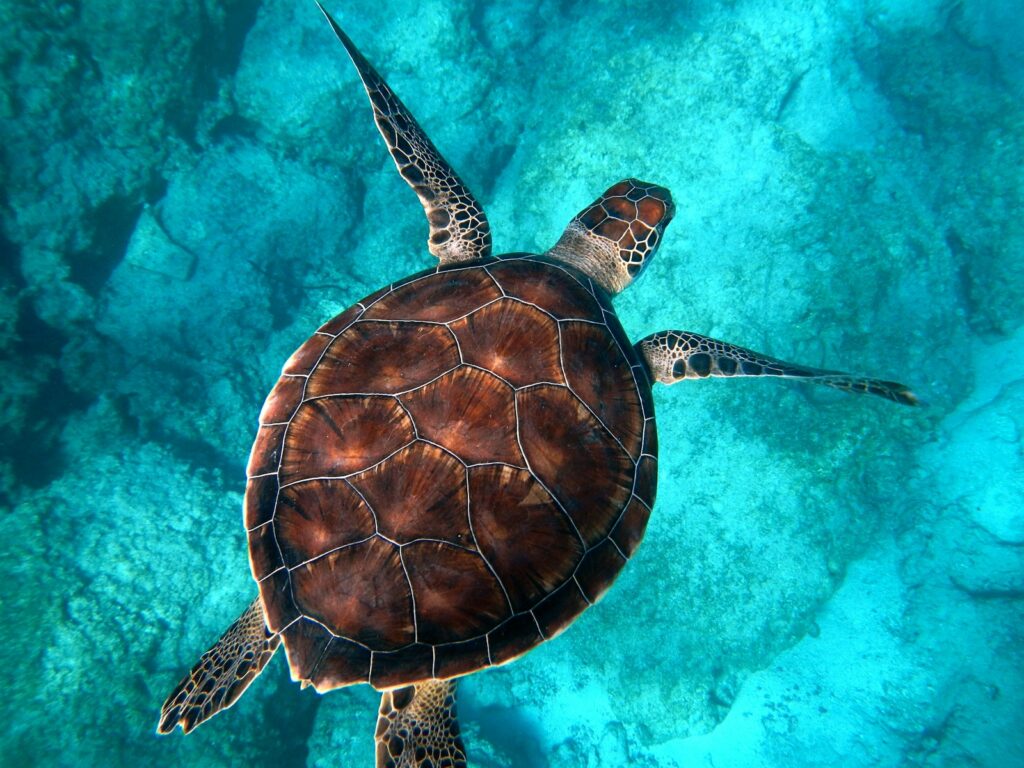
During peak season (July-October), hundreds of green turtles emerge nightly to nest on Tortuguero’s 22-mile stretch of beach. The park’s protection and monitoring programs have been instrumental in helping green turtle populations recover from historical lows.
The Problem:
- Hunted extensively for their meat, eggs, and calipee (cartilage used in turtle soup)
- Boat strikes in coastal areas where they feed
- Entanglement and drowning in fishing nets
- Loss of seagrass feeding habitats due to coastal development and pollution
- Fibropapillomatosis (a tumor-causing disease possibly linked to pollution)
Historical Context:
Green turtles were once so abundant in the Caribbean that early explorers reported seas “teeming” with them. Commercial harvesting for meat and eggs, particularly in the 1800s and early 1900s, decimated populations. Costa Rica banned sea turtle hunting in 1966, but illegal poaching persists in some areas.
Conservation Success:
Thanks to decades of protection, green turtle numbers at Tortuguero have increased significantly. However, they remain endangered globally, and continued conservation is essential.
Osa Peninsula Connection:
While green turtles primarily nest on the Caribbean coast, they occasionally appear in Pacific waters, including around the Osa Peninsula. Snorkelers and divers may encounter them grazing on algae near rocky outcrops and reef areas.
4. Hawksbill Sea Turtles (Eretmochelys imbricata)
Conservation Status: Critically Endangered
Where in Costa Rica: Both coasts, more common in Caribbean
Nesting Season: April-November (peak)
Best viewing locations: Caribbean coral reefs, Cahuita, Tortuguero
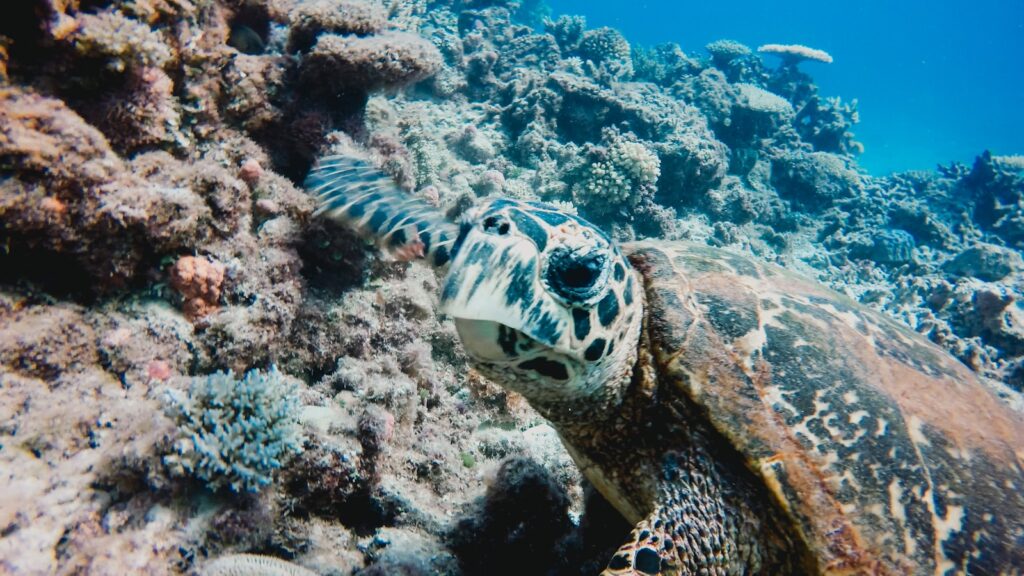
Hawksbill sea turtles are named for their distinctive narrow, pointed beaks that resemble a bird of prey’s beak. These medium-sized turtles grow 3-5 feet long and weigh up to 180 pounds.
Beautiful and Endangered:
Hawksbills have the most beautiful shells of all sea turtles—overlapping scutes create intricate patterns of amber, brown, orange, and gold that shimmer in the water. This stunning “tortoiseshell” pattern has been both their defining feature and their greatest curse.
The Tortoiseshell Trade:
For centuries, hawksbills were hunted extensively for their shells, which were carved into jewelry, combs, decorative boxes, and other luxury items. Despite international bans on the tortoiseshell trade (established in 1973 through CITES), illegal poaching continues in some regions.
Japan was historically the largest importer of hawksbill shell, consuming an estimated 2 million turtles between 1950-1992. While legal trade has ended, black markets persist.
Reef Guardians:
Hawksbills play a critical ecological role in coral reef ecosystems. They feed primarily on sponges—organisms that would otherwise overgrow and smother coral reefs. Their specialized diet includes sponges that are toxic to most other animals, including some containing glass-like spicules.
By controlling sponge populations, hawksbills help maintain the delicate balance of reef ecosystems that support thousands of other species.

Nesting Behavior:
Unlike mass-nesting Olive Ridleys, hawksbills are solitary nesters. Females return to the same beaches where they hatched (called natal beach fidelity) and typically nest 3-5 times per season, laying about 140 eggs per nest.
They prefer nesting on beaches with vegetation close to the water line, often laying eggs under shrubs or in mangrove areas—making their nests harder to find but also more vulnerable to erosion and predation.
The Problem:
- Critically endangered throughout their range
- Continued illegal hunting for shells despite international protections
- Loss of coral reef feeding habitats due to climate change and ocean acidification
- Entanglement in fishing gear
- Egg poaching
- Coastal development destroying nesting beaches
Glimmer of Hope:
Some Caribbean populations show signs of recovery thanks to intensive protection efforts. However, hawksbills remain critically endangered, and their recovery depends on continued conservation action.
Costa Rica Connection:
Costa Rica’s Caribbean coast provides important hawksbill habitat, particularly around coral reef areas near Cahuita National Park and Tortuguero. The clear, warm Caribbean waters host sponge-rich reefs where hawksbills feed.
Pacific coast sightings are less common but do occur, particularly around rocky areas and coral formations near the Osa Peninsula.
What Travelers Can Do:
- Never purchase tortoiseshell products (real or imitation)
- Support reef conservation through responsible snorkeling and diving practices
- Choose reef-safe sunscreen that doesn’t harm coral ecosystems
- Report any illegal tortoiseshell sales to authorities
5. Loggerhead Sea Turtles (Caretta caretta)
Conservation Status: Endangered
Where in Costa Rica: Occasional Pacific coast sightings, rare
Nesting Season: Sporadic; peak nesting occurs elsewhere (Florida, Mediterranean)
Best viewing locations: Rare in Costa Rica; more common in Florida and Mediterranean
Named for their large, reddish-brown heads, loggerhead sea turtles grow 3-5 feet long and can weigh up to 400 pounds. They have proportionally larger heads than other sea turtle species, housing powerful jaw muscles.
Powerful Jaws:
Loggerheads possess incredibly strong jaws capable of crushing hard-shelled prey. Their diet consists primarily of crabs, horseshoe crabs, mollusks, conchs, and other hard-bodied invertebrates. They’ve been observed crushing queen conch shells that would require over 1,000 pounds of force to break.
This specialized diet fills an important ecological niche, loggerheads help control populations of shellfish and maintain balance in marine ecosystems.
Incredible Journeys:
Loggerheads are among the most wide-ranging sea turtles, migrating thousands of miles between feeding grounds and nesting beaches. Satellite tracking has revealed that loggerheads hatched on Florida beaches travel across the entire Atlantic Ocean to feed in European waters before returning to nest decades later.
Young loggerheads spend their early years in the open ocean, drifting with currents and feeding in floating sargassum seaweed mats, earning them the nickname “sargassum riders.”
Limited Costa Rica Presence:
Unlike the other four species, loggerheads are rare in Costa Rican waters. While occasional sightings and nesting attempts occur on Pacific beaches, Costa Rica is not a primary nesting ground for this species.

The majority of loggerhead nesting occurs on beaches in:
- Florida and southeastern United States (over 90% of Western Hemisphere nesting)
- Mediterranean (Greece, Turkey, Cyprus)
- Oman (Arabian Peninsula)
- Australia and Japan (different subpopulations)
Why mention them?
Although rare, loggerheads occasionally appear in Costa Rican waters, particularly along the Pacific coast. Additionally, understanding all sea turtle species helps illustrate the global nature of marine conservation, the health of Costa Rica’s oceans affects species that nest thousands of miles away.
The Problem:
- Significant mortality from fishing bycatch, especially shrimp trawls and longlines
- Loss of nesting beaches to coastal development
- Artificial lighting disorienting hatchlings
- Boat strikes in feeding areas
- Pollution and marine debris ingestion
Conservation Efforts:
In the United States, Turtle Excluder Devices (TEDs) on shrimp trawling nets have significantly reduced loggerhead deaths. International cooperation between nesting and feeding ground countries is essential for protecting these far-ranging turtles.
Costa Rica Context:
While you’re unlikely to see loggerhead nesting on the Osa Peninsula, the occasional individual may be spotted swimming in offshore waters. Their presence reminds us that ocean conservation is borderless, protecting Costa Rica’s marine ecosystems benefits species from around the world.
Did You Know? Two Other Sea Turtle Species are in Danger
Seven sea turtle species exist worldwide, but only five are found in Costa Rican waters. It is important to note the two not found in Costa Rica as they need our help too. The two absent species are:

Kemp’s Ridley (Lepidochelys kempii) – Critically Endangered
The smallest and most endangered sea turtle, found primarily in the Gulf of Mexico and western Atlantic. They nest almost exclusively on a single beach in Mexico (Rancho Nuevo).
Flatback (Natator depressus) – Data Deficient
Endemic to Australia and found nowhere else in the world. They nest exclusively on Australian beaches and feed in shallow Australian coastal waters.
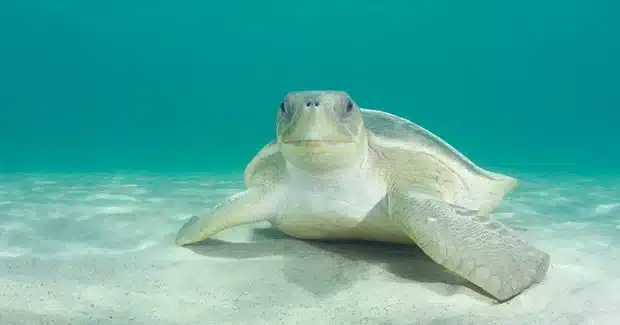
Why this matters: Costa Rica’s is home to 5 of the world’s 7 sea turtle species making it have an integral and critical importance role for global sea turtle conservation. Protecting Costa Rica’s beaches and waters helps ensure the survival of the majority of sea turtle species on Earth.
Sea Turtle Nesting Seasons in Costa Rica: When to Visit
Want to plane a trip to Blue Osa around sea turtle activity? Here’s what to expect:
Pacific Coast (Osa Peninsula)
Olive Ridley: Year-round nesting, peak July-December
- Individual nesting occurs throughout the year
- Mass arribadas at Ostional (2 hours north) primarily August-December
- Best viewing: September-November
Leatherback: October-March
- Peak season: November-January
- Occasional nesting on Osa beaches
- Most reliable viewing at Playa Grande
Hawksbill: April-November (less common on Pacific)
- Sporadic nesting
- More common in Caribbean waters
Caribbean Coast
Green Turtle: July-October (peak)
- Best viewing at Tortuguero
- Thousands of nests laid annually
Leatherback: March-July
- Caribbean population more stable than Pacific
- Tortuguero is a key nesting site
Hawksbill: April-November
- More common on Caribbean reefs
- Solitary nesters
Blue Osa Guest Opportunities
While we can’t guarantee sea turtle sightings (they are wild animals, after all), guests staying during nesting season (especially July-December for Olive Ridleys) may:
- See turtle tracks on nearby beaches during morning walks
- Learn about local conservation efforts
- Participate in beach cleanups that protect nesting habitat
- Encounter turtles while snorkeling or paddleboarding in ocean waters
Important Note: Never disturb nesting turtles or hatchlings. Maintain distance, avoid flash photography, and follow all local wildlife protection guidelines.
How Blue Osa Supports Sea Turtle Conservation

At Blue Osa Yoga Retreat & Spa, we believe luxury and sustainability can coexist. Our commitment to protecting the Osa Peninsula’s incredible biodiversity, including endangered sea turtles, is woven into every aspect of our operation, knowing that our choices matter and we are dedicated to the sustainability of not only our small piece of the world, but in making a global impact with our practices.
Our Conservation Practices:
Solar-Powered Operations
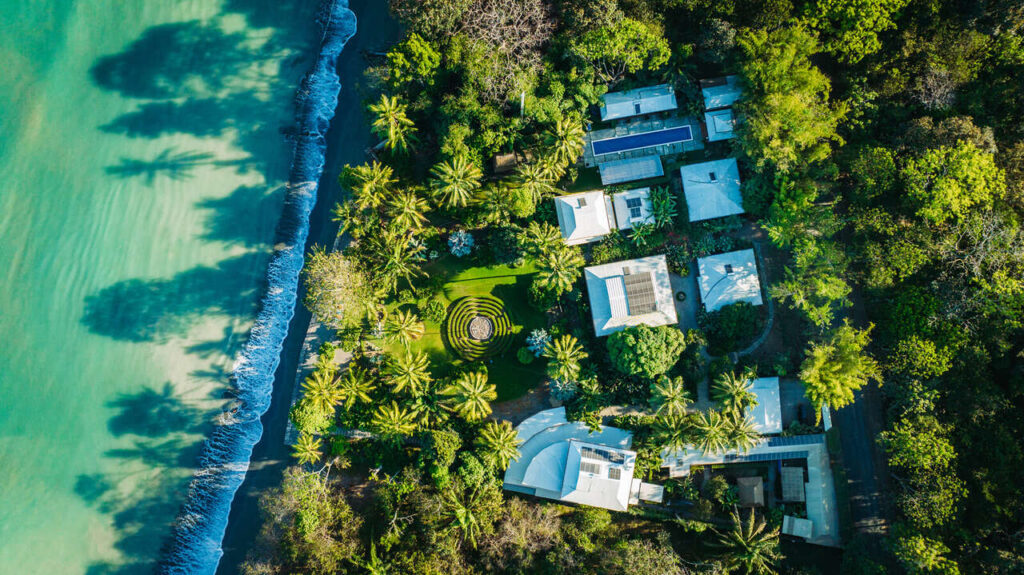
Our retreat runs primarily on solar energy, on our own septic system, utilizing rain water collection which dramatically reduces our carbon footprint and contribution to climate change, one of the major threats facing sea turtles globally. We built this retreat center with the intent to preserve the natural beauty of this wild landscape to sustain all life in and around this stunning biodiverse area of where jungle meets the pacific.
Minimal Plastic Use
We’ve eliminated single-use plastics wherever possible, providing:
- Refillable water stations instead of bottled water
- Glass and metal drinking glasses, and metal straws eliminating any plastic from the kitchen
- Biodegradable alternatives when disposables are necessary
- Eco-friendly cleaning practices and supplies as well as laundering soap.
Every plastic bottle we prevent from entering the ocean could save a sea turtle’s life.
Organic Farm-to-Table Cuisine
Our on-site organic garden produces much of the food served to guests, reducing:
- Transportation emissions
- Pesticide runoff into ocean ecosystems
- Packaging waste
Healthy oceans start with healthy land practices.

Responsible Lighting
We minimize light pollution that can disorient sea turtle hatchlings by:
- Using warm-toned, directional lighting
- Keeping beachfront areas naturally dark during nesting season
- Educating guests about the importance of dark beaches for nesting turtles
Supporting Local Conservation
Blue Osa partners with and supports local organizations including Osa Conservation – Working directly on the Osa Peninsula to:
- Monitor nesting beaches
- Relocate vulnerable nests to protected hatcheries
- Tag nesting females for research
- Release hatchlings safely to maximize survival
- Conduct marine research and education programs
Guest Education & Awareness
During your stay at Blue Osa, you’ll learn about:
- Local wildlife and ecosystems
- Conservation challenges facing the Osa Peninsula
- How your choices (even at home) impact ocean health
- Opportunities to support conservation through donations or volunteer work
Sustainable Tourism Model
By choosing Blue Osa, you’re supporting a model of tourism that:
- Provides economic alternatives to environmentally destructive practices
- Employs local community members
- Reinvests in environmental protection
- Proves that conservation and prosperity can go hand-in-hand
What You Can Do to Help Protect Sea Turtles
Whether you’re visiting Costa Rica or supporting from afar, here are meaningful actions you can take:
During Your Visit:
- Choose eco-friendly accommodations like Blue Osa that prioritize conservation
- Never touch or disturb nesting turtles or hatchlings – observe from a distance
- Avoid flash photography near nesting turtles (it can disorient them)
- Participate in beach cleanups to remove debris that threatens marine life
- Use reef-safe sunscreen that doesn’t harm coral ecosystems
- Don’t purchase tortoiseshell products (real or imitation)
- Report illegal activities like egg poaching to authorities
- Support local conservation organizations through donations or volunteering
- Fill in holes dug in sand – they can trap hatchlings trying to reach the ocean
At Home:
- Reduce plastic consumption – refuse single-use plastics whenever possible
- Choose sustainable seafood from fisheries that use turtle-safe practices
- Dispose of trash properly – never litter, especially near waterways
- Release balloons responsibly – better yet, don’t use them (they often end up in oceans)
- Support policies that protect marine environments and combat climate change
- Educate others about sea turtle conservation
- Choose coral-safe products to protect reef ecosystems
- Offset your carbon footprint to address climate change impacts
Spread Awareness:
Share what you learn about sea turtles with friends, family, and social media followers. The more people understand these ancient creatures and the threats they face, the more support conservation efforts will receive.
Experience Costa Rica’s Sea Turtles Responsibly at Blue Osa
When you choose Blue Osa for your yoga retreat, spa vacation, or teacher training, you’re not just investing in your own transformation, you’re supporting a sustainable model of tourism that actively protects endangered species and preserves one of Earth’s most biodiverse ecosystems.

The Osa Peninsula is home to 2.5% of the planet’s biodiversity, including five species of endangered sea turtles. Every mindful guest who visits with respect and awareness helps ensure these ancient mariners continue nesting on our beaches for generations to come.
Ready to Experience the Magic of the Osa Peninsula?
Discover what it means to truly disconnect, reconnect, and contribute to something bigger than yourself. At Blue Osa, your wellness journey supports the wellness of our planet.
Explore Our Yoga Retreats & Packages
Teachers from all over the world have been leading yoga and wellness retreats for more than a decade. But you don’t need to come with a teacher, there are opportunities to join many of privately lead yoga retreats when there is still space available, or you can travel independently of a retreat to immerse yourself in a daily yoga class, organic cuisine, spa treatments, and the pristine nature of Osa Peninsula. all while supporting conservation.
Learn About Our Sustainability Practices
See how we’re walking the talk when it comes to environmental stewardship. With a certified Naturalist on site, all of your queries are expertly addressed. You can see for yourself through either a morning walk straight from the front gate of the property, or a short hike through the jungle to a waterfall just a short drive up the road just how divine this biodiverse area of the world is well preserved and maintained for sustainability of the land and its people.
Discover Osa Peninsula Wildlife & Adventures
If the nature walk and local hike aren’t enough to immerse yourself in the wildlife native to the Osa Peninsula there are many eco-tours that offer adventures deeper into the sea or the jungle. A dolphin tour with snorkeling where often sea turtles can be seen, local surf companies that offer lessons or board rentals including stand-up-paddle-boards, hike through Corcovado National Park, sloth tours, zip-lining through the rainforest, kayaking through the mangroves, and more all to encounter the incredible biodiversity the this southern pacific region of Costa Rica.
Book Your Transformative Costa Rica Experience
Limited spaces available, reserve your spot in paradise before these incredible immersive retreats sell out.
Have questions about sea turtle viewing or our conservation efforts?
Contact our team at [email protected] we’re here to help you plan the perfect eco-conscious getaway to nourish your soul and entice your adventurous spirit all while preserving this beautiful Costa Rican paradise.
Share This Guide
Know someone planning a Costa Rica trip? Share this guide and help spread awareness about sea turtle conservation. With all the trouble around the globe these days, it can feel overwhelming on how to be part of the change for the better, we thing how can i make a difference?
Through our actions and choices is one powerful way that any individual can help the cause. How we spend our money, what companies we choose to support, and making conscious choices for supporting those that share our values, and also ethics with eco-conscious and sustainable practices, makes a huge impact on not just our lives, but the loves all those around the world, especially those in danger of disappearing from existence.
Together, we can ensure these magnificent creatures survive and thrive.
The ocean’s guardians need ours. Let’s answer the call.
Sources & Further Reading
- International Union for Conservation of Nature (IUCN) Red List
- Sea Turtle Conservancy
- Osa Conservation
- National Oceanic and Atmospheric Administration (NOAA)
- World Wildlife Fund (WWF)
- Costa Rica’s Ministry of Environment and Energy (MINAE)
About The Author, Yogi Aaron

Yogi Aaron is the founder and creator of Applied Yoga Anatomy + Muscle Activation™ (AYAMA), a revolutionary methodology that challenges conventional approaches to yoga. Using a science-backed approach, he prioritizes muscle activation over traditional stretching.
With over three decades of dedicated study, mentorship, and hands-on experience, he has established himself as a leading expert in yoga therapy, alignment, and pain-free movement.
As owner and operator of Blue Osa Yoga Retreat + Spa in Costa Rica, Yogi Aaron leads transformative programs that combine his expertise in yoga instruction, retreat facilitation, and wellness business operations. His work spans both in-person immersive experiences and digital education through The Yogi Club online platform and the AYAMA™ Certification Program.
Yogi Aaron’s teaching methodology represents a paradigm shift in modern yoga practice. AYAMA focuses on activating and engaging muscles to enhance range of motion, build strength, improve stability, and optimize alignment—while reducing pain and injury risk. This evidence-based approach has positioned him as a thought leader challenging the status quo in the yoga community.
His mission extends beyond the mat: to liberate individuals from chronic pain and guide them toward discovering yoga’s authentic purpose through intelligent, body-informed practice.
Learn more about training opportunities with Yogi Aaron at Blue Osa Yoga Retreat + Spa.
Check out these other popular posts on sea turtles!


Tags: Costa Rica, Osa Peninsula, inspiration
Book/Inquire Now
Got pain? This will help you!

YOU DESERVE TO LIVE PAIN-FREE...
Receive 7 short, simple, and effective practices to alleviate knee, hip, low back, neck, shoulder pain, and more!
All you need is 5 minutes per lesson and it's FREE!
This revolutionary approach to yoga is new, and no one else is teaching this! Since I created Applied Yoga Anatomy + Muscle Activation™ and started teaching it consistently, I've witnessed students heal long-standing injuries, access yoga postures they never thought possible, and tell me over and over again how their body just feels better.
I hope you'll join me on this journey!
~Yogi Aaron

Is Yoga Teacher Training Right For Me?
We Created This FREE 5 Part Series So You Can Get All The Information To Make The Right Choice.
In this series, you will learn:
-
- Am I a candidate for yoga teacher training??
-
- What will I learn in a YTT?
-
- Do I need to have a perfect downward dog to attend YTT?
14-Day 200-Hour Yoga Teacher Training in Costa Rica

If you are looking for a 14-day 200 hour Yoga Teacher Training Costa Rica Immersion, you have landed in the right place. Join the next one!
300-Hour, 28-Day Yoga Teacher Training

Do You Feel Called To Something Greater?
This 300-Hour Yoga Teacher Training immersion training at Blue Osa will immerse you in yoga for one month.
You will have the specific transformational skills and yogic practices you need in order to connect with your higher purpose.
And more! You will be able to offer these transformative skills to others!
