

Unlock Your True Potential: The Journey of Knowing Yourself Through Yoga
The ultimate purpose of life is Self-realization, truly knowing yourself—a truth echoed across cultures and philosophies. The ancient Greek maxim “Know Thyself,” inscribed on the temple of Delphi, aligns with the wisdom of the East, emphasizing the importance of inner discovery. Yet, modern education often overlooks this essential pursuit. True knowledge isn’t found externally; it already resides within you—you simply need to learn how to access and apply it.
At Blue Osa’s immersive two-week yoga teacher training, self-discovery isn’t just a focus—it’s the destination. Through deep yogic practices, mind training, and fearless self-exploration, we provide the tools to guide your path toward inner freedom. But ultimately, the journey is yours to walk. Are you ready to embrace transformation?
In the journey of self-discovery, one fundamental truth stands out—the soul is already perfect. It requires no change or improvement. Meditation doesn’t transform the spirit; rather, it refines the mind. As the ancient Upanishads teach:
“The mind is the instrument that can become either a means of liberation or a means of bondage.”
To truly know yourself, you must first understand your mind—a task easier said than done. Unlike external subjects of study, the mind has no physical tool for observation. Instead, self-inquiry requires training one aspect of the mind to observe and understand its entirety. Through dedicated yoga and meditation practices, you can develop this awareness, gaining mastery over your thoughts and unlocking the path to inner freedom.

The Path to Self-Discovery: Knowing Yourself Before Knowing God
The first true step in personal growth isn’t seeking to know God—it’s understanding yourself. This journey is an inward exploration, helping you recognize your habits, refine your actions, and cultivate a fulfilling life. To truly know yourself, self-study must happen on three levels: action, speech, and mind.
While the wisdom of great sages can offer inspiration, real transformation comes from self-examination—observing your thoughts, emotions, and behaviors. Intellectual knowledge alone cannot dissolve ignorance; only through direct experience can true understanding emerge. When you deeply study your internal world, the knowledge of the Self begins to unfold.
Your ultimate purpose isn’t to “attain” God—God is already present everywhere. What remains unknown is yourself. The key to spiritual realization is self-awareness; when you truly know yourself, you naturally come to understand God. Faith and religious practice have their place, but self-knowledge is the foundation for deeper spiritual awakening.
You are not meant to “become” God. If that were possible, you might even regret it—because no one would understand you. Instead, set a single goal: to know yourself. Without self-awareness, the search for God is futile. The good news? You already possess everything you need for self-discovery. The answer isn’t outside of you—it’s within. The moment you see your true essence, you fulfill your highest purpose as a human being.

Understanding the External World and the Self Within
The external world is like a spinning wheel, constantly in motion. Its spokes represent the various faculties of the mind, while the hub at the center symbolizes Reality—your true essence. To uncover the deeper cause behind your thoughts, actions, and emotions, you must first understand the nature of the mind that drives them.
There are three key aspects of the Self to recognize:
- That which moves – the physical self, engaged in action.
- That through which movement happens – the subtle self, influencing thoughts and behavior.
- That which is the cause of movement – the deepest Self, the source of all existence.
To fully know yourself, you must explore all three levels of your being. However, the mind, conditioned by time, space, and causation, cannot comprehend the pure consciousness within. True self-realization comes from distinguishing between the ego-driven self and the real Self—the unchanging source of awareness.
Just as you cannot understand the hub of a wheel without first examining the spokes, you must first observe your inner states to grasp the true nature of your consciousness. The four functions of the mind serve as spokes, spinning around the Center of Consciousness, the source of all power. The external world doesn’t create movement—it only triggers responses within the mind.
To navigate life wisely, learn to observe your own mind. Before taking any action, consult your buddhi (higher intellect) to discern what is right or wrong. Self-awareness is the first step to mastering your thoughts, emotions, and ultimately, your true Self.
Light Your Own Lamp
The truth is simple: no one outside of you can grant you salvation. You must not rely on others for enlightenment—it is a journey you must take for yourself. You alone must light your own lamp. The key to spiritual awakening begins with knowing yourself. Stay committed to this goal above all else—let nothing deter you from the path of self-discovery.
When you understand how your mind functions, you create inner harmony; without this coordination, inner turmoil arises, leading to external conflict. In fact, all struggles in life stem from unresolved inner conflicts. The essential question, then, is: How can we free ourselves from both internal and external discord?

As you walk the inner path, support will come from the center of truth itself. The quest for truth is always rewarding because at our core, we are beings of truth, immortality, and eternity. However, before you can fully grasp this reality, you must analyze yourself. It is your own mind and personality that stand in the way of experiencing the pure consciousness within.
With time and practice, you will naturally progress to higher wisdom. True knowledge doesn’t come from external sources—it already exists within you. The outside world only provides facts, but the deepest understanding comes from within your own being.
Commit to Knowing Yourself
This is a system of commitment, not commandment. You are committing to yourself, to your path, and to the goal that you will know yourself. This is your commit¬ment; it is not a commandment from outside you, that you must know yourself. If you don’t want to know yourself or don’t care to know yourself, then no one can force you. But as you grow you will come to a point where you will want to know your deeper Self, and then you become committed to the idea that you will know yourself in this lifetime. You want to know yourself on all levels.
Learn to know yourself; you have sufficient time to accomplish that. Don’t use the excuse that you don’t have enough time. You may say you have not attained anything. Are you sure that you have been doing meditation? Did you sit and sleep or dream or think? Maybe you have been thinking about many things in the name of meditation. Maybe you have sat for years in meditation but did not really meditate, and then have complained that nothing has happened to you. Do not give your mind space to wander when you meditate, but go step by step in the process.
Examine yourself sincerely and ask yourself if you want to meditate, explore, know yourself, and choose your habits. Presently, you are a stranger to yourself. How can you live in the world and tolerate such agony? Many traditions say to the student, “Know thyself,” as the first step.
Three Powerful Methods to Discover Yourself
Here are three fundamental paths to self-discovery:
- Prayer – Connecting with the divine through devotion and surrender.
- Meditation – Quieting the mind to expand awareness and inner stillness.
- Contemplation – Deep reflection to gain clarity and insight into your true nature.
Through meditation, you experience a profound expansion in your waking state. As you turn inward, you come face to face with your thoughts—many of which have been stored in your unconscious mind. When you truly relax your consciousness, these hidden thought patterns begin to surface, allowing you to observe, understand, and ultimately liberate yourself from their influence.
By practicing prayer, meditation, and contemplation, you embark on a transformative journey toward self-awareness, inner peace, and enlightenment.
The Waking State
The waking state is actually only a small part of the mind. The waking state can be expanded. It can become a means for us. Any state of mind—waking, dreaming, or sleeping—can be used as a means to attain the goal. The waking state can be expanded, but even if you do not want to expand it, then you should still learn how to make your mind one-pointed through meditation on a focal point. This requires only a small part of the totality of the mind to bring your waking state into balance. However, the yogis say to expand your consciousness during the waking state. When you expand yourself, what will happen? Through expansion of the waking state you can attain turiya, the fourth state, beyond waking, dreaming, and sleeping.
If you want to be a student of the interior world, of the path of light, if you want to do inner research, you will have to understand this point: you must have a purified, free, and one-pointed mind to know and examine the interior Self. For conducting this internal research, one should be truthful, sincere, and free from prejudices. Research should not be shaded by social and cultural norms or religious fanaticism. It requires a totally independent and unbiased mind. In doing research within, we have to forget our prejudices from the past completely, and we have to remain true to ourselves; otherwise our research will be incomplete.
Train The Mind
Also, we must start training the mind to be inward. We must train the mind to go inside our personal world so that we can understand those needs, motivations, desires, those strong powers within us that move us to do something in the external world. We want to know their nature. We want to know why we act and feel the way we do. We ourselves have created our miseries, and if we want to understand this truthfully, we will have to turn the mind inward. The mind must be trained to go inward and examine itself because it is not accustomed to practicing a technique of inwardness.
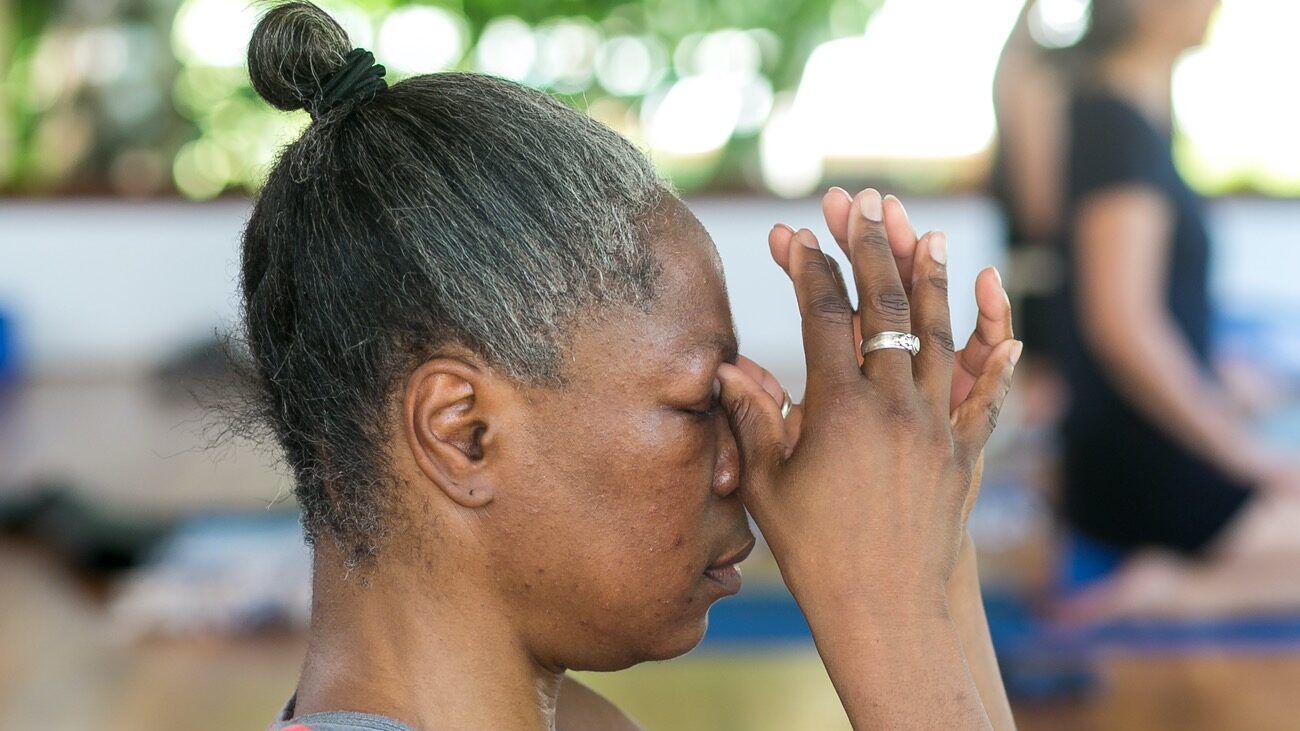
The Only Thing You Need To Meditate
One can discover a great deal about our inner life by studying body language. So when we start turning within, we do not have to ignore the external world, nor do we have to make any radical change in our external life. We simply have to be ourselves and create a strong desire to know ourselves from within. That desire is the first requirement. If one doesn’t understand the importance of spirituality and meditation, then they should not waste their time and energy with it. If one is not convinced that meditation is a technique that is helpful, if one is not prepared, then one should not apply that technique. So first, to research the inner world, one needs a burning desire to know their inner potential and states.
Become a Scientist of Yourself
Yogis say that you can analyze the whole universe and know everything about it by understanding yourself and your mind. If you want to know about the universe you will have to know the miniature universe that is yourself. You are becoming a scientist, looking at the universe, yourself, your relationship with the universe, and all the mysteries of the universe under a microscope that is your focused mind. And so, you must learn how to focus your mind so you can become a brilliant Scientist.
On this path, you yourself are a laboratory for research. Your internal states contain many instruments for research. You have to learn to use those instruments to understand the Consciousness that already flows from your Center. Nothing external is going to help you in your quest.
Understanding the Capacities of the Mind
Meditation helps you to fully know and understand all the capacities of the mind:
- memory
- concentration
- emotion
- reasoning
- intuition
Those who meditate begin to understand how to coordinate, balance, and enhance all these capabilities, using them to their fullest potential. Then they go beyond the usual states of mind and consciousness.
Direct not Control Your Mind
Many people think the mind can be controlled. That is not a useful idea. Like the monkey, the mind can never actually be controlled; it can only be directed. If you want to try to control your mind, you will regret the results. Forget the word “control” and learn to direct your mind and energy on all levels.
There have been many scholarly commentaries on the Yoga Sutras but all the commentaries miss something very practical. Such commentaries can only satisfy the intellect, but do not actually help you beyond that: “yogash chitta vritti nirodah”—yoga is the control of the “modifications” of the mind. Nirodah means control; there is no other English word for it. Control does not mean suppression, but channeling or regulating.
Even if you know exactly what the mind is, you still don’t have control over your mind. Mere knowledge will not give you control over your mind. Control means knowing the way in which to direct your mind. Control does not mean preventing the mind from functioning, but being aware of the mind and having a choice about the way it is directed.
Train Your Ego
That which separates you from your real Self—the whole and real—is your ego. You may wonder how you can cut down that ego or may try to tear it down or forget it, but that is not possible. Instead, you have to learn to polish or train your ego. When the ego becomes aware of reality, it is trained, and then the ego is useful. If the ego does not remain aware of reality, then the ego becomes unhelpful; it is then harmful or an obstacle.
As long as there are conflicts in your mind, you have not trained your ego. Such conflict creates misery and then you experience the misery. You can resolve your conflicts yourself. No one else is going to resolve them for you.
The Purpose of Fear
The purpose of fear is to lead you to question and understand why you have that fear in the first place. As you examine your fears, you will learn that all your fears are somehow false and based on misunderstandings. There is no truth or reality to your fears. Many fears remain buried within you, and you never really examine them, so you remain at their mercy. You may be afraid to examine your fears, but it is by examining each fear, one by one, by encountering them that you can be free of their control. This process is very important. To fear and try to escape from examining your thought process during this experience is a missed opportunity for the student.
All your fears should be examined so that you can remain fearless as long as you live. There is no charm in a life full of fear. You should not accept this fearful sort of living. Fearless living is possible when you have understood the reason behind your actions in the external world and when you have learned about your internal states.
Burn Your Beliefs
All your actions leave some impression in your unconscious mind, and those beliefs then control your life. The unconscious mind needs to be purified. You can do that in meditation if you ask all the beliefs in your mind to come forward so that you can examine and burn them.
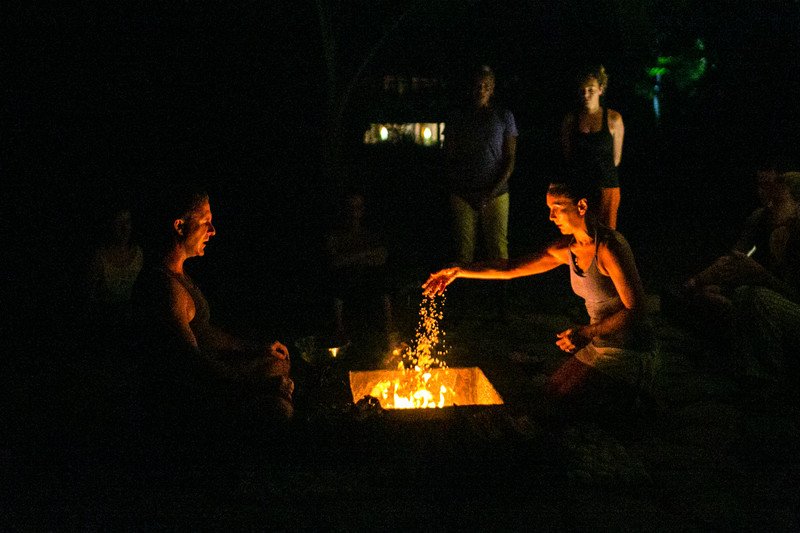
How to Burn Your Beliefs
- Sit quietly in a comfortable position either sitting or lying down.
- Use a relaxation tool such as breathing or listening to binaural beats to get into a meditative state
- Consciously bring forward one or more beliefs (an easy way to do this is to think about something that is currently triggering you and then look at the belief around this trigger).
- Tell your mind (either out loud or internally) that you are ready to face them.
- Then choose to no longer allow these fears to control your inner and outer worlds by burning them.
- Create a burning practice or ceremony:
- Imagine the fear in your mind through an experience, draw out the emotion, and then imagine it burning seeing yourself as free from this fear.
- Use a word or phrase to describe the fear and imagine that burning.
- Light a candle or start a fire. Write down an experience, word or phrase that describes the fear you are ready to release on a piece of paper and safely burn the paper in the fire.
The goal is here is to expand the conscious aspect of the mind to train unconscious thoughts, patterns, behaviors or actions that are running your life.
How to Recieve Knowledge
If you want to understand intuition and the path to inner wisdom, you must first understand the avenues through which you receive knowledge. This includes the processes of perception and conception, as well as instinct and intuition. Deep within you, within the recesses of your being, lies the library of intuition, but you may not understand how to reach it and access its wealth. We are all rich, deep within. Great people receive a small fountain from that knowledge, and that’s why they become great. The knowledge of the mind (traditional learning), the senses, and instinctual knowledge do not help in this quest. Those kinds of knowledge are important but to access the deepest level of expertise that can not be learned in a book is through your intuition.
Intuition does not require any evidence at all; it does not need to ask if something is right. When you have intuition, you don’t have to ask about it, because you know it’s right. That knowledge helps you see things and know things as they are, and then you no longer see things incompletely and partially.
Training Your The Inner World Affects Your External World
All things happen in the inner world long before they happen outside. If you concentrate and watch silently, you can know what is going to happen to you in the future, but usually, your mind remains busy in the material world. Everything happens in the subtle world long before it takes place externally. If you know how to, you can take precautions.
When your mind becomes aware that the Spirit is everywhere, then the mind surrenders. The mind learns that although it thought it knew all things, Spirit is everywhere and the mind is nothing. The mind learns that all the power it has is due only to the Spirit, the Source of life, the Source of Consciousness. Then the mind surrenders. That is the meaning of true surrender; such self-surrender is the highest of all yoga. Your mind surrenders when you reach such a height that the mind doesn’t function any longer. Mind is still there, but as it becomes aware of Reality, its ego vanishes. When you fully understand the functions of the mind, you will know how to work with yourself.
Inspect Your Thinking Process
We need to inspect our thinking process. We must recall that what is going on in our minds is produced by us. We should inspect it and always recognize it as our own product. Each person’s thinking is their own creation. We begin by learning to inspect and analyze our own minds. First we find that we do indeed have minds because we think. We come to realize that we are not the same as our thinking process and our minds. Through analysis, through introspection, we learn to discriminate between the thinker and the thinking process. Liberation comes from self-observation.
One can easily understand that the center of consciousness, Atman, is overlaid by many coverings. The aspirant should apply the exact scientific methods taught by the ancient scriptures and teachers to attain an understanding of each covering. These methods enable the student to comprehend both the mere self—body, breath, senses, and all the dimensions of mind—and to help him go to the source of consciousness. Before one reaches the fountainhead of life and light from which consciousness flows spontaneously, he has to understand the various realities that exist. He can then conceive of the idea that human beings have many subtle bodies within the physical body.

Sadhana
In the path of sadhana (a Sanskrit term used to refer to a daily spiritual practice), no effort is in vain; all sincere efforts bear their fruits in the unconscious mind according to the inevitable law of karma. Even a little sadhana practiced with sincere effort leaves deep imprints in the unconscious mind. Those impressions help and guide you whenever you veer off the path. The conscious part of the mind is but a small part of the whole. It is helpful in communicating with the external world but has very little use on the inward journey. If the conscious part of the mind is trained not to create further barriers, then sadhana is useful.
Yoga sadhana alone has explored all the unknown levels of life and is thus useful for knowing the levels of the unconscious and for training the totality of the mind. Sadhana alone is the way of knowing, understanding, and analyzing the internal states and one’s relationship to the external world. While treading the path of the inner world, the sadhaka (Sanskrit term which describes someone who follows a certain sadhana) comes in touch with those potentialities that guide them unconsciously, through dreams, and at other times consciously. Fearlessness thus increases, and self-reliance is strengthened. One is fully protected by the inner force that exists. No danger can ever befall the sincere sadhaka in their exploration of the inner realms. The sadhaka is completely protected if they are fully dedicated to the goal of Self-realization.
Attention is the first step on the ladder to develop one-pointedness of mind. One must pay wholehearted attention to all of the things they do from morning until evening. If one forms the habit of attending fully to whatever they are doing, the mind will become trained, and eventually, concentration will become effortless. Thousands of thoughts remain waiting to be entertained. The purpose of sadhana is to attend to those thoughts in a systematic manner so that they do not create unrest in the inner world.
You need to examine honestly what is in your mind. Be honest with yourself. Do not meditate if you are being hypocritical and are just sitting and punishing yourself. There should be only one desire, the desire for meditation, the desire to go deep inside. At first, you will fail to achieve it, but that does not matter; you should not give up.
How a Yoga Teacher Training Can Support You
If you have a strong desire to master the mind, consider taking a Yoga Teacher Training. In this focused container, you can immerse yourself in this work while being supported by a trained teacher as well as being surrounded by others who have the same desire as you do.
What is most important is that you constantly work with yourself in order to achieve peace within. And remember, withdrawing yourself from the world is not the purpose; the purpose is to live in the world without being of this world. That is true liberation and that is what you will learn at Blue Osa’s YTT.
Check Out These Other Popular Posts!

Tags: inspiration, yoga teacher training
Book/Inquire Now
Got pain? This will help you!

YOU DESERVE TO LIVE PAIN-FREE...
Receive 7 short, simple, and effective practices to alleviate knee, hip, low back, neck, shoulder pain, and more!
All you need is 5 minutes per lesson and it's FREE!
This revolutionary approach to yoga is new, and no one else is teaching this! Since I created Applied Yoga Anatomy + Muscle Activation™ and started teaching it consistently, I've witnessed students heal long-standing injuries, access yoga postures they never thought possible, and tell me over and over again how their body just feels better.
I hope you'll join me on this journey!
~Yogi Aaron
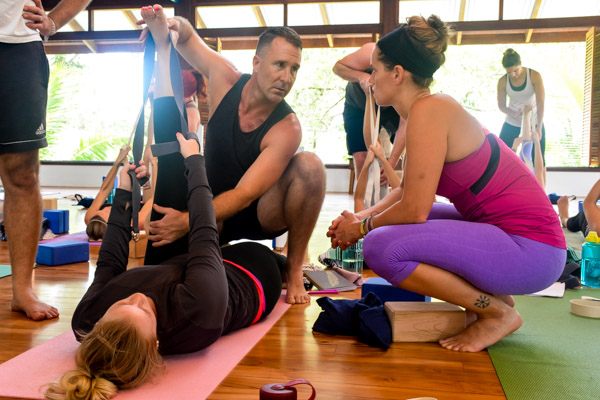
Is Yoga Teacher Training Right For Me?
We Created This FREE 5 Part Series So You Can Get All The Information To Make The Right Choice.
In this series, you will learn:
-
- Am I a candidate for yoga teacher training??
-
- What will I learn in a YTT?
-
- Do I need to have a perfect downward dog to attend YTT?
14-Day 200-Hour Yoga Teacher Training in Costa Rica
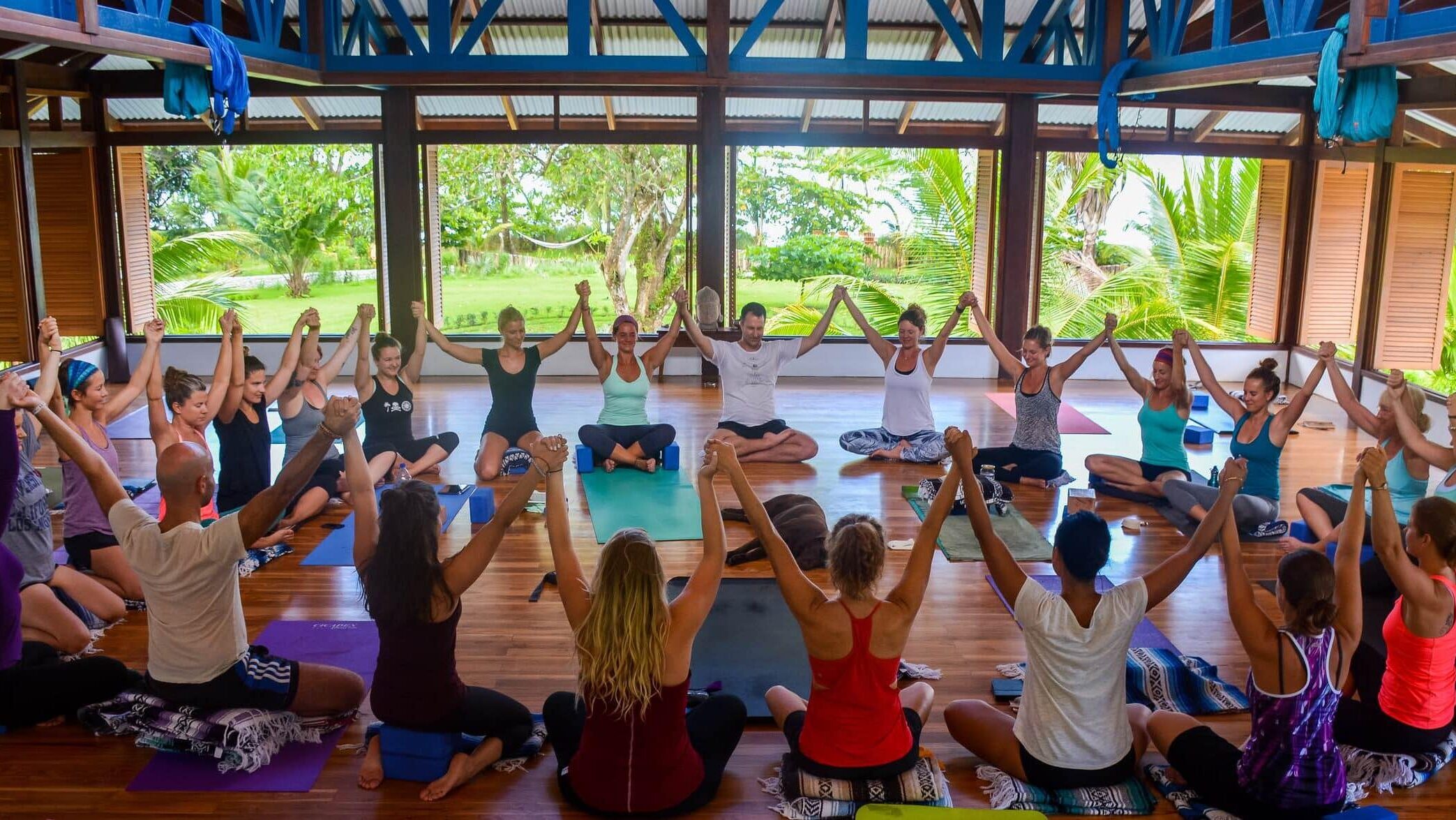
If you are looking for a 14-day 200 hour Yoga Teacher Training Costa Rica Immersion, you have landed in the right place. Join the next one!
300-Hour, 28-Day Yoga Teacher Training
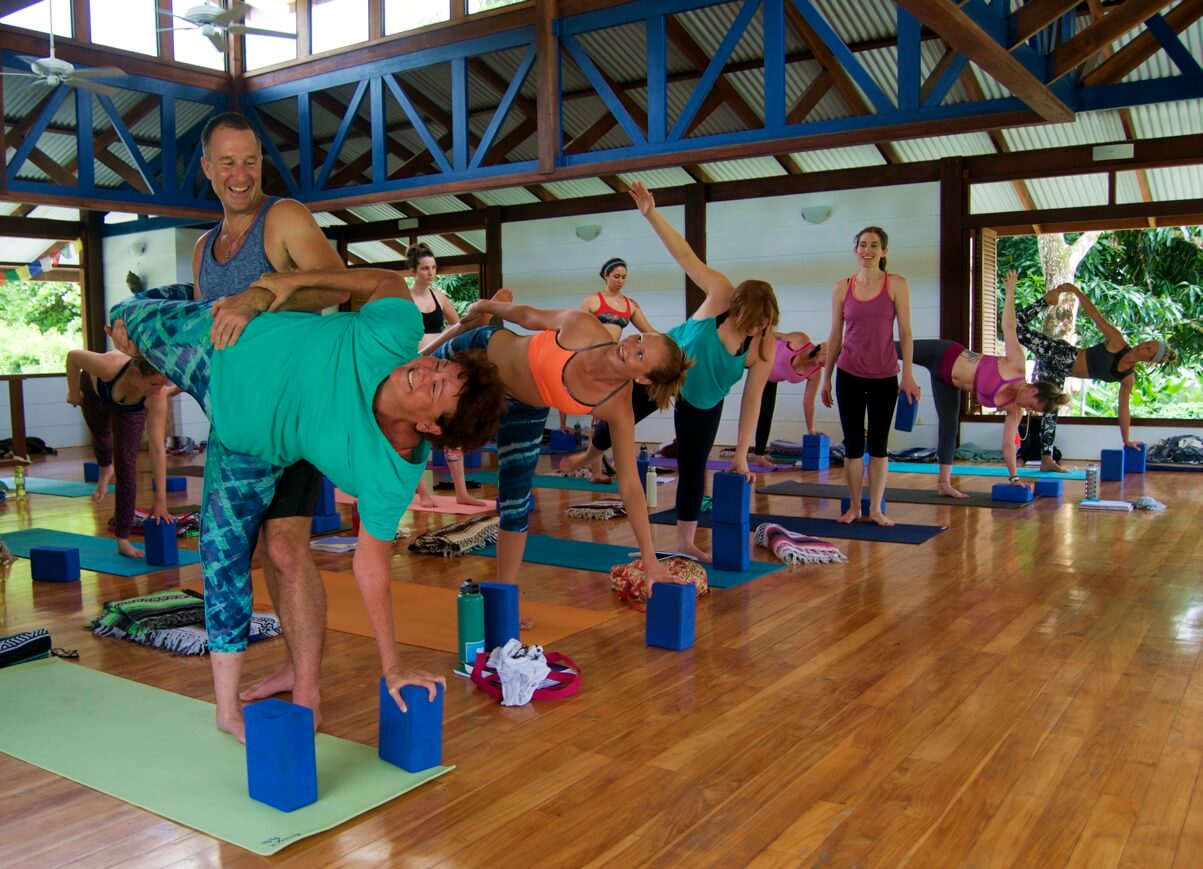
Do You Feel Called To Something Greater?
This 300-Hour Yoga Teacher Training immersion training at Blue Osa will immerse you in yoga for one month.
You will have the specific transformational skills and yogic practices you need in order to connect with your higher purpose.
And more! You will be able to offer these transformative skills to others!
