

Back spasms can be painful, frustrating, and sometimes debilitating. They are a common reason for lower back pain and can range from a minor annoyance to a recurring issue that affects daily life. If you’ve ever wondered what causes back spasms, you’re not alone. These sudden, involuntary muscle contractions can result from overexertion to underlying health conditions. The good news? In most cases, back spasms are temporary and treatable with the right care. Understanding what triggers them and how to prevent them, is the first step toward lasting relief.
Back spasms occur when muscles involuntarily contract, often in the lower back. Heavy lifting and sports are common causes, but they can also be triggered by simple movements. Hence, without proper diagnosis and treatment, back spasms have the potential to wreak havoc on a person’s daily life. I
f you suffer from back issues, knowing how to ease the pain as quickly as possible is crucial. However, it’s equally important to understand what causes back spasms and what you can do to prevent them from flaring up.
While most medical advice focuses on treating back spasms after they occur, the yogic approach asks a different question: Why is your body creating this spasm in the first place?
At Blue Osa Yoga Retreat & Spa, we’ve worked with thousands of students suffering from chronic back pain, and we’ve discovered something most doctors miss: back spasms are rarely just about your back. They’re often the result of poor movement patterns, misalignment in your foundation (your feet), and compensations your body has been making for years.
The good news? When you address the root cause through AYAMA yoga rather than just treating symptoms, back spasms stop happening altogether.
What Causes Back Spasms?
When you experience a back spasm, it’s worth figuring out what your body is trying to tell you. Whether it’s a specific activity that your body can’t tolerate or the result of an underlying condition, a spasm can give you a lot of information. Although there’s no single cause for back spasms, most occur for the following reasons:
- The most common cause of back spasms is muscle, tendon, or ligament strain. A spasm can occur after any type of strain or injury to the spine. Heavy lifting is a regular offender, but any activity that puts excessive strain on the lower back can lead to injury. Sports, like football and golf, can cause spasms because they require quick and repeated turns of the back.
- Back spasms can also be a response to an underlying issue. Arthritis or a ruptured spinal disc can put pressure on the spinal cord, resulting in back and leg pains. If your back spasm doesn’t improve within 1–2 weeks, you may have an underlying anatomical problem.
- Weak abdominal muscles, weak lower back muscles, and tight hamstrings can all make lower back spasms more likely.
The Hidden Culprit: How Your Feet Affect Your Back
Most people suffering from back spasms never consider looking at their feet. Yet according to yogic anatomy and biomechanics, your foundation, how your feet connect and relate to the ground, directly impacts your entire body through the kinetic chain, all the way up your spine.
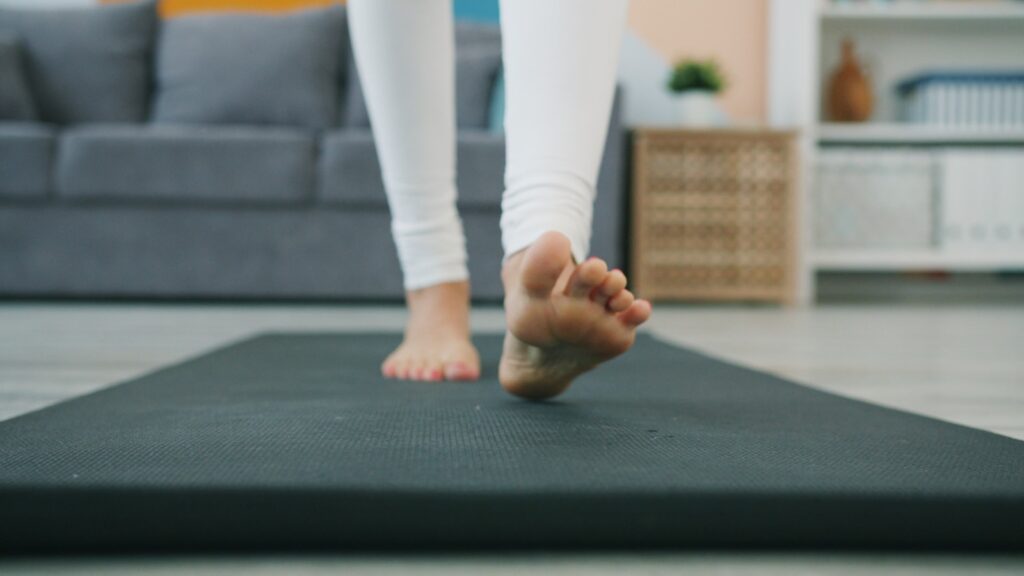
When you have weak foot arches, eversion/inversion at the ankles, or poor mobility through your feet, your body compensates by overworking other muscles. Your calves tighten. Your knees shift inward or hyperextend. Your pelvis tilts. And your lower back muscles desperately try to stabilize what should have been stable from the ground up.
This is why at Blue Osa, we emphasize grounding exercises and foot activation as the foundation of preventing back pain. When you learn to properly engage the three arches of your feet, creating what we call “metatarsal arch activation”, your pelvis naturally finds better alignment, your core engages more efficiently, and your lower back stops overworking.
Try this now: Stand barefoot and notice if you’re collapsing into the inner arches of your feet. Now, press firmly through the big toe mound, pinky toe mound, and inner heel (creating a triangle of support) and then lift up through the center of the arch. Feel how this simple shift changes the engagement in your legs, pelvis, and yes, even your lower back. This is the kind of foundational work that prevents spasms before they start, strengthening good posture.
Symptoms of Back Spasms
Typical symptoms of back spasms include tension in the lower back, sharp and intense pains, recurring lower back pain, and difficulty moving after bending down. People who suffer from back spasms often find that the pain intensifies after doing certain activities. Sitting down or standing for long periods can also be a trigger. Although people tend to experience back spasms specifically in the lower back, they can also affect other parts of the body. Some sufferers might develop pain in their legs, while others might notice hip pain.
Treatment for Back Spasms
If you suffer from a back spasm, relieving the pain is the first thing to focus on. Relaxing the muscles, reducing inflammation, and reducing stress on the body can all help to ease the pain.
Effective treatments for back spasms include:
Ice and Heat Therapy
Applying ice to the affected area can help reduce local inflammation, which in turn can help to ease the pain. While suffering from a back spasm, applying ice for up to twenty minutes, three to four times a day can be helpful. Make sure to wrap the ice in a towel before applying it to your skin, or use a suitable cold pack to avoid ice burn. Follow the CBAN rule for optimal benefit:
- C – cold, the stage where the ice pack feels cold
- B – burn, the sensations starts to feel like it’s burning
- A – ache, the sensation changes to an ache
- N – numb, the last stage when there is a void of sensation, the tissue is numb
*Once the area goes numb with the ice application, remove the ice/ice pack and stay in a relaxed and comfortable position for a few more minutes.
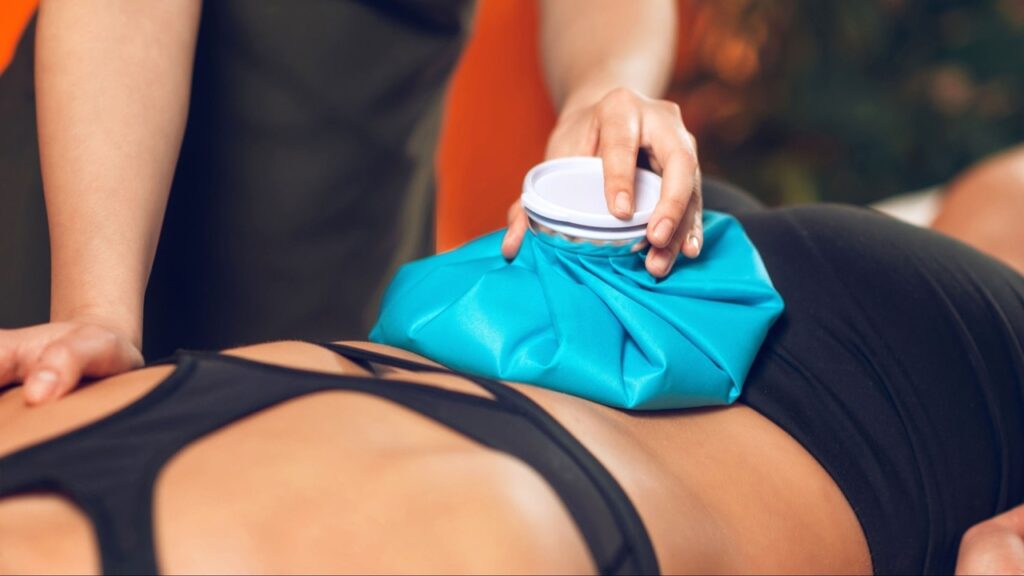
Alternating ice and heat, or contrast therapy, can also be an effective way to ease muscle tension. The goal is a “pumping” action, constricting then dilating vessels to flush fluids and reduce swelling/stiffness
- Start Cold: Apply ice pack (wrapped in a towel) for 1-2 minutes to constrict blood vessels and reduce inflammation.
- Apply Heat: Switch to a heating pad (wrapped) for 3-4 minutes to dilate vessels and increase blood flow.
- Repeat: Alternate cold and hot for 3-5 cycles, usually 15-30 minutes total.
- End Cold: Finish with a final cold application to keep inflammation down.
*A wet wash cloth rung out and heated in the microwave for a moist heat application can be very effective, make sure to have a dry towel layer between hot towel and skin and that the microwaved one isn’t too hot. Should only be microwaved for a few minutes depending on the watts of the microwave used. An anti-inflammatory essential oil diluted in a carrier oil can be placed on the affected area prior to the heat application to drive the essential oil deep into the soft tissue layers to add in healing benefits of this protocol to ease the pain of back spasms.
Massage
Massage can also help to reduce tension and stop the spasm. To massage the area effectively, work general to specific, and first perform long flowing strokes over the entire back, even the side that is not in pain. This effleurage technique warms up the area and downshifts the nervous system into a parasympathetic state, where no threat is perceived; the body and mind relax. This can take up to ten minutes, so take your time here.

Once relaxed, more specific and targeted techniques can be used just in the pain site, like compression for a few minutes broad with fist, then pointed with finger pad, then finger tip. Then rub the area with small movements called friction in three patterns: linear (with muscle fibers), cross-fiber (against/opposite muscle fibers), and circular (counterclockwise circles). A firm massage should be uncomfortable, but not painful.
Also, if you feel a pulse in the area, do not apply any pressure, this is true for bones, do not apply any pressure directly on bones.
Ease stress on the body
During a severe spasm, moving might be too painful. In this situation, it’s best to ease any stress on the body by getting into a more comfortable position and resting.
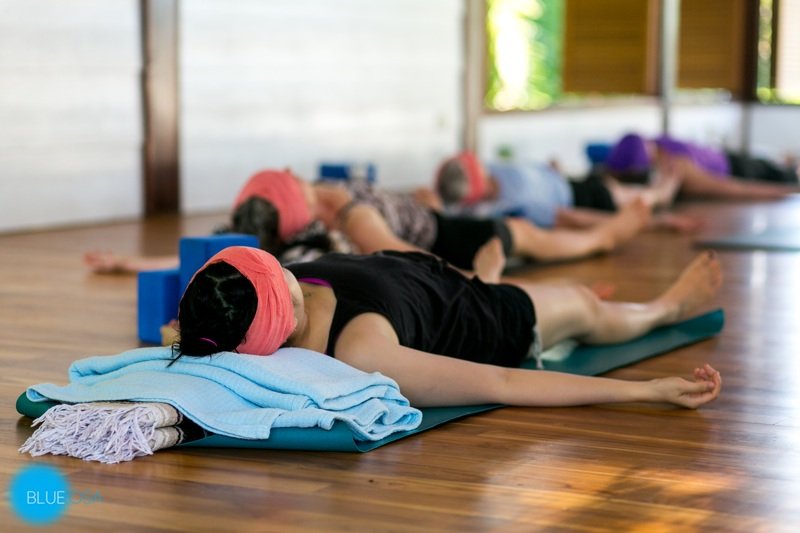
To do so, lie on your back on a firm surface and place a pillow under your knees, and maybe under the head. It is important to try and get the entire spine supported in the natural curvatures. Alternatively, you can lie on your side with a pillow between your knees, maintaining they stay hip width apart, as well as support for the head and neck.
Medication
Although medication is not recommended for the long-term treatment of back pain, it can be useful for temporary pain relief. Non-steroidal anti-inflammatory drugs (NSAIDs), such as ibuprofen and aspirin, can help to slow spasms and reduce pain. Meanwhile, doctors can prescribe muscle relaxants when people have chronic spasms. But they should only be used for 72 hours, and adverse side effects vary from every medication, and can be just as unpleasant.
Essential oils, CBD, and other natural plant-based products, as well as other home remedies, can be just as effective as over-the-counter medications without any of the nasty side effects.
Gentle Movement
Moving gently and for limited amounts of time is usually much better than lying in bed. Once the pain is bearable, try walking slowly around the house several times a day. As you build up tolerance and the pain eases, try to make your walks increasingly longer.

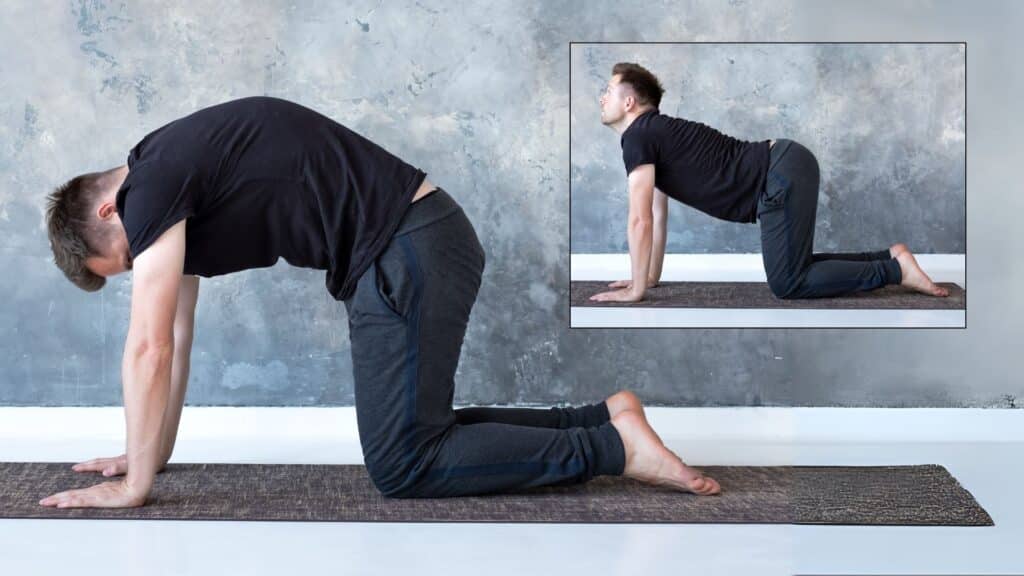
Walking encourages blood flow, which helps to speed up the healing process. In addition to walking, simple yoga poses can also help to reduce tension and stretch the lower back. Pelvic tilts and cat/cow movements are both wonderful poses for easing lower back pain.
The Blue Osa Method: AYAMA for Lasting Back Health
Generic yoga advice often suggests “strengthening your core” or “stretching tight muscles.” While these aren’t wrong, they miss the deeper issue: how you move matters more than what you do.
Blue Osa’s AYAMA™method of yoga, created by Yogi Aaron, Master Yoga Teacher and Muscle Specialist, stands for Applied Yoga Anatomy & Muscle Activation.
Unlike traditional yoga practices that emphasize stretching, AYAMA™ focuses on muscle activation and engagement. This innovative approach is grounded in scientific evidence, proving that muscle activation, not stretching, is the key to lasting strength, stability, and mobility.
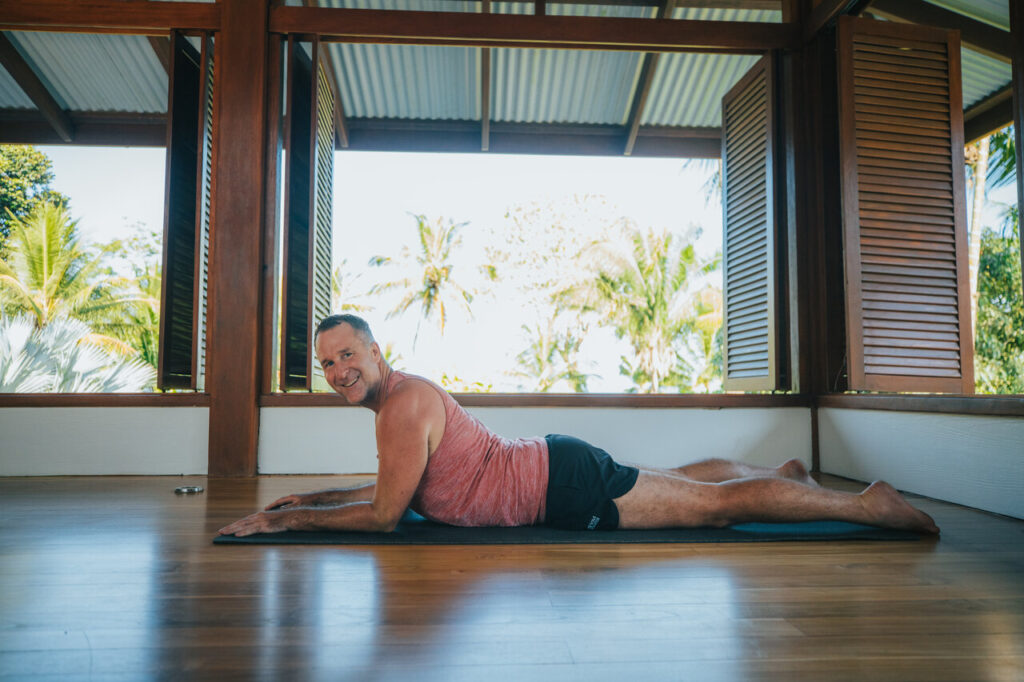
Your back doesn’t exist in isolation. True healing happens when you address the entire system: feet, pelvis, core, breath, and nervous system. This is why immersive experiences like Blue Osa retreats create lasting change; you’re not just taking a yoga class, you’re retraining your entire relationship with your body.
During our 200-hour and 300-hour yoga teacher training programs, we dive deep into the biomechanics of back health, teaching future instructors how to help their students prevent injuries rather than just manage pain.
Blue Osa’s Immersive Wellness Retreats: Radical Self Care
Sometimes, back spasms are so severe or chronic from too much time under the tension from holding a high-stress position at work, or living in a high-stress environment. Blue Osa’s luxury spa and wellness center offers immersive experiences that reshape our relationship with self and nourish all aspects of our health. From the rich bio-diverse natural setting, luxury accommodations, cleansing and detoxifying juices and smoothies, fresh farm-to-table food, to the therapeutic treatments specifically designed to address all your needs, including musculoskeletal pain, we have your physical and mental health in mind.

How to Prevent Back Spasms from Returning
According to the American Chiropractic Association, around 80 percent of the U.S. population will suffer from back pain at some point during their lives. Luckily, taking care of your back is the best way to reduce your risk of developing problems. In terms of long-term prevention, AYAMA yoga, massage, stress reduction, meditation, breathwork, acupuncture, Qi Gong, and Tai Chi are all effective ways to support your back health.
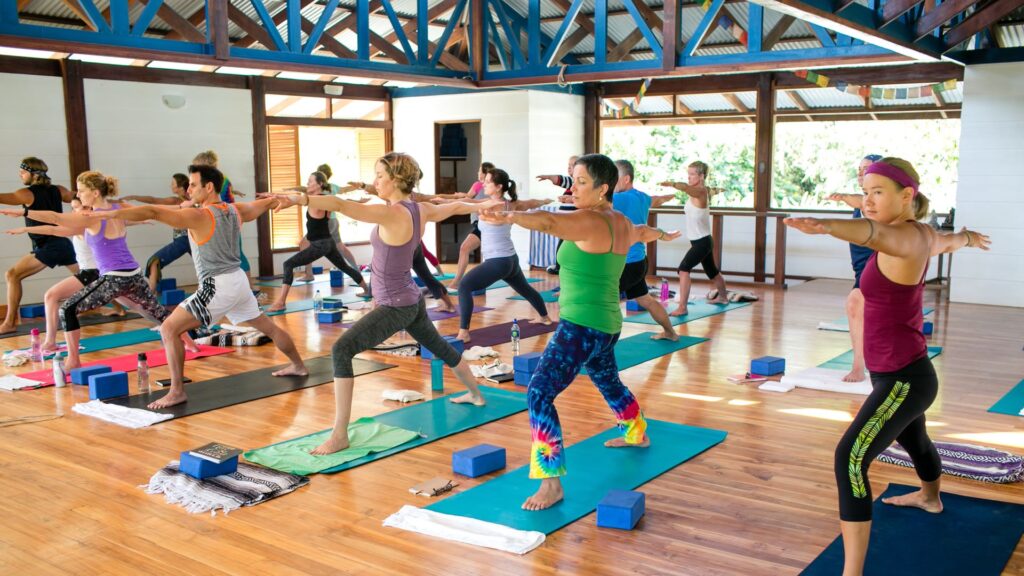
However, lifestyle changes, such as exercising regularly and avoiding extended periods of sitting, can also help significantly.
Your Back Is Speaking—Are You Listening?
Back spasms are your body’s way of saying “something needs to change.” Whether it’s how you stand, how you sit, how you move, or how much stress you’re carrying, a spasm is an urgent message that deserves attention.
While ice packs and ibuprofen provide temporary relief, lasting freedom from back pain requires addressing the root cause. Where the ancient wisdom of yoga meets modern biomechanics, Blue Osa’s unique approach can transform not just your back, but your entire relationship with your body, and your entire life.
Ready to heal your back for good?
Join a Blue Osa retreat and experience AYAMA yoga, therapeutic bodywork, cleansing organic food, and the healing power of an immersion in nature
Download our free guides: 3 different starter kits and start healing today.
About The Author, Yogi Aaron

Yogi Aaron is the founder and creator of Applied Yoga Anatomy + Muscle Activation™ (AYAMA), a revolutionary methodology that challenges conventional approaches to yoga. Using a science-backed approach, he prioritizes muscle activation over traditional stretching.
With over three decades of dedicated study, mentorship, and hands-on experience, he has established himself as a leading expert in yoga therapy, alignment, and pain-free movement.
As owner and operator of Blue Osa Yoga Retreat + Spa in Costa Rica, Yogi Aaron leads transformative programs that combine his expertise in yoga instruction, retreat facilitation, and wellness business operations. His work spans both in-person immersive experiences and digital education through The Yogi Club online platform and the AYAMA™ Certification Program.
Yogi Aaron’s teaching methodology represents a paradigm shift in modern yoga practice. AYAMA focuses on activating and engaging muscles to enhance range of motion, build strength, improve stability, and optimize alignment—while reducing pain and injury risk. This evidence-based approach has positioned him as a thought leader challenging the status quo in the yoga community.
His mission extends beyond the mat: to liberate individuals from chronic pain and guide them toward discovering yoga’s authentic purpose through intelligent, body-informed practice.
Learn more about training opportunities with Yogi Aaron at Blue Osa Yoga Retreat + Spa.
Read More about Applied Yoga Anatomy + Muscle Activation

Book/Inquire Now
Got pain? This will help you!

YOU DESERVE TO LIVE PAIN-FREE...
Receive 7 short, simple, and effective practices to alleviate knee, hip, low back, neck, shoulder pain, and more!
All you need is 5 minutes per lesson and it's FREE!
This revolutionary approach to yoga is new, and no one else is teaching this! Since I created Applied Yoga Anatomy + Muscle Activation™ and started teaching it consistently, I've witnessed students heal long-standing injuries, access yoga postures they never thought possible, and tell me over and over again how their body just feels better.
I hope you'll join me on this journey!
~Yogi Aaron
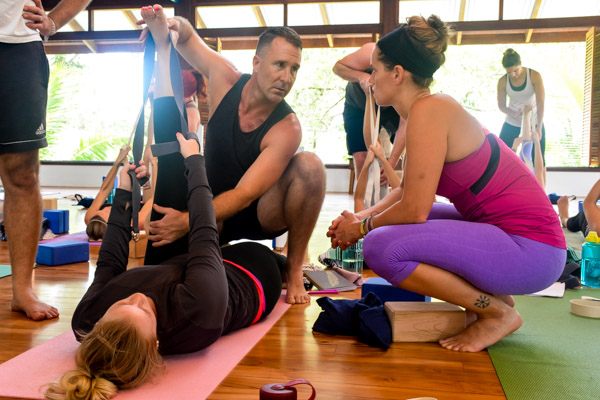
Is Yoga Teacher Training Right For Me?
We Created This FREE 5 Part Series So You Can Get All The Information To Make The Right Choice.
In this series, you will learn:
-
- Am I a candidate for yoga teacher training??
-
- What will I learn in a YTT?
-
- Do I need to have a perfect downward dog to attend YTT?
14-Day 200-Hour Yoga Teacher Training in Costa Rica
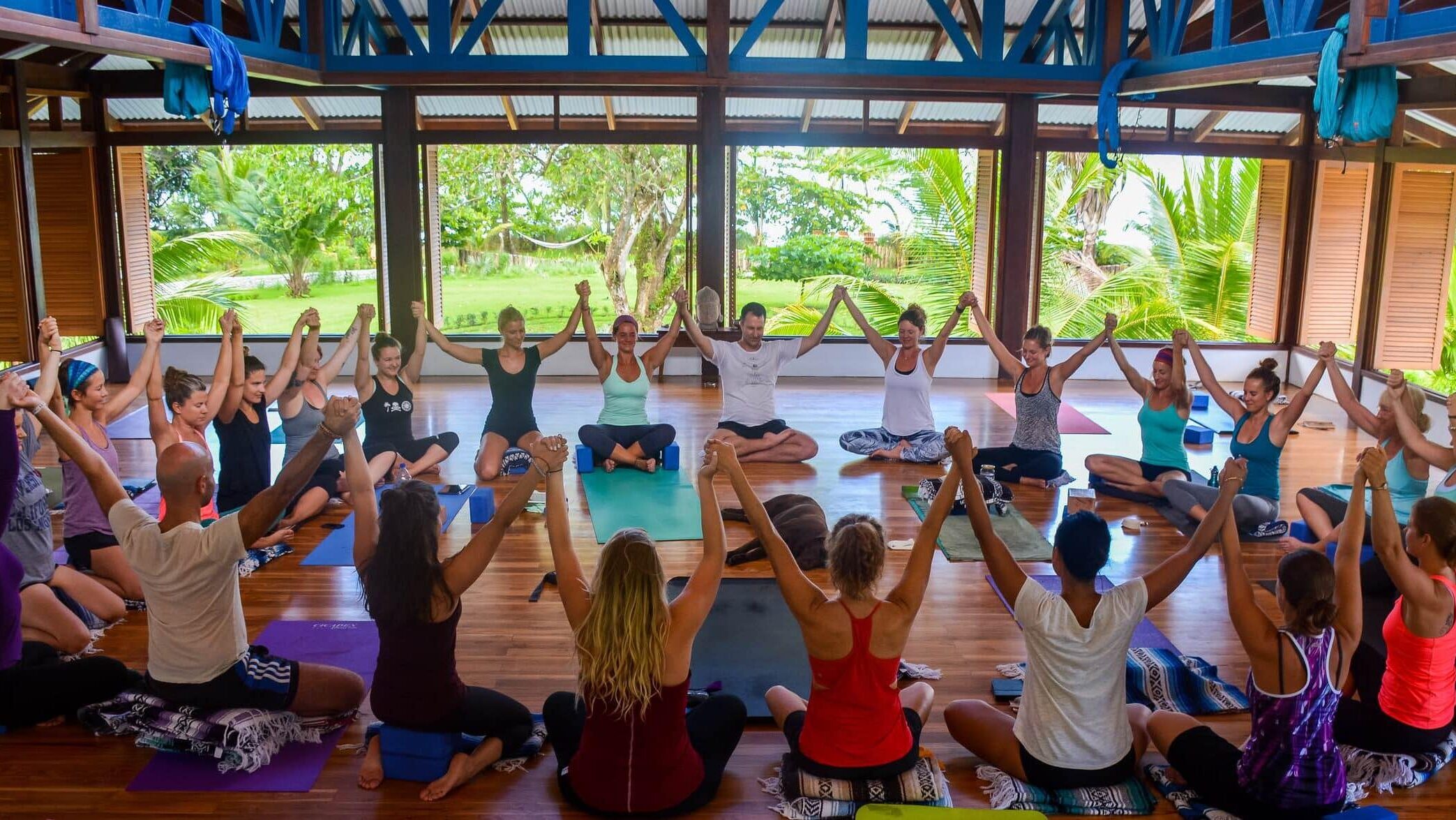
If you are looking for a 14-day 200 hour Yoga Teacher Training Costa Rica Immersion, you have landed in the right place. Join the next one!
300-Hour, 28-Day Yoga Teacher Training
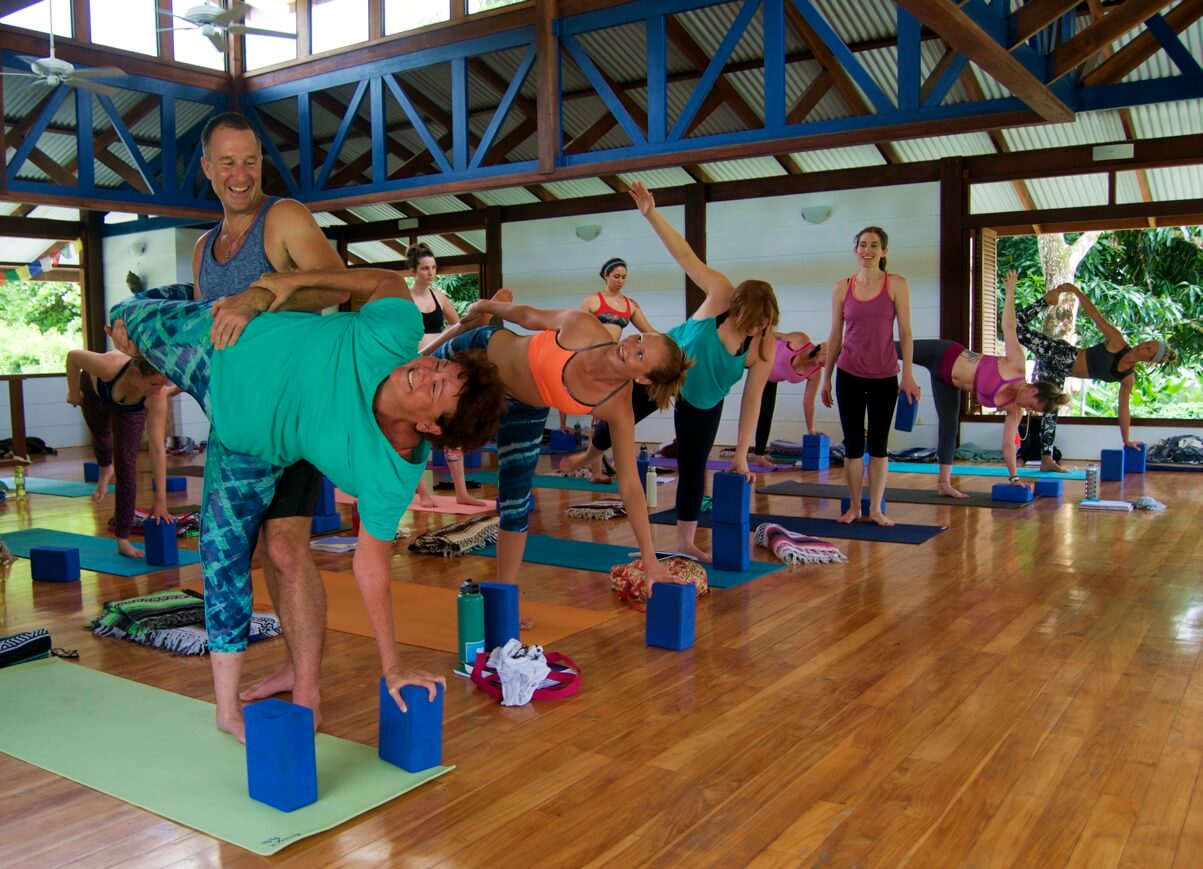
Do You Feel Called To Something Greater?
This 300-Hour Yoga Teacher Training immersion training at Blue Osa will immerse you in yoga for one month.
You will have the specific transformational skills and yogic practices you need in order to connect with your higher purpose.
And more! You will be able to offer these transformative skills to others!
