

We often don’t think about the way our feet carry us in this body, but finding yoga for foot pain relief is essential for our physical health on all levels. When we neglect foot strength and stability, we risk ailments like plantar fasciitis and bunions, as well as energetic disruptions like feeling ungrounded or directionless.
By practicing foot mobility exercises, we build the foundation of everything, shaping not just our physical stance, but our entire presence in life.
Why Yoga for Foot Pain is the Key to Full-Body Health
Our feet directly link to our roots, where we came from, how we receive the present and what direction we are heading in life. Being ungrounded often leads to other issues further up the chain, knees, hips, spine, and even shoulders.
All standing poses in yoga build from the feet upwards. We need to root in order to rise and this is the basis of balanced oppositional energy flows that helps break through stagnant areas of prana and create more muscular engagement for greater stability.

To find a stable foundation to the ground we need to shift our focus to the feet. To find a stable foundation in life we must remain connected to Nature. When we stand barefoot on soil, or sand, we instantly connect to the earth and receive the magnetic pulse from deep beneath our feet.
In the southern Osa Peninsula of Costa Rica, this connection is easy to find with expansive beaches and lush jungle landscapes to receive the healing benefits of grounding, and learn how important our stance is through the receptivity of our feet and the way they connect to not only the earth but the spirit of this biodiverse area of the world, pristine and protected by locals and government to ensure the eco-system thrives for generations to come.
The 3 Arches of the Foot
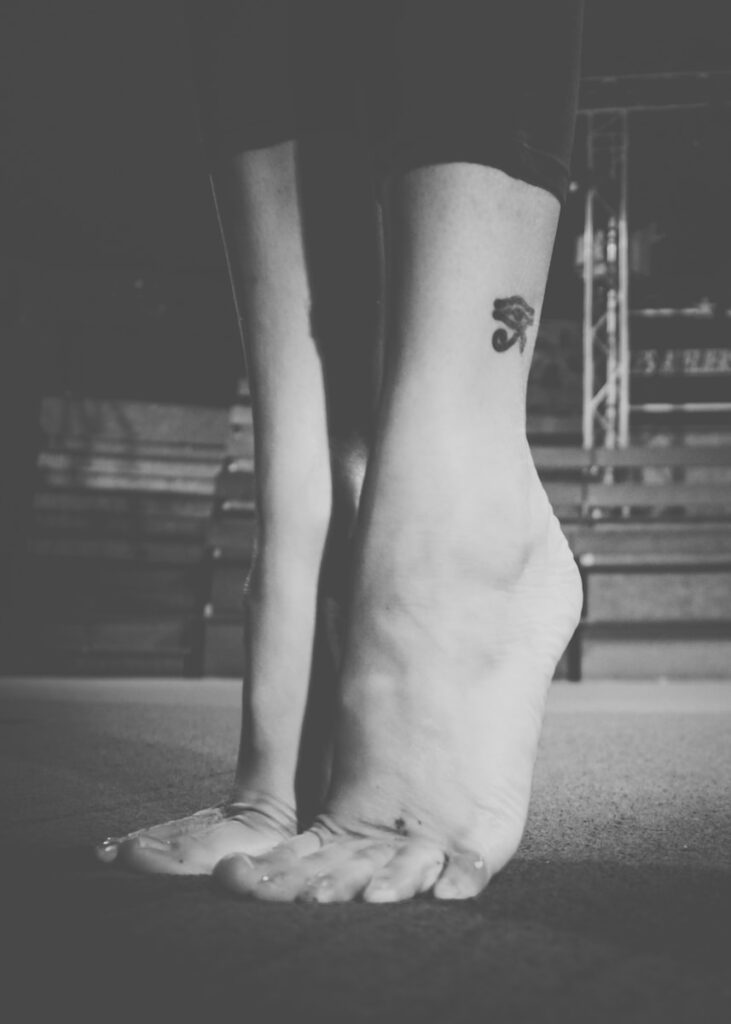
There are three arches in the foot: two long arches (medial, or inside and lateral, or outside) and one transverse (across the tarsal and metatarsal bones) all supported by over 100 ligaments and tendons throughout the foot. How we roll along these three arches is key to good health in the feet, our connection to our life and the direction we take in life.
How Your Feet Connect to Your Pelvis
If the receptivity and connection our feet make to the ground wasn’t important enough for our general health and well being, there is another layer to why this is so crucial to our existence and experience in everyday life. The sensation and function of our feet is intricately connected to our pelvis through shared nerve pathways, continuous fascial tissue, and biomechanical forces. This means that how our feet feel and function directly impacts our pelvic stability and vice versa.
The way our feet connect to the earth sets up a foundation for the entire rest of the body through the pelvis, but also the flow of energy to the pelvis, the sacral chakra (or svhadisthana) which symbolizes and synthesizes our personal relationships and all the emotions we experience from them (among many other things) affecting our ability to connect with others, our own creativity, and develop emotional intelligence. This multifaceted connection will help us be more in the flow of the ever-changing tides of life.

6 Proven Yoga Exercises for Foot Pain and Stability
Now that we have discussed the importance of how our feet root into the ground, let’s explore exercises to build strength, mobility and stability within them.
Exercise 1: Rolling the Arches (Triangle Pattern)
As mentioned earlier there are three arches to each foot. This exercise will bring in more sensitivity to this triangular foundation and strengthen the structures to support better posture, energy flow and biomechanical communication.

The objective is to roll the feet in a triangle pattern along the three arches. This exercise can be done one foot at a time to build awareness and stability and then eventually can be done with both feet at the same time.
Roll along the 3 arches as follows:
1. The lateral (outside) edge of the heel up the outside of the foot all the way up to the pinkie toe
2. From the lateral edge of the pinkie toe roll across to the base of the big toe
3. Roll from the big toe ball mound down to the inside of the heel
4. Repeat focus attention on sensations in the feet (and potential for some discomfort anywhere up the chain) and any asymmetry between the feet
Neuromuscular connections from the feet connect into the pelvis. For example, your glute max (big most superficial of the glute muscles) gets better activation when you dig your heel into the floor due to the tibial nerve getting triggered, like properly performing a squat.
Exercise 2: Palm Tree Pose for Better Foot Mobility
Mobility within the toes is essential for foot health. Our feet have carried us around our entire life and may have taken quite a beating. The way we connect in bare feet is only half the equation, the other half is what sort of footwear we shove our feet in everyday. There are so many wide toe footwear options now, allowing the delicate metatarsal joints of the toes to have enough space to maintain movement, but bare feet (with receptivity and muscular engagement) is still optimal.
1. Bring both feet parallel to each other at sit-bone distance apart
2. Feel the three arches connect into ground, especially inner lateral arch from inner big toe to inner heel (the arch will remain lifted)
3. Rise onto the balls of your feet keeping your weight even across the transverse arch (ball of foot) and hold for one breath cycle
4. Return heels with control and resistance gravity pulling you back to the ground
5. Repeat five times
Tip: Keeping the big toe ball mound strongly pressed into the ground activates the deep peroneal nerve that triggers and stabilizes the same side of the pelvis into the sacral and lumbar spine helping you to balance.
Exercise 3: Metatarsal Arch Activation
If you need orthotics or arch supports, this exercise will help you immensely and may even negate the need for them in the future!
1. Lift up your toes and spread them apart from each other
2. Press from the big toe ball mound across to the pinkie toe ball mound into the ground (transverse arch)
3. Create the triangle pattern from Exercise 1 listed above and feel the inner and outer arches from the ball mounds down to the heel of the foot root down (the arch will remain lifted)
4. As you press through the triangle of support, imagine drawing energy from the earth into the body through the arch in the middle of each foot upward to the pelvis
Exercise 4: Figure 8 Walking Pattern
While most people think of yoga as staying on a mat, walking yoga is a growing trend that brings mindfulness and biomechanical efficiency to every step you take. This exercise transitions your foot mobility from a static stretch into a functional movement pattern.
- Stand with your feet hip-distance apart.
- Place most of your weight into the right heel.
- Transfer that weight up the outside of the foot to the base of the right pinkie toe.
- Roll the weight across the ball of the foot to the base of the right big toe.
- Instead of just stepping, “pour” your weight diagonally to the inner left heel.
- Pull the weight around the outer left heel, up to the left pinkie toe, and across to the left big toe.
- Repeat this figure-8 pattern five times to find your rhythm.
The Walking Yoga Challenge: Once you feel the “flow,” use the moment your weight hits the base of the big toe as the “push-off” point to take a step forward. Practice this mindful walking yoga around your room to retrain your gait for better stability and pain relief.
Exercise 5: Self-Compassion Foot Massage
Give yourself a foot rub as a nurturing act of self-compassion. Wash your feet in warm water with a few drops of an essential oil that you like that would aid in a desired outcome for body, mind or spirit, along with epsom salts and/or magnesium. If you have the time, let them soak for upwards of fifteen minutes. Pat your feet dry then use a moisturiser on your feet to allow your hands to glide over the skin of your feet smoothly. Focus on one foot at a time starting with long strokes from heel to the base of the toes and all along the top of foot with focus between the long metatarsal bones.
Follow the following steps to continue the session for more specific massage techniques:
1. Rub the sides of the heel up towards the ankle in a circular motions all around the ankle bones
2. Make a more open fist where the middle knuckle of the fingers create a sharper edge than the base knuckles of a closed fist would and make large circles around the entire arch of the foot, then get more specific in the arch by moving the fingers within the fist in a wave pattern
3. Walk your thumbs and finger pads through the ball mound of your foot
4. Take each toe and give it a full rub using your thumb and other fingers, then give each toe a gentle tug, and then holding it in one place give each a little twist a few times
5. Then take it all to the other foot.
Take your time and enjoy the different feelings around each foot and find what feels particularly good to you, there is no wrong or right, only what feels good to you and notice if there are any discrepancies between the feet. Look up areas that are uncomfortable on a reflexology chart to assess if there is any particular organ, joint, or system of the body calling out for your attention.

Exercise 6: Toe Squat Pose to open Foot Chakras
1. From kneeling, tuck all 10 toes under
2. Gently walk your hands back towards your knees sitting your hips towards your feet
3. If your toes are comfortable to allow your hips to come all the way to your heels, try to sit straight on your heels, if not stay where it is a comfortable edge to stay for a few deep, slow breaths
4. If your body limits this action for any reason, it can be performed sitting in a chair with the toes placed on the floor in front of the legs of the chair with the heels resting further up the legs of the chair (as if you were wearing high heels)
4. Rest your hands in your lap
5. Breathe deeply and slow
6. Try to stay for 3 to 5 minutes

Why Yoga Feet Exercises Create Buoyancy and Open Energy
What is Buoyancy in Yoga
We want to feel light yet rooted: in yoga, this is yield. Yield is the balance of opposition. Through the feet there is a balanced action between the ground and our body, it is the junction where they meet and needs to be a symbiotic relationship.
Yoga is more than physical, as is buoyancy. Think of treading lightly as to not negatively impact the surface or the shock absorbing joints throughout the body. If we are unaware of how we plant our feet and stomp around, we create a disruptive force in both directions, down into the earth and upwards through our body.
Foot Anatomy: The Foundation of Foot Mobility
To further inform of this dynamic relationship we need to explore four domes in the body: metatarsal, pelvic floor, diaphragm and palate. These domes (or hammocks) are bridges between our physical and energy bodies.
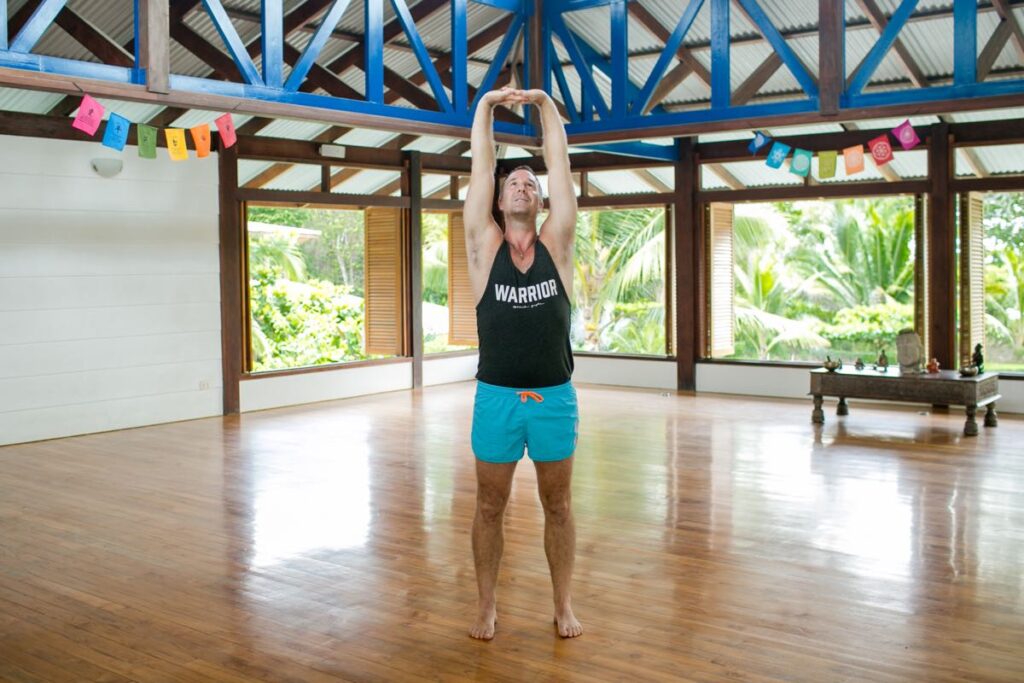
Are you buoyant?
From the ground, the metatarsal arch in the mid-foot activates and energizes upwards to the other domes, bringing earth energy (stability) in through the feet. When we have flat feet, there is only surrender or collapse into gravity demonstrating a lack of correct receptivity and activation. This manifests as feeling heavy, lethargic, and disconnected at base levels of our root. Physically the feet, legs and pelvic floor, energetically struggling with basic needs getting met or allowing ourselves to experience pleasure or healthy relations with others.
If we just ‘fall’ with our feet as they hit the ground, then we are not holding ourselves up. If we ‘tip toe’ and do not place our heel down when we walk, then we are living in our heads and not driving ourselves. It is the same with running, do you have a proper heel to toe stride, or run primarily on the ball mounds of your feet? Begin to become aware of how you use your feet as you move.
The following exercise will help you create buoyancy in your stance as a firm foundation for maintaining good posture and support open communication of other systems of the body for optimal health not only while on your yoga mat but when you find yourself standing in one place during the day. This can be extremely beneficial for your foot health (and overall health as everything is connected) to incorporate when you find yourself waiting in lines, or even while cooking or doing the dishes in the kitchen.
Energetic Benefits of Yoga Feet Exercises: Chakras and Meridians
Let us now get into more details of how your feet are an energetic gateway to the Earth. There are 6 meridians through the feet, minor chakras within the arch of each foot, with hundreds of thousand nerve endings as the basis of the healing modality of reflexology.
When these energetics are blocked or stagnant, the lack of flow can lead to various ailments; various kinds of headaches, low back pain or spinal discomfort, and various disruptions to digestive health.
All of what we’ve discussed so far, as well as all the exercises mentioned can be (and should be) brought to the mat when we practice yoga. The first step to setting up any asana (a pose) is receptivity, the second is drawing from the ground up and into the body, creating muscular engagement (metatarsal arch activation). This is often also referred to as root to rise, yielding, or balanced action.
Understanding Foot Chakras in Yoga
From a yogic tradition, all 7 chakras connect to the feet. Foot chakras are organized in a semi-circular pattern from heel to big toe. For example, when you press into the big toe joint it activates the throat chakra and will affect your breath. It is also why in tadasana the connection of the feet opens a pathway through all the chakras, connecting us from earth to universe as a mountain does.

Understanding Foot Meridians in Yoga
Foot meridians in yoga refer to the energy pathways that correspond to different organs and systems in the body, believed to be connected through pressure points in the feet. Understanding this connection helps enhance balance and stability during practice, as engaging the feet properly can improve overall alignment and energy flow.
You Don’t Have to Be a Yogi to Benefit From Foot Exercises
Students of yoga tend to have better balance, strength, mobility and flexibility, but it doesn’t come from stretching, it comes from receptivity and activation through our feet’s connection to the earth, our root, and the pelvis. But you don’t have to practice yoga to benefit from the exercises listed in this blog, anyone can do these and create not only better foot health but overall health.
Experience Grounding Yoga Practices in Costa Rica
All of Blue Osa’s yoga classes are grounding and focus on muscular activation. They aim to link the physical body with the energy bodies, which provide strength and flexibility to explore endless possibilities available in this body and to see opportunities when they arrive, so we can experience more abundance and joy having longevity to whatever activities we enjoy and more autonomy as we age.
Join one of our signature wellness retreats to reconnect to yourself, the earth and live a more fulfilling life.
Stop Living with Foot Pain Today
If these exercises felt like a breath of fresh air for your feet, imagine what five days of focused practice could do. Join our Foot Pain 5-Day Yoga Series to get guided, step-by-step videos designed to strengthen your arches, stabilize your pelvis, and give you lasting relief.
About The Author, Yogi Aaron

Yogi Aaron is the founder and creator of Applied Yoga Anatomy + Muscle Activation™ (AYAMA), a revolutionary methodology that challenges conventional approaches to yoga. Using a science-backed approach, he prioritizes muscle activation over traditional stretching.
With over three decades of dedicated study, mentorship, and hands-on experience, he has established himself as a leading expert in yoga therapy, alignment, and pain-free movement.
As owner and operator of Blue Osa Yoga Retreat + Spa in Costa Rica, Yogi Aaron leads transformative programs that combine his expertise in yoga instruction, retreat facilitation, and wellness business operations. His work spans both in-person immersive experiences and digital education through The Yogi Club online platform and the AYAMA™ Certification Program.
Yogi Aaron’s teaching methodology represents a paradigm shift in modern yoga practice. AYAMA focuses on activating and engaging muscles to enhance range of motion, build strength, improve stability, and optimize alignment—while reducing pain and injury risk. This evidence-based approach has positioned him as a thought leader challenging the status quo in the yoga community.
His mission extends beyond the mat: to liberate individuals from chronic pain and guide them toward discovering yoga’s authentic purpose through intelligent, body-informed practice.
Learn more about training opportunities with Yogi Aaron at Blue Osa Yoga Retreat + Spa.
Read More about Applied Yoga Anatomy + Muscle Activation
Tags:
Book/Inquire Now
Got pain? This will help you!

YOU DESERVE TO LIVE PAIN-FREE...
Receive 7 short, simple, and effective practices to alleviate knee, hip, low back, neck, shoulder pain, and more!
All you need is 5 minutes per lesson and it's FREE!
This revolutionary approach to yoga is new, and no one else is teaching this! Since I created Applied Yoga Anatomy + Muscle Activation™ and started teaching it consistently, I've witnessed students heal long-standing injuries, access yoga postures they never thought possible, and tell me over and over again how their body just feels better.
I hope you'll join me on this journey!
~Yogi Aaron
Is Yoga Teacher Training Right For Me?
We Created This FREE 5 Part Series So You Can Get All The Information To Make The Right Choice.
In this series, you will learn:
-
- Am I a candidate for yoga teacher training??
-
- What will I learn in a YTT?
-
- Do I need to have a perfect downward dog to attend YTT?
14-Day 200-Hour Yoga Teacher Training in Costa Rica
If you are looking for a 14-day 200 hour Yoga Teacher Training Costa Rica Immersion, you have landed in the right place. Join the next one!
300-Hour, 28-Day Yoga Teacher Training
Do You Feel Called To Something Greater?
This 300-Hour Yoga Teacher Training immersion training at Blue Osa will immerse you in yoga for one month.
You will have the specific transformational skills and yogic practices you need in order to connect with your higher purpose.
And more! You will be able to offer these transformative skills to others!
