

Unveiling the Secrets of Angkor Wat: Cambodia’s Iconic Temple
Angkor Wat is one of the most celebrated temples in the ancient city of Angkor, Cambodia. Built in the 12th century by King Suryavarman II, this magnificent structure is shrouded in intriguing secrets and fascinating facts. The secrets of Angkor Wat have captivated archaeologists, historians, and travelers for centuries, revealing layers of meaning that go far beyond its stunning architecture.
In this article, we will uncover the secrets of Angkor Wat and explore why it remains one of the most significant archaeological sites in the world. From hidden symbolism to dark historical truths, these secrets of Angkor Wat offer a glimpse into the spiritual, political, and artistic genius of the Khmer Empire.
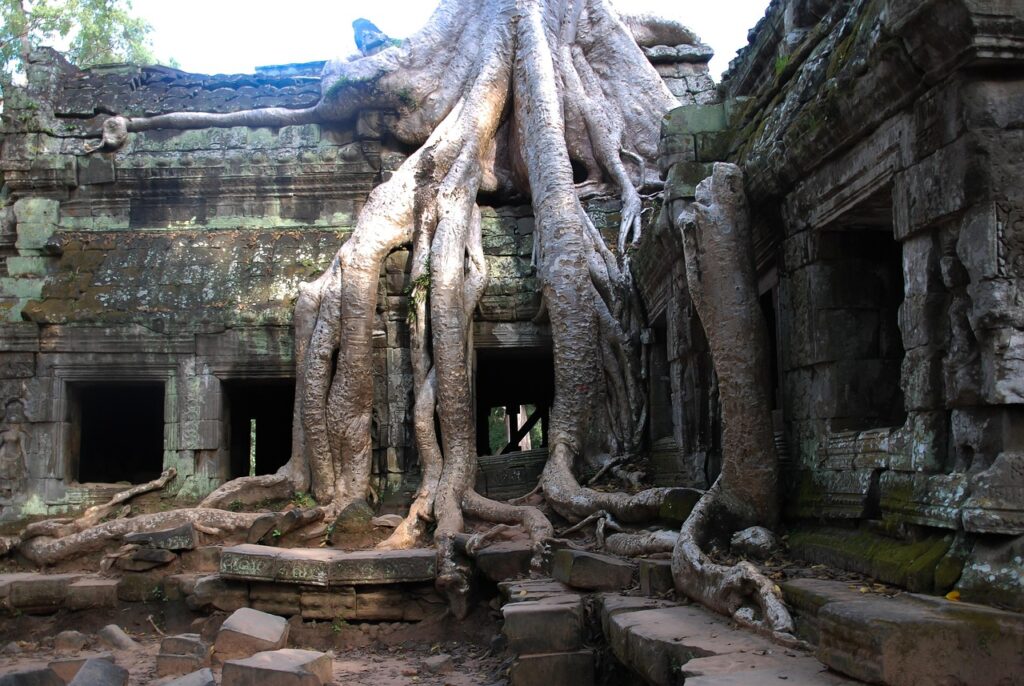
Extending over approximately 400 square kilometers, the Angkor Wat complex features numerous temples, hydraulic structures, and a wealth of cultural heritage. Join us as we delve into the captivating history and hidden wonders of this iconic monument.
Understanding Angkor Wat: More Than Just a Temple
Before we explore the secrets of Angkor Wat, it’s essential to understand what makes this structure so extraordinary. Angkor Wat isn’t merely a temple—it’s a cosmic diagram carved in stone, a political statement, and a gateway between earthly and divine realms.
Why Angkor Wat Matters Today
The secrets of Angkor Wat continue to reveal themselves to modern researchers using advanced technology. LiDAR scanning has uncovered hidden cities beneath the jungle canopy, suggesting the Khmer Empire was far more extensive than previously believed. Each discovery adds another layer to our understanding of this remarkable civilization.
What Makes Angkor Wat Different from Other Temples
Unlike most Hindu temples of its era, Angkor Wat faces west—toward the setting sun and the realm of death. This unique orientation is one of many secrets of Angkor Wat that hints at its intended purpose as a funerary temple for King Suryavarman II.
Secret #1: One Big Mandala – The Cosmic Blueprint
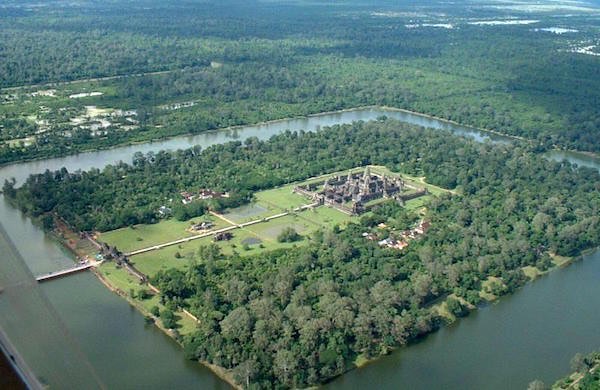
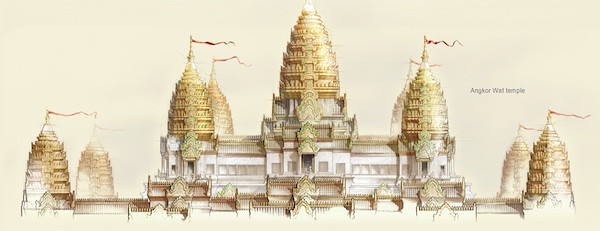
One of the most profound secrets of Angkor Wat lies in its layout, which mirrors the Hindu cosmos, forming one vast sacred mandala. The five towers of the central shrine represent the peaks of the mythical Mount Meru, the axis of the universe and the home of the gods.
The Sacred Geometry of Angkor Wat
Designed like a symmetrical mandala, Angkor Wat incorporates numerous numerical and geometric correspondences. The structure features 108 lotus bud-shaped towers, a sacred number significant to both Hindus and Buddhists. This number appears repeatedly throughout the complex, representing the distance between the human and divine realms.
The secrets of Angkor Wat’s measurements reveal intentional astronomical alignments. During the spring equinox, the sun rises directly over the central tower, creating a spectacular visual alignment that demonstrates the Khmer’s sophisticated understanding of celestial movements.
The Divine Nymphs: Apsaras as Sacred Guardians
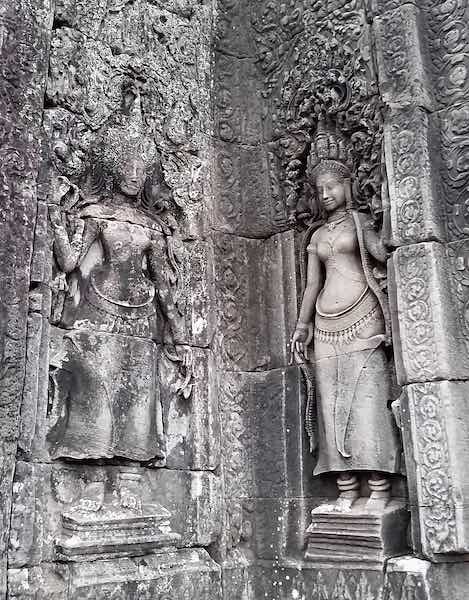
Adding to the city’s magnificence, artisans adorned the walls and towers with over 2,000 divine nymph figures called Apsaras. Among these nymphs, intricate bas-reliefs depict Hindu legends, including ancient battles (some fought in the sky), the 32 hells, and 37 heavens.
Each Apsara is unique—no two share the same hairstyle, jewelry, or facial expression. This incredible attention to detail is one of the lesser-known secrets of Angkor Wat, showcasing the artisans’ dedication to creating a truly divine dwelling.
Secret #2: A Dark History – The Price of Paradise
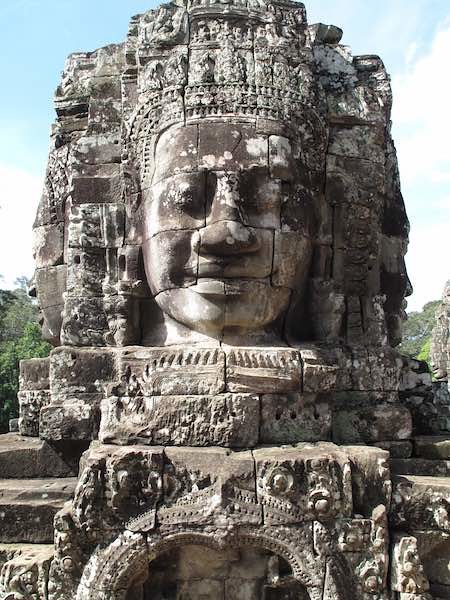
Like many ancient masterpieces, the Angkor Wat temple hides a dark history. One of the most disturbing secrets of Angkor Wat involves its founder’s brutal rise to power.
The Teenage Usurper King
Usurper King Suryavarman II ambushed his uncle at the age of 14 to overtake the throne. Historical inscriptions describe him leaping onto his uncle’s war elephant during battle, a bold and violent act that secured his claim to power.
To prove himself to the people and legitimize his rule, he planned a massive, intricate temple to serve as his gateway to the afterlife. This ambition would come at a tremendous human cost.
The Human Cost of Building Heaven on Earth
The cost of building heaven on earth was horrific violence amongst thousands of Khmer forced into harsh conditions during labor. Over five million tons of sandstone was quarried and transported 25 miles to the temple—a feat that required an estimated 300,000 workers and 6,000 elephants.
These workers faced brutal conditions, laboring under the tropical sun with primitive tools. The secrets of Angkor Wat include the countless lives lost during its 37-year construction period. Ancient inscriptions rarely mention these workers, focusing instead on the glory of the king and the gods.
The Engineering Marvel Behind the Construction
Despite the harsh conditions, the engineering achievements remain astounding. The sandstone blocks fit together so precisely that no mortar was needed. Workers transported massive stones using a combination of elephants, wooden rollers, and an intricate canal system—demonstrating the Khmer Empire’s sophisticated understanding of hydraulics and logistics.
Secret #3: A Temple Built by Gods or Giants
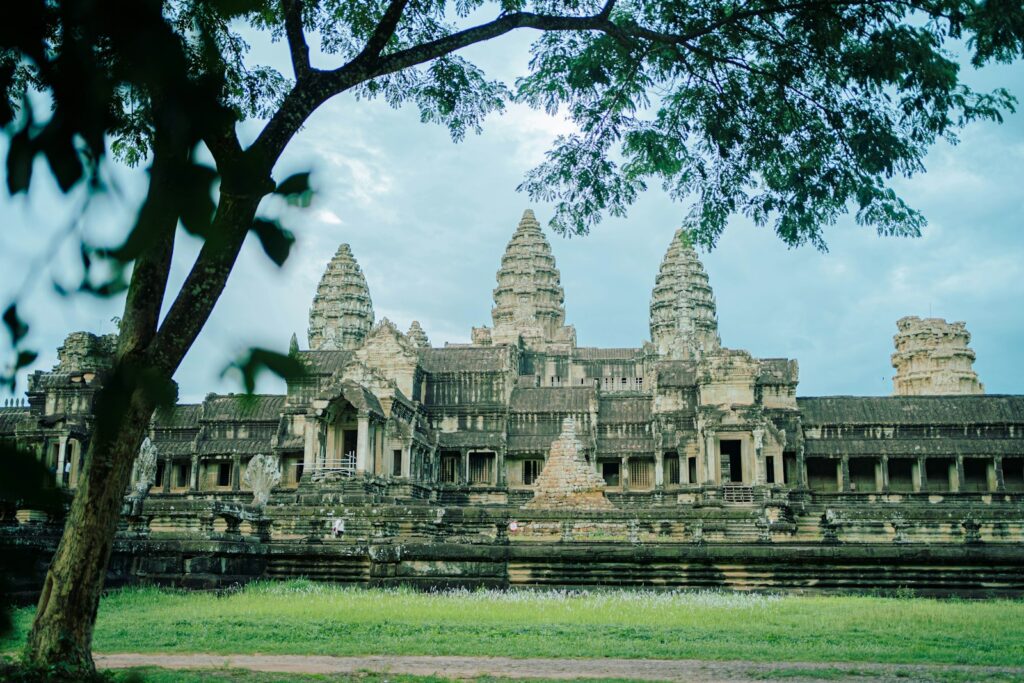
On a brighter note, Angkor Wat remained completely isolated from the Western world for many years. Thick, dense jungles covered the area, as it lay at the center of Cambodia. The first Westerners to encounter Angkor were the French colonialists, who heard local rumors about “temples built by gods or by giants.”
The Rediscovery That Changed Everything
During a zoological expedition, French naturalist Henri Mouhot discovered the city complex of Angkor Wat in 1860. Overwhelmed by the magnificence of the jungle-hidden ruins, he wrote:
“One of these temples – a rival to that of Solomon, and erected by some ancient Michael Angelo – might take its place beside our most beautiful buildings – Grander than anything left to us by Greece or Rome …it makes the traveler forget all the fatigues of the journey, filling him with admiration and delight, such as should be experienced on finding a verdant oasis in the sandy desert.”
Why Local Communities Never “Lost” Angkor Wat
One of the misunderstood secrets of Angkor Wat is that it was never truly “lost.” Buddhist monks continuously maintained a monastery at the site, and local communities always knew of its existence. The Western “discovery” narrative overlooks centuries of ongoing spiritual practice and cultural continuity at the temple.
The transition from Hindu to Buddhist use is itself one of the fascinating secrets of Angkor Wat. Rather than destroying Hindu imagery, Buddhist practitioners incorporated it into their own spiritual framework, demonstrating remarkable religious tolerance.
Secret #4: Sacred Meanings – Astronomy Meets Mythology
The temple’s origins trace back to what many consider the world’s oldest religious text, the Rig Veda, one of the four Veda Samhitas of Hindu literature. This ancient text describes the gods of heaven and earth, including Vishnu, “The Preserver,” an earthly god.
The King Who Became a God
During the temple’s construction, people believed that after his death, King Suryavarman II would transform into Vishnu, to whom the temple is dedicated. This divine transformation is central to understanding the secrets of Angkor Wat—the temple wasn’t just honoring a god, it was preparing to house a king-turned-deity.
The Gallery of Bas-Reliefs: A Cosmic Calendar
At Angkor Wat, astronomy and Hindu cosmology intertwine seamlessly. The bas-relief galleries surrounding the temple tell interconnected stories that align with both mythology and the natural world.
The Four Walls, Four Seasons
Along the east wall, a vivid scene depicts the “churning of the sea of milk,” a creation myth in which the gods attempt to extract the elixir of immortality from the milk of time. The north wall illustrates the “day of the gods,” the west wall showcases a great battle scene from the Mahabharata, and the south wall presents the kingdom of Yama, the god of death.
Researchers have suggested that the selection and arrangement of these scenes reflect the changing seasons—one of the most ingenious secrets of Angkor Wat. The creation scene on the east wall symbolizes the renewal of spring, the “day of the gods” represents summer, the great battle on the west wall signifies the decline of autumn, and the portrayal of Yama marks the dormancy and lifelessness of winter.
Astronomical Alignments Hidden in Plain Sight
The secrets of Angkor Wat extend to precise astronomical calculations. The temple’s dimensions correlate with the cycles of the sun and moon. The distance from the entrance to the central shrine measures 1,728 hat (a Khmer unit), which equals the number of years in one cycle of the Hindu cosmological calendar called the Kali Yuga.
Secret #5: It’s All About the Details
The final secrets of Angkor Wat reveal themselves in the smallest details—elements that most visitors overlook but that demonstrate the extraordinary craftsmanship of Khmer artisans.
The Temple Left Unfinished
The temple remained incomplete when King Suryavarman II died before construction finished. Evidence of this incompletion can be seen in uncarved stones and partially finished bas-reliefs, offering modern visitors a glimpse into the construction process.
The Mysterious Western Orientation
One unusual feature of Angkor Wat is its westward orientation, setting it apart from most other Angkorian temples, which face east. This westward orientation—toward the setting sun and the realm of the dead—reinforces the theory that Angkor Wat served as King Suryavarman II’s funerary temple.
Layers Upon Layers of Gold
A rectangular moat surrounds the structure, which features two rectangular walls enclosing three nested rectangular galleries. These galleries lead to a central spire flanked by four smaller towers.
Artisans meticulously layered every intricate wall carving with gold leaves. To this day, you can still spot some gold flecks if you look closely—one of the hidden secrets of Angkor Wat that rewards careful observers. At its height, the temple would have shimmered like a golden mountain, visible for miles across the Cambodian plains.
The Restored Devatas
Additionally, craftsmen have recently restored some of the 1,796 devata carvings, bringing back a touch of the temple’s original splendor. Each devata (guardian deity) was carved with individual characteristics, and restoration efforts have revealed traces of the original paint and gilding that once covered these figures.
Beyond the Five Secrets: What Else Awaits at Angkor Wat
The secrets of Angkor Wat extend beyond these five major revelations. Recent archaeological work continues to uncover new aspects of this remarkable site.
The Hidden Water Management System
One of the engineering secrets of Angkor Wat that often goes unnoticed is its sophisticated water management system. The moat isn’t merely decorative—it was part of an elaborate hydraulic network that controlled flooding, provided water for agriculture, and maintained the temple’s symbolic connection to the cosmic ocean.
Modern Technology Reveals Ancient Secrets
LiDAR technology has revealed that Angkor Wat was part of a much larger urban complex than previously understood. The secrets of Angkor Wat include a sprawling medieval city with a population that may have exceeded one million people—making it one of the largest pre-industrial cities in the world.
Experience the Secrets of Angkor Wat Yourself
Reading about the secrets of Angkor Wat is one thing, but experiencing them in person is truly transformative. Walking through the galleries as dawn breaks, watching the sun align with the central tower during the equinox, or simply sitting in quiet contemplation within this sacred space offers insights no article can fully capture.
Join Blue Osa Journeys to Cambodia
Are you intrigued by Angkor Wat’s magic? Join us for our Blue Osa Journey to Cambodia and other far-flung places around the world, where we combine yoga practice with cultural exploration. Our expert guides will help you discover not only the well-known secrets of Angkor Wat but also hidden corners that most tourists never see.
Experience sunrise meditation at the temple, practice yoga in the shadow of ancient stones, and connect with the spiritual energy that has drawn seekers to this place for nearly a millennium.
Are you intrigued by Angkor Wat’s magic? Join us for our Blue Osa Journey!
Want more? Watch the video below!
Tags: Blue Osa Journeys
Book/Inquire Now
Got pain? This will help you!

YOU DESERVE TO LIVE PAIN-FREE...
Receive 7 short, simple, and effective practices to alleviate knee, hip, low back, neck, shoulder pain, and more!
All you need is 5 minutes per lesson and it's FREE!
This revolutionary approach to yoga is new, and no one else is teaching this! Since I created Applied Yoga Anatomy + Muscle Activation™ and started teaching it consistently, I've witnessed students heal long-standing injuries, access yoga postures they never thought possible, and tell me over and over again how their body just feels better.
I hope you'll join me on this journey!
~Yogi Aaron

Is Yoga Teacher Training Right For Me?
We Created This FREE 5 Part Series So You Can Get All The Information To Make The Right Choice.
In this series, you will learn:
-
- Am I a candidate for yoga teacher training??
-
- What will I learn in a YTT?
-
- Do I need to have a perfect downward dog to attend YTT?
14-Day 200-Hour Yoga Teacher Training in Costa Rica

If you are looking for a 14-day 200 hour Yoga Teacher Training Costa Rica Immersion, you have landed in the right place. Join the next one!
300-Hour, 28-Day Yoga Teacher Training
Do You Feel Called To Something Greater?
This 300-Hour Yoga Teacher Training immersion training at Blue Osa will immerse you in yoga for one month.
You will have the specific transformational skills and yogic practices you need in order to connect with your higher purpose.
And more! You will be able to offer these transformative skills to others!
