

One of the most unforgettable experiences you will see on your trip to Blue Osa is the remarkable diversity of wildlife thriving where the lush rainforest meets the mighty Pacific Ocean. This unique intersection creates a vibrant ecosystem bursting with life—from colorful birds soaring overhead to curious monkeys swinging through the trees—inviting you to connect deeply with nature’s extraordinary rhythms.
At Blue Osa, nature reveals some of the most mystical and awe-inspiring sights imaginable—moments that linger in your heart long after you leave. Watching the vibrant life of the rainforest and ocean—the Scarlet Macaws flying above, the monkeys playing in the canopy—awakens a profound connection not only to this place but to the very heartbeat of our planet. Surrounded by such raw and beautiful biodiversity, you naturally slow down and sense yourself as part of something larger—a living, breathing Earth that sustains and inspires us in ways words can hardly capture.
Let’s explore some of the wildlife you can expect to see on your trip to Blue Osa.
The Scarlet Macaw
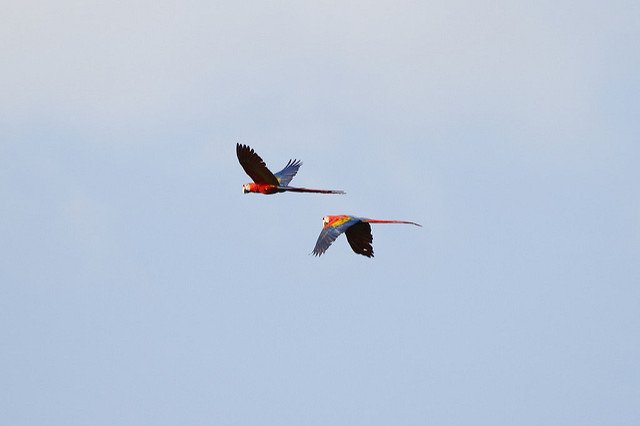
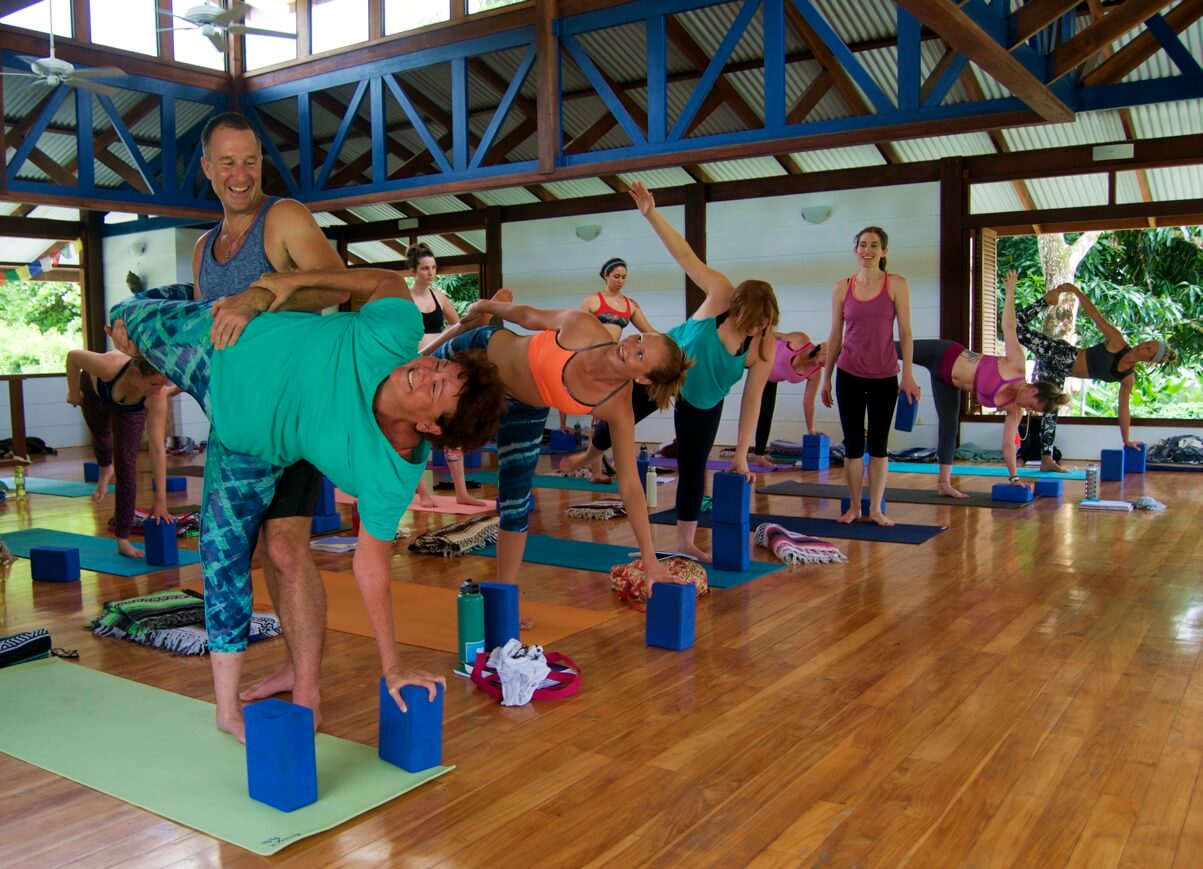
You’ll often spot the Scarlet Macaw with its brilliant red, yellow, and blue feathers flying around Blue Osa, usually in pairs. These birds mate for life and are known for their loud, distinctive squawks that echo from the giant Inga tree near the ocean and yoga studio, or from the Beach Almond trees along the shore.
With powerful beaks, they crack open nuts and seeds high in the treetops. Social and lively, Scarlet Macaws travel in small groups from tree to tree. They are the largest members of the parrot family and just two of the 17 parrot species calling Costa Rica home.
These birds are the largest of the parrot family and are only 2 of 17 parrot species that call Costa Rica home.
The Great Green Macaw
Another striking parrot you may glimpse is the Great Green Macaw. Though it prefers the Caribbean side of Costa Rica, some still appear on the Pacific coast. Sadly, this beautiful bird has been endangered since 2006 due to habitat loss caused by illegal logging.
Great Green Macaws are picky eaters, feeding almost exclusively on mature almendro tree almonds. Blue Osa’s lush gardens provide a perfect sanctuary where you might spot a few of these magnificent green flyers.
The White-Faced Capuchin Monkey
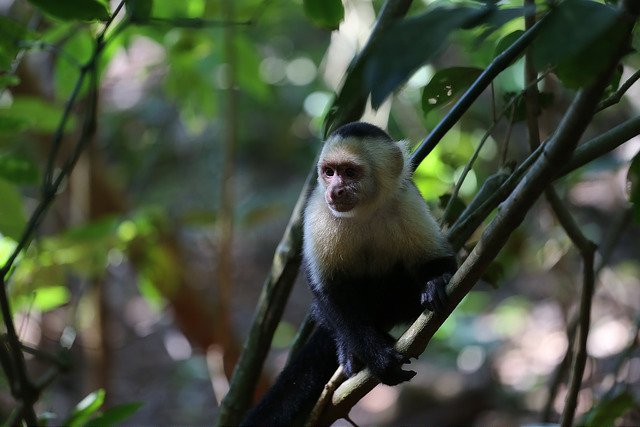
The White-faced Capuchin monkey is one of four monkey species native to the Osa Peninsula. Easily recognized by its black body and white face, these adaptable climbers thrive in many environments. They eat a wide variety of foods and typically stay close to their birth family groups, so if you see one, chances are you’ll spot others nearby.
These monkeys are sometimes trained as service animals, helping quadriplegics with daily tasks. At Blue Osa, you can often find them playfully swinging in the trees behind the kitchen—perfect creatures to appreciate if you want to extend gratitude on behalf of humanity.
The Chestnut-Mandibled Toucan
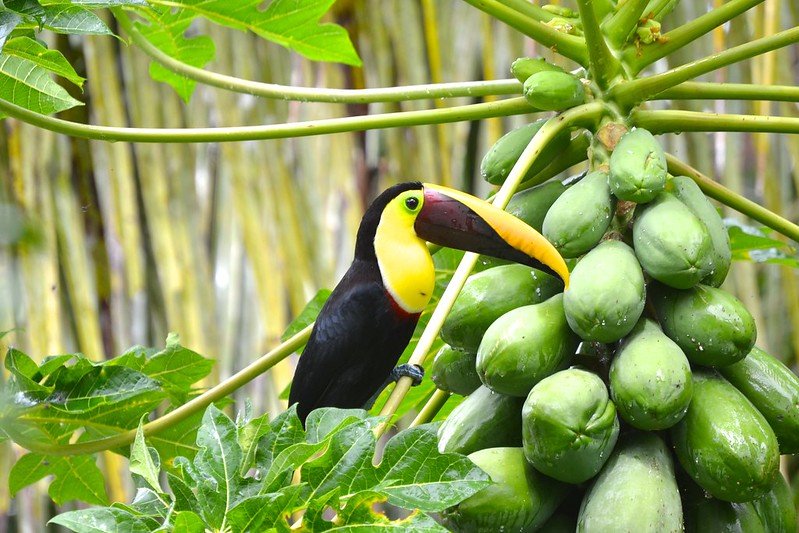
The Chestnut-Mandibled Toucan catches your eye with its bright colors and impressively large bill. Usually spotted in pairs, these birds prefer short flights of less than 300 feet, often seen feasting on fruit or insects while caring for their mate.
A pair of toucans has made the tall tree near the spa their home. This is one of only two toucan species found in the Osa, and you’ll most often hear their calls at dawn and dusk as they announce their presence.
If you are quiet and patient, you can often monitor them from the comfort of the pool.
The Howler Monkey
More likely to be heard than seen, the Howler monkey’s deep, resonant calls carry for miles through the jungle. The Guinness Book of World Records names it the loudest land animal. You may wake up to their howls around 5 AM on your first morning in the jungle.
Howler monkeys spend most of their time high in the trees, rarely descending to the ground. They have long beards, thick fur, and prehensile tails that help them navigate the canopy. Their roar serves as a territorial signal to other groups nearby.
The Halloween Crab

The striking purple and orange Halloween Crab lives along the beach, digging deep burrows up to 1.5 meters. These nocturnal crustaceans come out at night to burrow and climb trees, mainly eating plants but also consuming fish, insects, and fruit.
If you want to see them in action, bring a flashlight to the beach and look near the foliage for their glowing yellow eyes.
Hoffmann’s Two-Toed Sloth
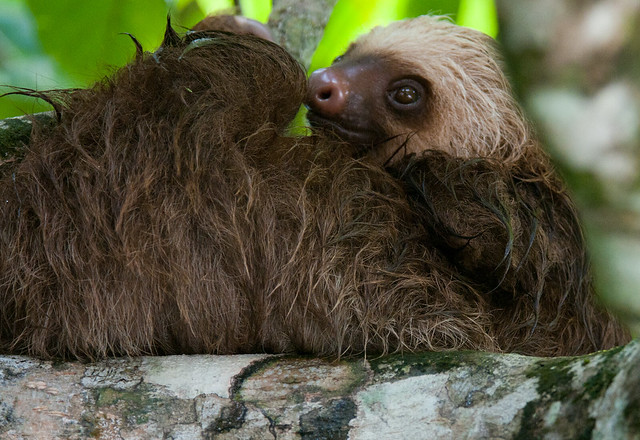
One of the jungle’s more shy residents, Hoffmann’s Two-Toed Sloth spends most of its life hanging upside down, moving only when necessary. With poor eyesight and hearing, it relies on camouflage to stay safe.
Though slow and deliberate, watching a sloth move is fascinating—like watching life unfold in slow motion. If you spot one high in the trees, gather your friends for a closer look: the sloth won’t be going anywhere anytime soon.
Bio-Luminescent Plankton
One of nature’s most enchanting spectacles happens at night when bioluminescent plankton light up the water. When disturbed by swimmers, these tiny organisms emit a glowing blue light that flickers and dances with your movements.
To witness this magical display at Blue Osa, visit the beach on a dark, moonless night and swim gently in the water. It may take patience and a bit of luck, but the luminous show is unforgettable
More Wildlife Awaits at Blue Osa
This list highlights just seven creatures you’re likely to encounter here, but the Osa Peninsula teems with far more wildlife than you can imagine. Every day, new fascinating animals appear—from wall-climbing crabs and agile lizards to brilliantly colored birds and tiny ants with extraordinary strength.
The incredible diversity of life at Blue Osa makes it a truly magical place. Whether you hear the squawks of macaws overhead or the roar of the ocean in the distance, you’ll know you’ve stepped into a vibrant, healthy environment that inspires wonder.
Come to Blue Osa, and let the incredible variety of life spark your own sense of awe—turning your yoga practice into a childlike fascination with the natural world.
Blue Osa truly is a magical place, and it’s not just the yogis who think so.
Tags: Costa Rica, Eco Resort, Osa Peninsula
Book/Inquire Now
Got pain? This will help you!

YOU DESERVE TO LIVE PAIN-FREE...
Receive 7 short, simple, and effective practices to alleviate knee, hip, low back, neck, shoulder pain, and more!
All you need is 5 minutes per lesson and it's FREE!
This revolutionary approach to yoga is new, and no one else is teaching this! Since I created Applied Yoga Anatomy + Muscle Activation™ and started teaching it consistently, I've witnessed students heal long-standing injuries, access yoga postures they never thought possible, and tell me over and over again how their body just feels better.
I hope you'll join me on this journey!
~Yogi Aaron

Is Yoga Teacher Training Right For Me?
We Created This FREE 5 Part Series So You Can Get All The Information To Make The Right Choice.
In this series, you will learn:
-
- Am I a candidate for yoga teacher training??
-
- What will I learn in a YTT?
-
- Do I need to have a perfect downward dog to attend YTT?
14-Day 200-Hour Yoga Teacher Training in Costa Rica

If you are looking for a 14-day 200 hour Yoga Teacher Training Costa Rica Immersion, you have landed in the right place. Join the next one!
300-Hour, 28-Day Yoga Teacher Training
Do You Feel Called To Something Greater?
This 300-Hour Yoga Teacher Training immersion training at Blue Osa will immerse you in yoga for one month.
You will have the specific transformational skills and yogic practices you need in order to connect with your higher purpose.
And more! You will be able to offer these transformative skills to others!
