

You’ve been researching retreats for weeks. Maybe months. You know you need a real break — not a poolside cocktail kind of break, but the kind where you actually come home feeling different. Lighter. More like yourself.
And somewhere in that search, you’ve probably come across the phrase farm-to-table Costa Rica more than once — because the best retreats here don’t just offer yoga and jungle views. They feed you as they mean it.
If you want to understand what Costa Rican food culture is really about before you arrive, this guide is a good place to start.
And yet every retreat website starts to blur together. Stunning jungle views. Glowing testimonials. Vague promises of transformation. What you can’t seem to find is a straight answer to a surprisingly simple question: what will I actually eat?
It matters more than people admit. Because when you’re stepping away from your routine — your coffee order, your lunch spot, your Tuesday night dinner — food becomes the thing that either makes you feel cared for or just… managed. A bowl of sad salad after two hours of yoga is not nourishing. Let’s be honest. It’s just a sad salad.
At Blue Osa, food has never been an afterthought. Tucked into the Osa Peninsula — one of the most biodiverse places on Earth — our kitchen has always been guided by a simple principle: cook with what the land gives you, today, and make it extraordinary. That philosophy has a face, and her name is Chef Marie.
Born in Algeria, raised on the French coast, trained by life and by love, Chef Marie is not a typical retreat chef. She is the original co-owner of this property, a self-taught culinary force who has cooked in San Francisco bistros and Cartagena grand restaurants — and who now channels all of that into a menu that changes with the garden, the season, and her mood.
In this interview, she talks about how she thinks about flavor, why simple marinades beat complicated sauces, and what it actually means to cook with the land rather than just near it. If you’ve been wondering whether the food at a Costa Rica retreat could genuinely be part of the healing, read on.
Curious what a week at Blue Osa actually looks like? See upcoming retreat dates.
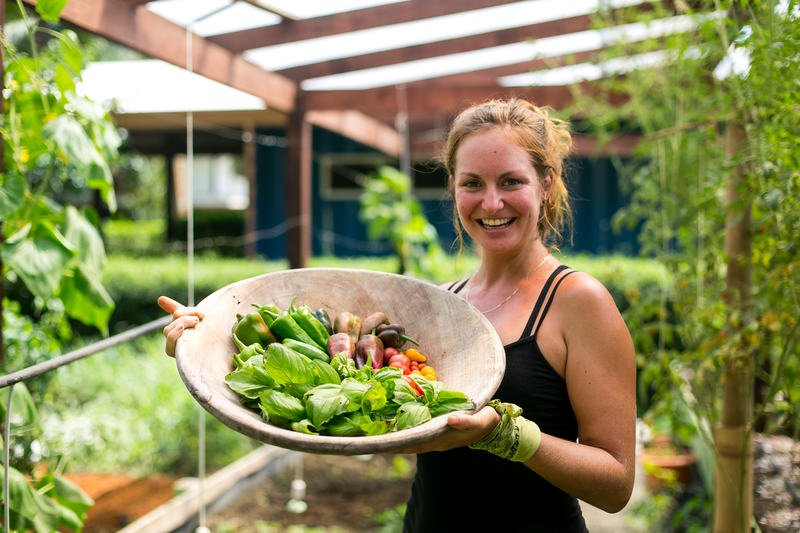
What Makes Farm-to-Table Cooking in Costa Rica So Special
The Osa Peninsula is not a convenient place to cook. There are no sprawling supermarkets, no reliable delivery schedules, no guarantee of what will be available on any given morning. What there is, however, is 2.5% of the Earth’s entire biodiversity within reach — and a kitchen philosophy built on the belief that where your food comes from matters as much as how it is cooked.
This is the raw material of Blue Osa’s kitchen. And for Chef Marie, it has never felt like a limitation.
Cooking farm-to-table in Costa Rica means something different than it does in a city restaurant that sources locally as a marketing choice. Here, it is simply reality. The organic garden dictates the menu. The local farmers — just down the road — determine what’s possible that week. What lands on your plate at dinner was growing in the ground that morning.
For guests arriving depleted from demanding careers and overstimulated lives, this approach to food is quietly radical. It is the opposite of processed, the opposite of rushed, and the opposite of indifferent.
Meet Chef Marie: A World-Traveled Chef Who Found Home in the Osa Peninsula
Born in Algeria and raised along the French coast near the Spanish border, Chef Marie has never cooked from a single tradition. Her culinary influences span continents — French technique, Mexican soul, global instinct — and her favorite dishes range from Coq au Vin to Sopa de Pescado. Her menu at Blue Osa reflects that same breadth — rooted in the best of traditional Costa Rican dishes while drawing freely from the global culinary traditions she has spent a lifetime exploring.
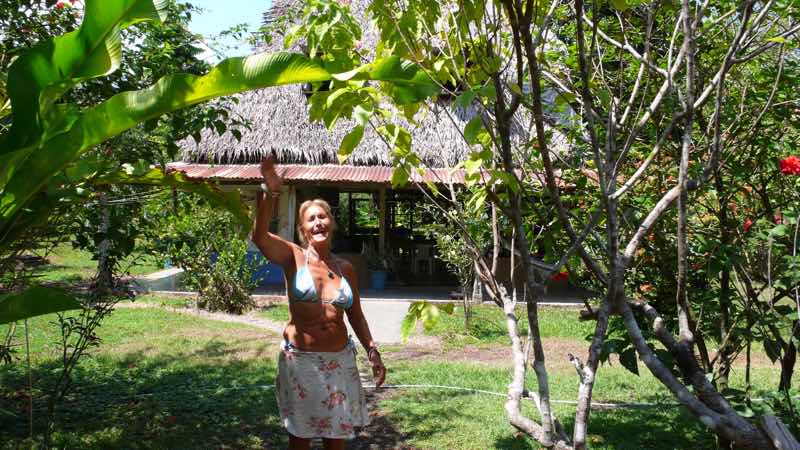
She is entirely self-taught, shaped less by culinary school than by a lifetime of cooking alongside people she loved. Chief among them was her late husband, Jean-François, himself a chef, with whom she ran a stylish French bistro in San Francisco and later an elegant grand restaurant in Cartagena.
Their first visit to Costa Rica brought them to Tamarindo, on the Northern Pacific coast, where their daughter lived. Like so many people who come here, the land held them. They bought a beachfront property on the Osa Peninsula — the very property that would become Blue Osa.
After Jean-François passed away in 2006, Marie encountered Aaron and Adam at the gate, a Century 21 sign reluctantly posted beside it. Their vision for what the property could become moved her so deeply that she offered to stay and help. Fourteen years later, she was still here — greeting guests in her French accent, moving through the kitchen with tireless creativity, and ending every dish with her signature: “Voila.”
She is not, she will tell you, working. Cooking is her passion. And passions, as she says, are not work.
Most mornings, Marie is in the kitchen before the rest of the retreat stirs. Before yoga, before breakfast, before the howler monkeys have finished their dawn chorus, she is already moving — checking what came in from the garden overnight, speaking with the local farmers about what is ready to harvest, making quiet decisions about what the day’s menu will become.
There is no fixed plan. There is only what is fresh, what is beautiful, and what will nourish the people sitting at her table that evening. It is a way of cooking that cannot be replicated in a city kitchen, and it is one of the things that makes eating at Blue Osa feel genuinely different from anywhere else.
What You’ll Find on Blue Osa’s Farm-to-Table Menu
The Blue Osa menu resists easy categorization. It is vegan-oriented at its core, with fish or meat served occasionally in family-style dining. It draws from Thai, French, Mexican, and Costa Rican traditions without belonging fully to any of them. On any given day, it might include:
- Picadillo de chayote, a traditional Costa Rican vegetable hash
- Coconut-encrusted Mahi Mahi with a heat-and-sweet glaze
- Savory lentil salads dressed with local citrus
- Upside-down pineapple cake made with fruit from the property
- Thai curry built from ingredients that arrived that morning
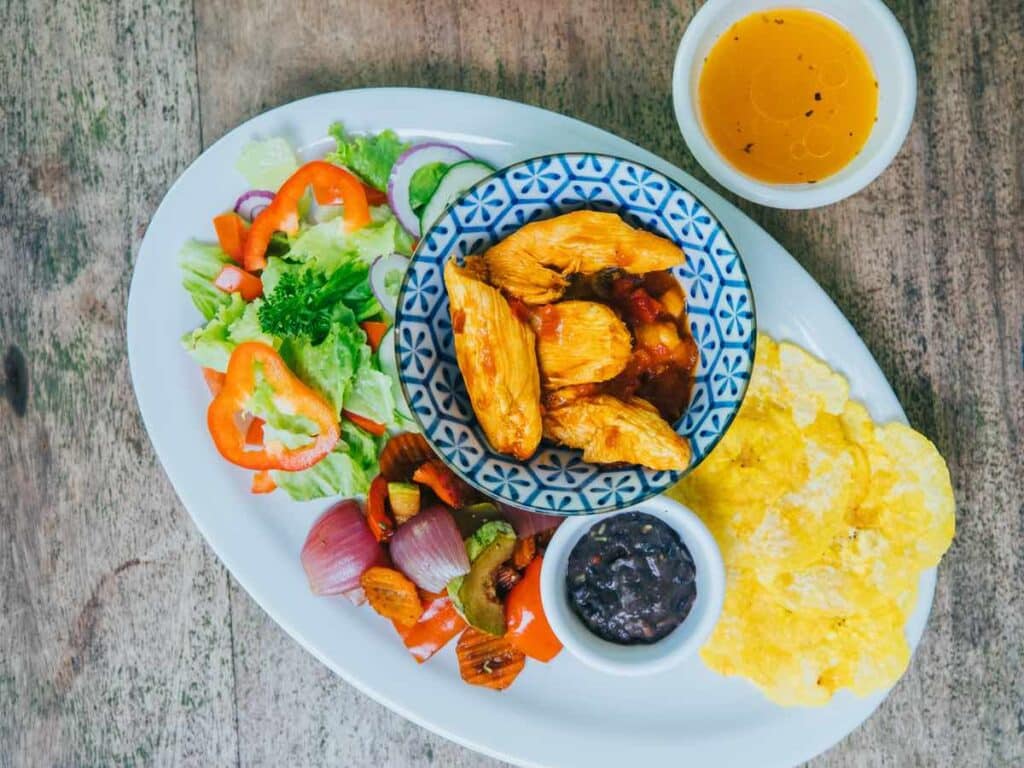
Not sure what some of these dishes are? Explore the full guide to Costa Rican cuisine to get familiar with the flavors before you arrive.
What unites these dishes is not a cuisine — it is a philosophy. Fresh, local, honest ingredients prepared with genuine skill and served to people who need to feel nourished, not just fed. If you practice yoga, what you eat matters more than most people realize. These are the foods that nutritionists and yoga teachers recommend for supporting your practice — and you will find most of them on Blue Osa’s menu every single day.
Marie is acutely aware of who sits at her table. “French food is rich in butter, milk, eggs, and cream,” she says, “and we are careful to respect our yoga guests.” The result is food that is clean and feel-good without being punishing — meals designed to complement the physical and mental work of a retreat. There is even a direct connection between what you eat and how your body moves: here is what the science says about yoga and digestion, and why it shapes every menu decision Chef Marie makes.
Meals at Blue Osa are served family-style, at long tables where place settings rotate so that guests share a meal with someone new each evening. Before dinner, there is a moment of gratitude — brief, unforced, and oddly powerful after a day of movement and stillness. It is the kind of ritual that sounds small until you are sitting inside it, watching the last light leave the Pacific, eating food that someone grew and someone cooked with genuine care.
For many guests, it becomes the part of the day they look forward to most. Not because the food is fancy — though it is extraordinary — but because the whole experience of eating here feels intentional. Like everything else at Blue Osa, the table is part of the practice.
The Philosophy: Letting Fresh Ingredients Lead
Here is where Chef Marie parts ways with most professional kitchen thinking: she does not begin with a recipe. She begins with what is available.
This is the true meaning of farm-to-table cooking in Costa Rica — not a curated aesthetic, but an actual constraint that demands creativity every single day. Marie often modifies beloved recipes on the fly, sometimes surprising even herself with the result.
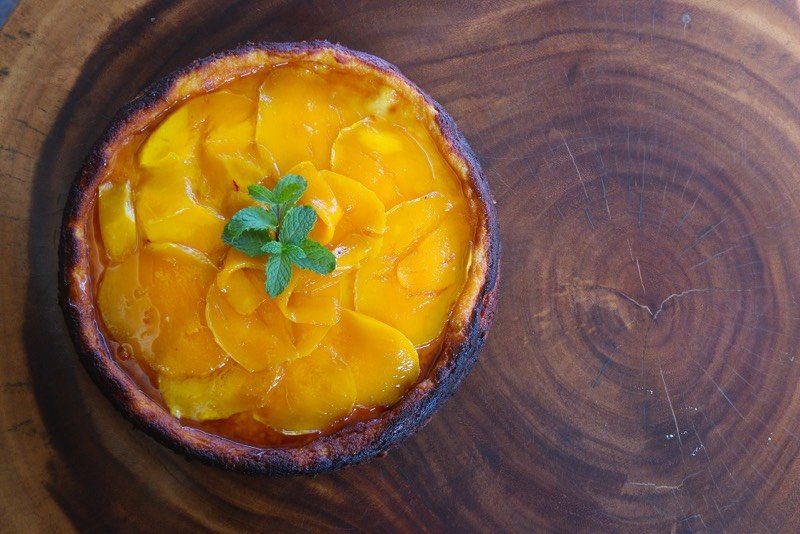
Her guiding principle is restraint. Simple preparations that allow the quality of local, organic produce to speak for itself. A perfectly ripe mango needs almost nothing. A just-harvested carrot is already sweet. The chef’s job, as she sees it, is not to transform the ingredient but to honor it.
On the broader question of culinary identity, Marie is characteristically direct. She once wrote, in French:
“Je pense que dans la nouvelle cuisine il y a une question de mode — les noms changent mais la base des recettes mexicaines, italiennes, chinoises ou françaises sont les mêmes.”
The names change. The foundations do not. Good cooking is good cooking, whether you call it farm-to-table, worldly, or simply lunch.
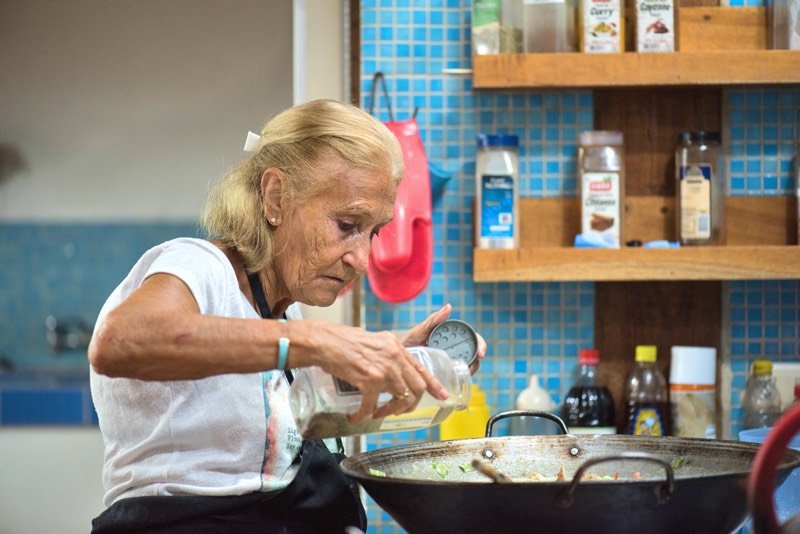
Marinades, Sauces, and Chef Marie’s Secret Ingredients
One of the most revealing things about a chef is not what they cook, but how they season. For Marie, a few key distinctions shape everything:
On marinades vs. sauces: A marinade is not a shortcut — it is a transformation. Applied to fish or meat over several hours, it changes both texture and flavor from the inside out. A sauce, by contrast, accents a finished dish. Both matter. Neither is interchangeable.
Her go-to fish marinade: Simple, fragrant, and built to let the protein shine.
- Olive oil
- Lemon zest
- Fresh thyme and rosemary
- A little grated ginger
- Fresh ground red pepper
- A pinch of salt
Marinate the fish for three hours, then cook as you prefer. The flavors merge as they heat, and the result — she promises — will have your mouth watering before the pan is even hot.
Her secret weapon for chicken: Honey. Always honey.
The combination of honey with heat or acid — hot sauce, citrus, vinegar — does something chemically precise and emotionally satisfying: it caramelizes the exterior of the meat while balancing the sharpness of whatever surrounds it. It is sweet, complex, and deeply Costa Rican in spirit, where tropical sweetness and heat coexist in almost everything.
Her unexpected favorite: Fresh vanilla in white sauce with lime. It has to be fresh — dried vanilla loses the floral volatile compounds that make this combination work. The result is, in her words, “exotic, rich and smooth to the palate.” It is the kind of flavor pairing that sounds wrong until you taste it.
On the question of trendy spices, Marie is unbothered by what is fashionable. Sriracha, she points out, is neither new nor old — it simply is what it is. “Remember what yesterday is can be new tomorrow. It depends on how you use it.” In a culinary culture obsessed with novelty, this is a quietly radical position.
Farm-to-Table Costa Rica: Eating Well as Part of the Retreat Experience
There is a reason Blue Osa guests consistently mention the food in their reviews. It is not simply that the meals are delicious — though they are. It is that eating well here feels like part of the same intention as the yoga, the stillness, the early mornings watching the Pacific from the deck.
Farm-to-table eating in Costa Rica, at its best, is not a feature. It is a practice. When you know that the vegetables on your plate were growing in the garden that morning, when you can taste the difference between a hothouse tomato and one pulled from volcanic soil at peak ripeness, something shifts. You slow down. You pay attention. You become, without trying, more present. This is not accidental. The ingredients Chef Marie selects — local tropical fruits, fresh herbs, anti-inflammatory spices — are the same ones that support and deepen a yoga practice. The kitchen and the yoga deck are, in this sense, part of the same offering.
This is what Chef Marie has always understood — and what she encodes into every dish she sends from the kitchen. “To know how to cook is to love to cook,” she has written. “I think that knowing how to eat is the beginning of knowing how to live.”
At Blue Osa, those are not just words on a cookbook page. They are the reason the kitchen light is on before sunrise.
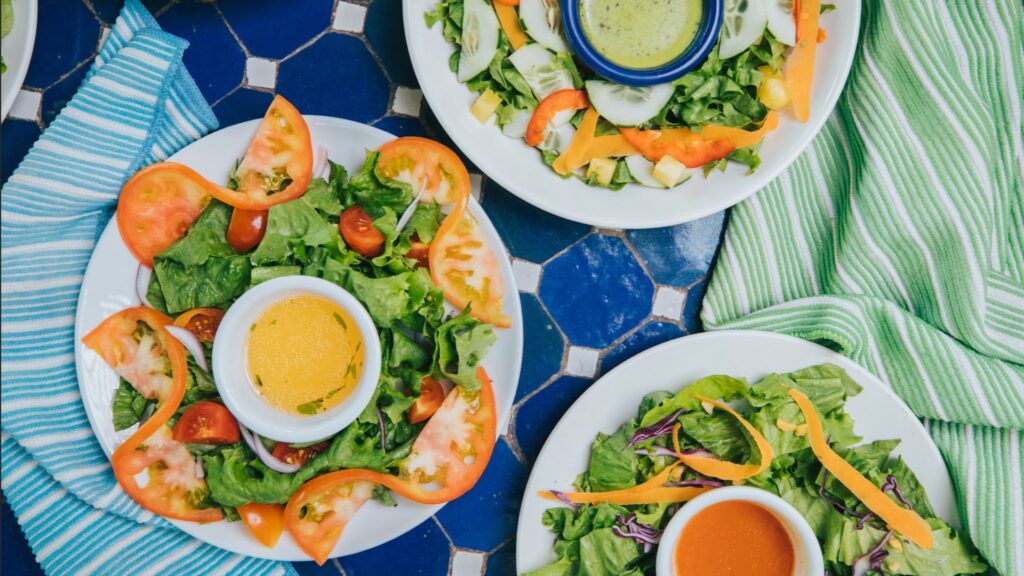
“The food is amazing. I felt so nourished. Marie goes above all expectations.” — Kaitlyn, Blue Osa guest
That word — nourished — comes up again and again in guest reflections on their time here. Not satisfied. Not impressed. Nourished. It is a different thing entirely, and it is what Chef Marie has been cooking toward her whole life.
Want to Taste It for Yourself?
The best way to understand what farm-to-table cooking in Costa Rica actually feels like is to sit at the table. To arrive after a morning of yoga with real hunger, to watch the dishes come out of a kitchen that smells of fresh thyme and ripe mango, and to eat something that someone made for you with genuine love and skill.
If that sounds like what you have been looking for, Blue Osa would love to have you. Browse our upcoming retreat dates and find a stay that fits your life — whether that is a weekend escape, a week-long immersion, or a full yoga teacher training with meals that will make you rethink what retreat food can be.
Frequently Asked Questions
What does farm-to-table mean at a Costa Rica retreat?
At Blue Osa, it means the menu is built around what the organic garden and local farmers provide that day. There is no fixed menu — only what is fresh, seasonal, and grown within reach of the kitchen.
Is the food at Blue Osa suitable for vegans and vegetarians?
Yes. The menu is primarily plant-based, built around local produce, legumes, and fruits. Fish and meat appear occasionally in family-style dining, but vegan and vegetarian guests are fully and deliciously accommodated.
What kind of cuisine is served at Blue Osa?
The kitchen draws from French, Mexican, Thai, and traditional Costa Rican cooking — united by fresh local ingredients rather than a single culinary tradition. Expect dishes like picadillo de chayote, coconut Mahi Mahi, and tropical fruit desserts. And if Chef Marie’s approach to ingredients has you curious, try one of her recipes at home to get a taste of what awaits you at Blue Osa.
Is the food included in a Blue Osa retreat package?
Yes. All meals are included in retreat stays at Blue Osa, served family-style at communal tables. Breakfast, lunch, and dinner are prepared fresh daily from the organic garden and local farms.
Can I learn to cook like Chef Marie at Blue Osa?
Chef Marie has authored a cookbook, Eating Clean in Costa Rica, which captures her recipes and cooking philosophy. It is available for purchase and brings a taste of Blue Osa’s farm-to-table kitchen into your home. Want a preview? Try this recipe from Blue Osa’s kitchen and see for yourself.

Want to Taste It for Yourself?
The best way to understand what farm-to-table cooking in Costa Rica actually feels like is to sit at the table. To arrive after a morning of yoga with real hunger, to watch the dishes come out of a kitchen that smells of fresh thyme and ripe mango, and to eat something that someone made for you with genuine love and skill.
Blue Osa has been recognized as one of the leading yoga retreats in Costa Rica — featured in the BBC, Wall Street Journal, and Travel + Leisure. If you want to understand what makes it an award-winning experience, that story starts long before you step onto the yoga deck. It starts in the kitchen.
If that sounds like what you have been looking for, we would love to have you. Browse Blue Osa’s beachfront retreat packages and find a stay that fits your life — whether that is a weekend escape, a week-long immersion, or a full yoga teacher training with meals that will make you rethink what retreat food can be.
About The Author, Yogi Aaron

Yogi Aaron is the founder and creator of Applied Yoga Anatomy + Muscle Activation™ (AYAMA), a revolutionary methodology that challenges conventional approaches to yoga. Using a science-backed approach, he prioritizes muscle activation over traditional stretching.
With over three decades of dedicated study, mentorship, and hands-on experience, he has established himself as a leading expert in yoga therapy, alignment, and pain-free movement.
As owner and operator of Blue Osa Yoga Retreat + Spa in Costa Rica, Yogi Aaron leads transformative programs that combine his expertise in yoga instruction, retreat facilitation, and wellness business operations. His work spans both in-person immersive experiences and digital education through The Yogi Club online platform and the AYAMA™ Certification Program.
Yogi Aaron’s teaching methodology represents a paradigm shift in modern yoga practice. AYAMA focuses on activating and engaging muscles to enhance range of motion, build strength, improve stability, and optimize alignment—while reducing pain and injury risk. This evidence-based approach has positioned him as a thought leader challenging the status quo in the yoga community.
His mission extends beyond the mat: to liberate individuals from chronic pain and guide them toward discovering yoga’s authentic purpose through intelligent, body-informed practice.
Learn more about training opportunities with Yogi Aaron at Blue Osa Yoga Retreat + Spa.
Check out these other popular posts!
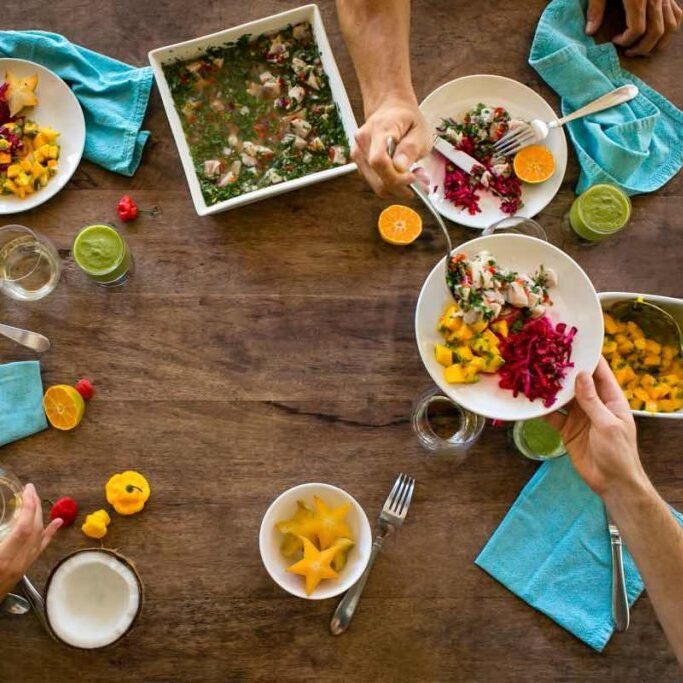
10 Foods to Enhance Your Yoga Practice
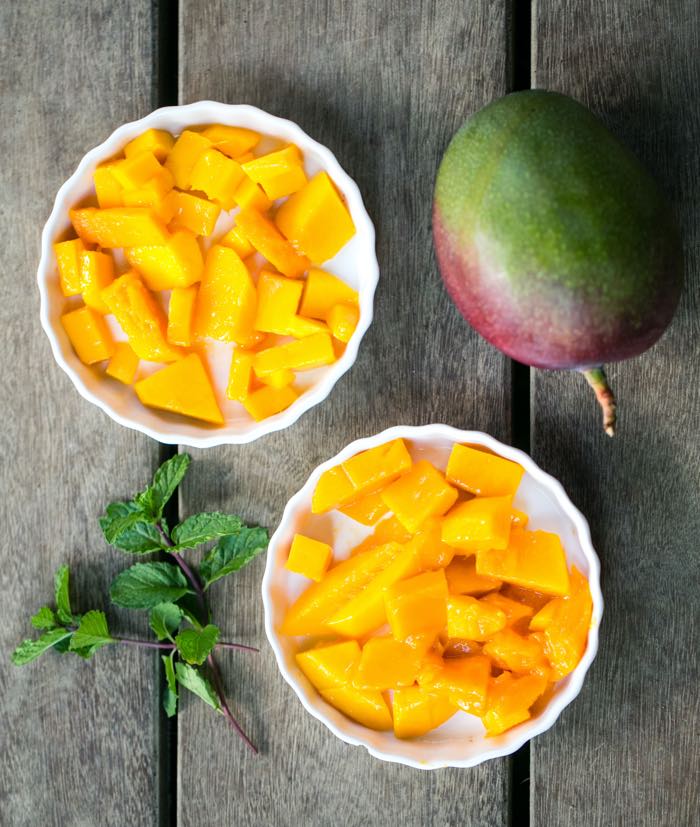
Everything You Need To Know About Costa Rican Cuisine
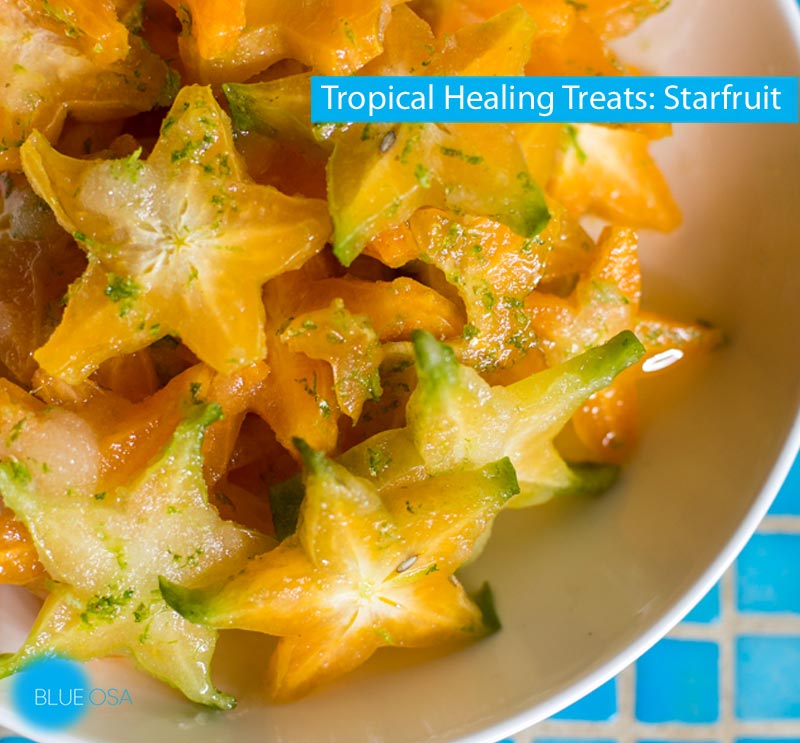
A Taste of the Tropics: Healing Foods and the Magic of Starfruit
Tags: Farm To Table, recipes
Book/Inquire Now
Got pain? This will help you!

YOU DESERVE TO LIVE PAIN-FREE...
Receive 7 short, simple, and effective practices to alleviate knee, hip, low back, neck, shoulder pain, and more!
All you need is 5 minutes per lesson and it's FREE!
This revolutionary approach to yoga is new, and no one else is teaching this! Since I created Applied Yoga Anatomy + Muscle Activation™ and started teaching it consistently, I've witnessed students heal long-standing injuries, access yoga postures they never thought possible, and tell me over and over again how their body just feels better.
I hope you'll join me on this journey!
~Yogi Aaron

Is Yoga Teacher Training Right For Me?
We Created This FREE 5 Part Series So You Can Get All The Information To Make The Right Choice.
In this series, you will learn:
-
- Am I a candidate for yoga teacher training??
-
- What will I learn in a YTT?
-
- Do I need to have a perfect downward dog to attend YTT?
14-Day 200-Hour Yoga Teacher Training in Costa Rica
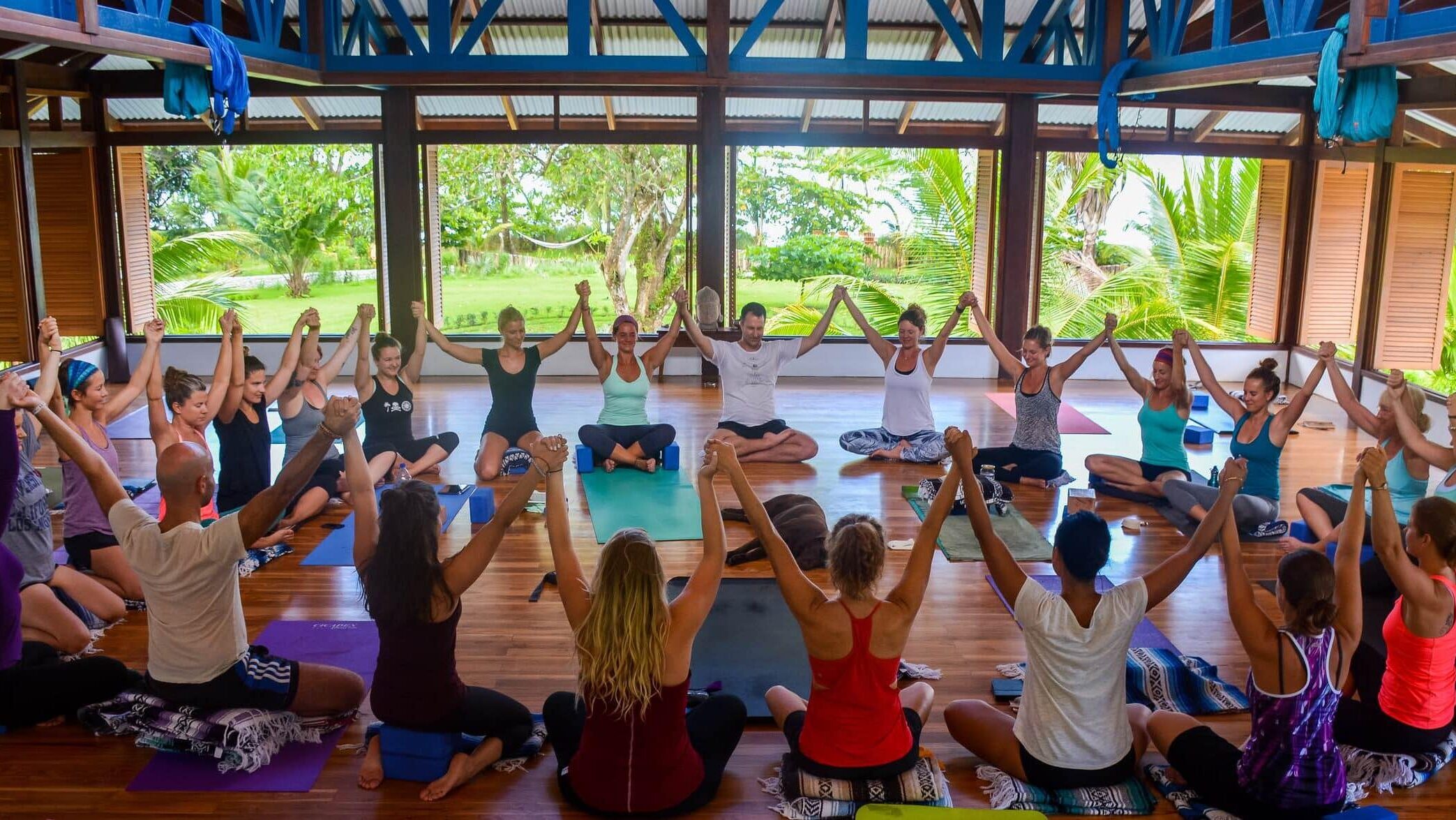
If you are looking for a 14-day 200 hour Yoga Teacher Training Costa Rica Immersion, you have landed in the right place. Join the next one!
300-Hour, 28-Day Yoga Teacher Training
Do You Feel Called To Something Greater?
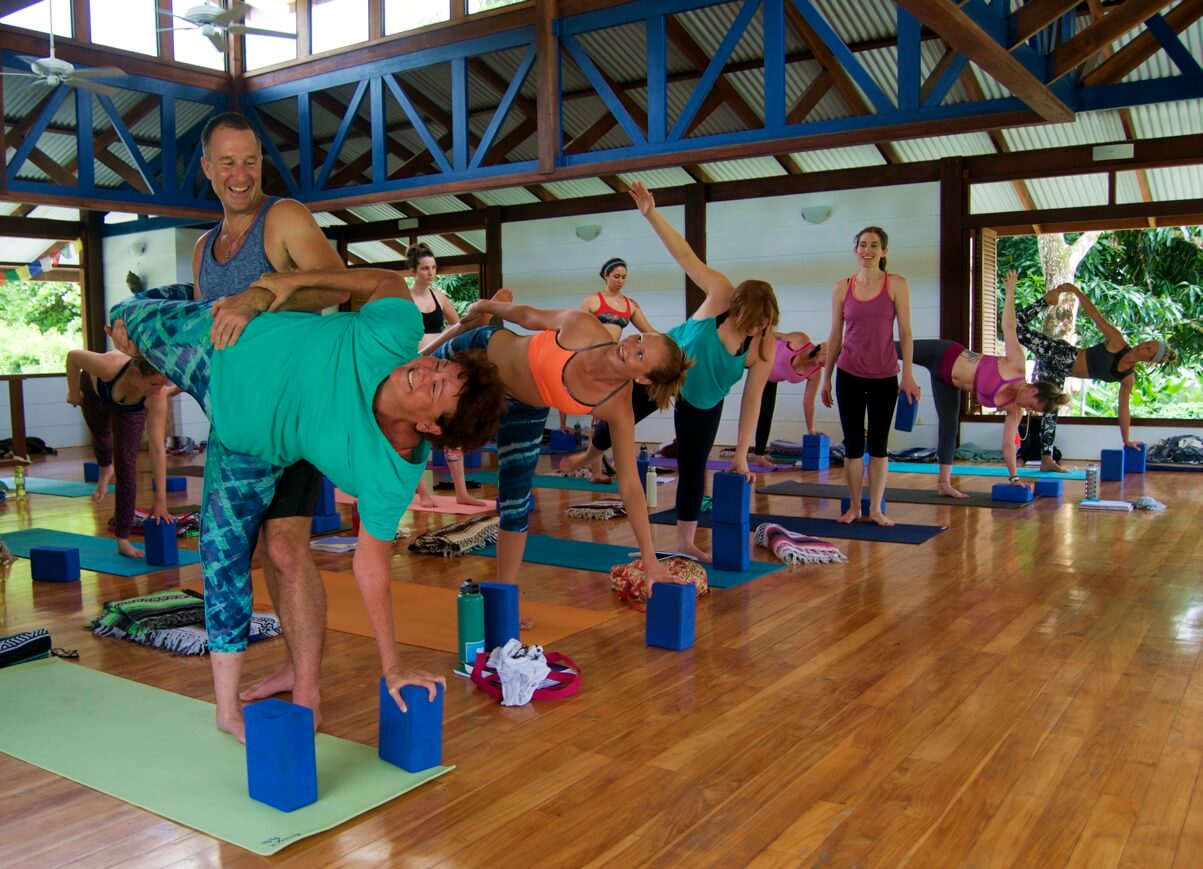
This 300-Hour Yoga Teacher Training immersion training at Blue Osa will immerse you in yoga for one month.
You will have the specific transformational skills and yogic practices you need in order to connect with your higher purpose.
And more! You will be able to offer these transformative skills to others!
