

Wondering how much do yoga instructors make a year?
First, let’s imagine your dream day as a yoga instructor.
You wake up to sunlight beaming across your carpet. You stretch, then head to the kitchen to grab a steaming cup of coffee. It’s time to journal, meditate and read. Later you’re teaching two private yoga classes, so you review your flow and intentions, too.
After you teach, it’s off to your favorite vegan cafe for lunch with a friend, followed by one more yoga class at a cute studio in town. You end the day looking into resorts in Costa Rica for your first international yoga retreat.
Not too shabby, right? But here’s the reality most yoga teachers find themselves in…
A 5am alarm, back-to-back classes across town, and a yoga instructor salary that barely covers the bills.
How much a yoga teacher makes is wildly dependent on several factors — and how hard you work isn’t necessarily one of them. Some certified yoga teachers earn six figures. Others struggle to make ends meet teaching 30 classes per week.
This guide breaks down the average yoga instructor salary for 2026, what experienced teachers earn across different settings, and how to build a career that actually supports your life.
Then, I’m going to share my top tips for making six figures as a yoga instructor.
What Is the Average Yoga Instructor Salary in 2026?
Google “yoga instructor salary” and you’ll find a wide range of answers — and they’re all technically correct.
Glassdoor puts the average yoga instructor salary at $76,324 per year. ZipRecruiter comes in at $59,299 per year, or $28.51 per hour. The U.S. Bureau of Labor Statistics reports a more conservative median of $45,380 — the category yoga teachers fall under.
The honest answer for most full-time studio teachers, once you factor in expenses and time off, is somewhere between $40,000–$60,000. The higher figures are possible — but they rarely come from studio classes alone.
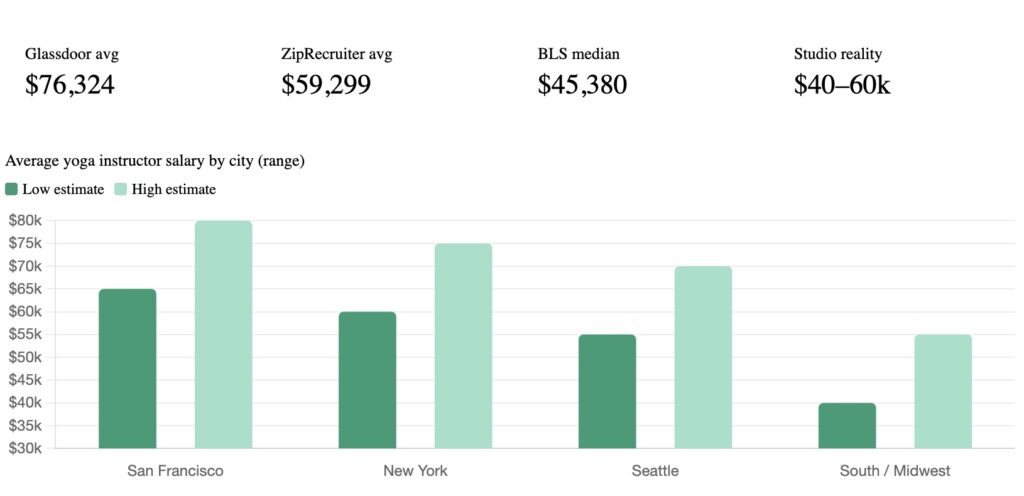
Average Yoga Teacher Salary by Location
Where you teach matters as much as how you teach. Coastal cities and major metros tend to pay more, though cost of living eats into that gap quickly:
- New York, NY: $60,000–$75,000/year
- San Francisco, CA: $65,000–$80,000/year
- Seattle, WA: $55,000–$70,000/year
- Southern and Midwest markets: $40,000–$55,000/year
A yoga teacher salary of $50,000 in a smaller market can go further than $75,000 in San Francisco. Location shapes your income ceiling — but it doesn’t have to define it.
How Do Studios Pay Yoga Teachers?
Most yoga teachers start their career teaching studio classes — and most are surprised by how the pay actually works. Studios use a few different compensation structures, and knowing the difference matters when you’re evaluating yoga instructor jobs or negotiating your rate.
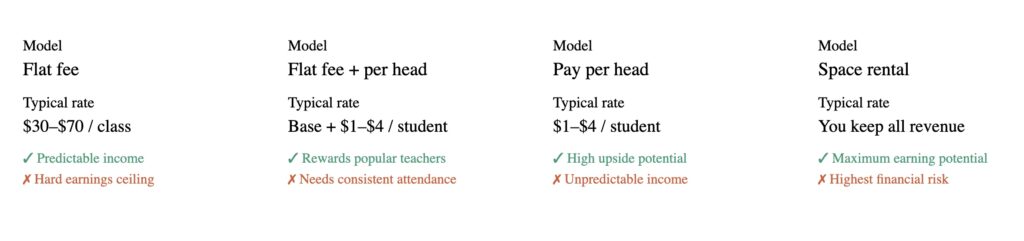
Flat Fee, Per Head, and Space Rental: Breaking Down Yoga Teacher Salaries
A flat fee means you get paid the same amount regardless of how many students show up. Most flat fee rates fall between $30–$70 per class. The upside is predictability. The downside is a hard ceiling on what you can earn, no matter how popular your classes become.
Flat fee plus bonus per head works differently. You receive a base rate for a minimum number of students, then earn an additional $1–$4 for every student beyond that threshold. This structure rewards teachers who build a following and fill their classes consistently.
Pay per head means your entire paycheck depends on attendance. At $1–$4 per student in a studio with 30 spots, you could earn anywhere from $30 to $120 per class. The earning potential is higher, but so is the income variability.
Space rental flips the model entirely. The yoga studio charges you a flat fee to use the space, and you keep everything your students pay. Your earning potential has real upside — but so does your risk, especially when you’re building a student base from scratch.
The real question is how to build an income that doesn’t depend on that number alone.
How Much Do Yoga Instructors Earn Beyond Studio Classes?
Studio classes are where most yoga teachers start. They are rarely where the highest earners stop.
Building a full-time yoga teaching career means thinking beyond the studio floor. The yoga teachers who make what most people consider a dream salary are almost always pulling from multiple income streams — not just weekly classes.
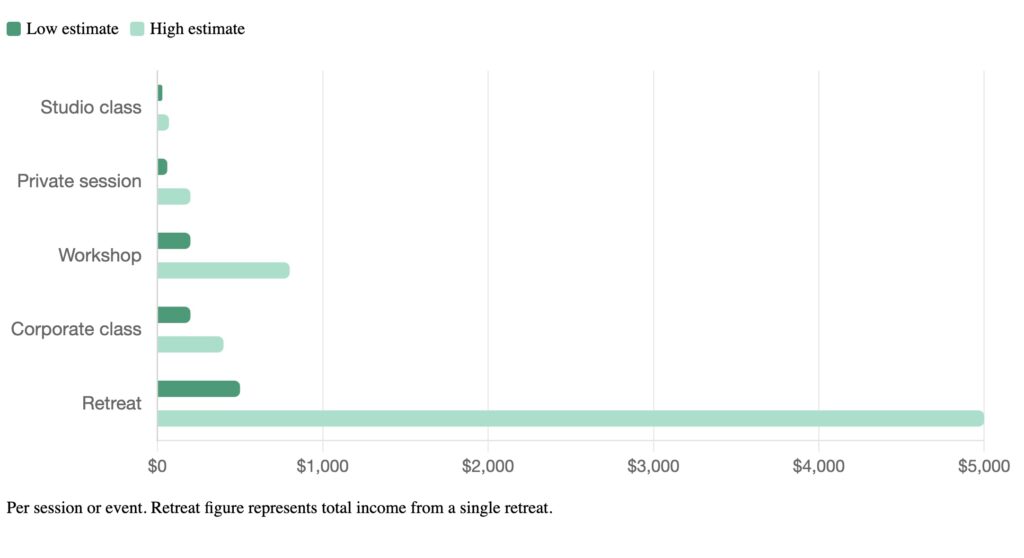
How Much Does a Yoga Instructor Earn From Private Sessions?

Private yoga sessions are one of the fastest ways to increase what you earn per hour. While studio classes average $30–$70 per class, private yoga instruction typically runs $60–$200 per session depending on your location, experience, and specialization.
Experienced teachers who work with private clients regularly can earn $80–$150 per hour without the overhead of renting a yoga space or splitting revenue with a studio. For full-time yoga teachers, even a handful of private sessions per week can meaningfully change the annual salary picture.
How Much Do Yoga Teachers Make From Retreats and Workshops?
Yoga retreats and workshops represent some of the highest earning opportunities for yoga instructors. A single workshop can bring in $200–$800 depending on attendance. A well-run retreat can generate $500–$5,000 or more.

The planning involved is real — but so is the return. Many yoga teachers find that one international retreat generates more income than months of weekly studio classes. It’s also where your personal yoga practice, teaching skills, and ability to hold space for transformation become your most valuable assets.
At Blue Osa in Costa Rica, we’ve watched countless graduates go on to lead their own retreats worldwide — and it often starts with the confidence and skills built during their 200-hour yoga teacher training.
Online Yoga: A Growing Income Stream for Every Yoga Instructor
Teaching online yoga has moved from pandemic workaround to permanent income stream. Whether through an online yoga studio, on-demand yoga videos, or a digital yoga membership, the ability to teach yoga online removes the ceiling that physical studio space creates.

Online yoga instruction means your earning potential is no longer limited by how many yoga sessions you can physically deliver per week. Teachers who build a digital yoga presence — even a modest one — open up income that works around the clock, not just during class hours.
Corporate Classes: The Highest Per Hour Rate for Yoga Teachers
Corporate yoga is one of the most overlooked opportunities for yoga instructors. Companies bringing yoga into the workplace typically pay $200–$400 per session — significantly more than any local studio rate.
For yoga teachers willing to offer yoga in a corporate setting, even one or two sessions per week adds thousands of dollars per year to their yoga instructor salary. It also tends to be consistent, contracted work — exactly the kind of income stability that studio teaching rarely provides.
How to Make More Money as a Yoga Teacher in 2026
The yoga teachers who build sustainable, well-paying careers in 2026 think like entrepreneurs and market themselves well.
What does it mean to think like an entrepreneur? Try these tips:
1. Build a brand as a yoga teacher
What makes you different from all the other yoga teachers out there? Maybe it’s a yoga niche or specialization. Or, perhaps it’s your unique perspective and personality.
Your classes aren’t cookie-cutter — and neither are you. Make sure potential clients and students know what sets you apart through intelligent yoga marketing.
2. Have more than one income pillar
There are many ways to make money as a yoga instructor; teaching classes is just one.
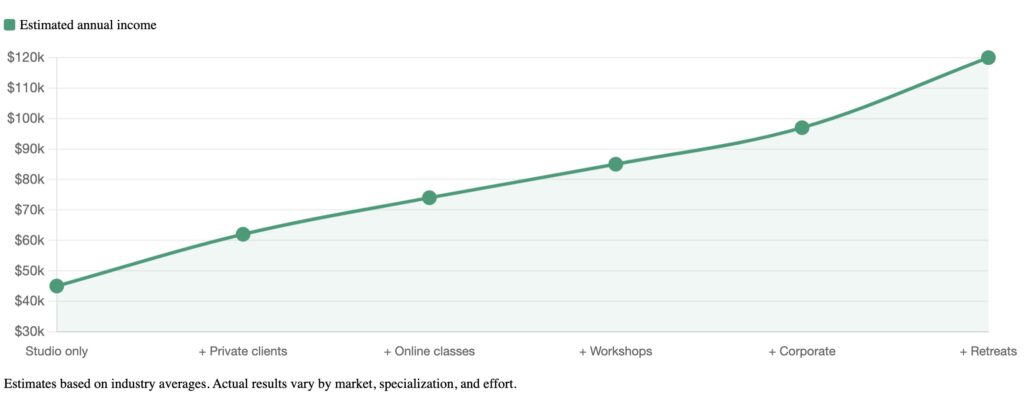
Get creative. Brainstorm a list of all the ways you can help the world through yoga. Here are a few ideas to get you started:
- Lead retreats
- Teach private classes
- Write articles for health + wellness publications — or even write a book!
- Teach at corporations
- Become an ambassador for your favorite products
- Create an online yoga business
(Want to know more, read this article on how to make money as a yoga teacher, or skip the link and take this course..)
3. Consider How Specialization and Yoga Teacher Training Increase Your Salary
A certified yoga teacher with a general 200-hour certification competes in the most crowded part of the yoga world. A yoga instructor with advanced training in a specific discipline — prenatal yoga, yoga therapy, trauma-informed yoga, or anatomy-based methodology — competes in a much smaller pool, and can charge accordingly.
Yoga Alliance recognizes certifications at the 200-hour and 300-hour level as the industry standard. But it’s what you specialize in beyond those hours that separates average yoga teacher salaries from premium ones.
Experienced teachers who invest in continuing education consistently report higher per-session rates and more consistent client retention.
Many students don’t feel prepared to teach yoga after their 200-hour YTT program. Now, a lot of that has to do with the program; a little research goes a long way before choosing the yoga teacher training program that’s right for you. (Obviously, I suggest our Blue Osa programs, but no matter what you choose, do your homework first.)
Invest in ongoing yoga teacher training. You’ll command a premium rate and be well on your way to earning six figures as a yoga instructor.
A 300-hour yoga teacher training, a specialty certification, or a methodology like AYAMA gives you tools your students can’t find everywhere. In the yoga world, that kind of specificity is worth more than years of general experience.
4. AYAMA Methodology Helps Yoga Instructors Earn More
Most yoga teacher training programs teach you how to sequence classes and cue poses. Very few teach you why the body moves the way it does — and how to use that knowledge to help students heal, progress, and stay injury-free.
Applied Yoga Anatomy and Muscle Activation (AYAMA), developed by Yogi Aaron at Blue Osa, is one of those exceptions. AYAMA goes beyond traditional yoga instruction to train teachers in muscle activation principles that address the root causes of pain and limitation in the body.
For yoga instructors, this matters financially. Teachers who can offer something specific and results-driven — whether that’s helping a student finally access a pose they’ve struggled with for years, or addressing chronic pain through their yoga practice — are positioned to charge premium rates for private sessions, workshops, and specialized classes.
Students pay for the perceived value of a class. AYAMA gives yoga instructors a concrete, teachable differentiator that justifies higher rates and builds long-term client loyalty.
5. Experience Shapes Yoga Instructor Salary at Every Stage
Entry-level yoga instructors teaching their first studio classes can expect to earn toward the lower end of the $30–$70 per class range.
As a yoga teacher’s experience builds — through consistent teaching, ongoing training, and a growing student base — so does the ability to negotiate better rates, attract private clients, and lead workshops and retreats. Experienced teachers with strong reputations and specialized skills regularly earn $80–$150 per hour for private yoga sessions and can command premium pricing for retreats and trainings.
The yoga instructor salary trajectory is not linear. It’s built through intentional decisions about training, specialization, and how you position yourself in the yoga industry.
6. Work on Your Relationship with Money
Do you feel guilt or shame around the topic of money?
If so, you’re not alone. Most yoga instructors start teaching because they have a desire to serve. We’ve experienced the life-changing benefits of yoga, and we want to share those blessings with others.
So when it comes to financial abundance, some yoga teachers start to feel icky — like they don’t deserve to make money off a spiritual practice.
Here’s my message to you:
You are deserving of wealth. Your work is vital in the world, maybe now more than ever before. You can be of service, transform the world, expand your impact, and have financial security, too.
Remember, you can’t pour from an empty cup. But when your cup is overflowing, you can share your resources with others. And that is a beautiful thing.
Take the first steps towards a sustainable yoga career
Ready to take a deep dive into the philosophy and application of yoga? Want hands-on experience safely teaching yoga classes so you can deliver maximum value to your future students?
Learn more about our yoga teacher training programs. You’ll gain the skills you need to build a heart-centered yoga business — and clarity and vision for the next steps after training.
FAQ: How Much Do Yoga Instructors Make?
How much do yoga instructors make per class?
Most yoga teachers make between $30–$70 per class teaching at studios and yoga schools, depending on location, class size, and compensation structure. In high cost of living cities, experienced teachers can earn toward the top of that range or beyond. The average salary for a yoga instructor climbs significantly when private sessions, corporate classes, and online yoga classes are added to the mix.
How many yoga classes per week do most yoga teachers work?
Most part-time yoga instructors teach 5–10 weekly classes. Full-time yoga teachers often teach 15–20 hours per week across studios and private sessions. Teaching 30 or more yoga sessions per week is possible but widely considered unsustainable — burnout is one of the most common reasons yoga teachers leave the profession.
How do I become a yoga instructor?
Most yoga instructors start with a 200-hour yoga teacher training registered with Yoga Alliance — the industry’s recognized credentialing body. From there, many pursue a 300-hour advanced training or specialty certifications in areas like prenatal yoga, yoga therapy, or anatomy-based methodologies. The quality of your yoga school matters — it directly shapes your teaching skills and earning potential.
How do I become a yoga instructor and teach yoga online?
Once certified, teaching yoga online is an accessible way to expand your reach and income. Online yoga teacher training platforms, on-demand yoga classes, and digital memberships have all become viable full-time income streams. Often, yoga teachers start with local yoga classes and add online yoga classes as a secondary income stream before transitioning to a hybrid or fully digital model.
Is teaching yoga a good side hustle?
Yes — part-time yoga teaching is one of the more flexible side hustles in the wellness industry. Teaching 3–5 yoga sessions per week at a local yoga studio can generate an additional $500–$1,500 per month depending on your market. The yoga industry has grown significantly, and studios and yoga gyms consistently look for new yoga teachers to fill schedules. Starting part-time is also one of the best ways to build yoga teaching skills before committing to a full-time career.
Are yoga teachers in high demand?
Demand for yoga instruction has grown alongside the broader wellness industry. Corporate yoga, online yoga classes, and specialty formats like yoga therapy have opened new opportunities well beyond the traditional studio model.
That said, the yoga instructor job market is competitive in major metros — teachers who differentiate through specialization, methodology, or a strong personal brand tend to find more consistent work and command higher rates than generalists.
Do I need to be able to do advanced yoga poses to teach yoga?
No — the ability to practice yoga poses at an advanced level is not a requirement for becoming a certified yoga teacher. What matters far more is choosing a training that will enhance your understanding of alignment, anatomy, and how to safely guide students through a practice. Many of the most effective yoga teachers focus less on demonstrating advanced postures and more on cueing, adjusting, and meeting students where they are.
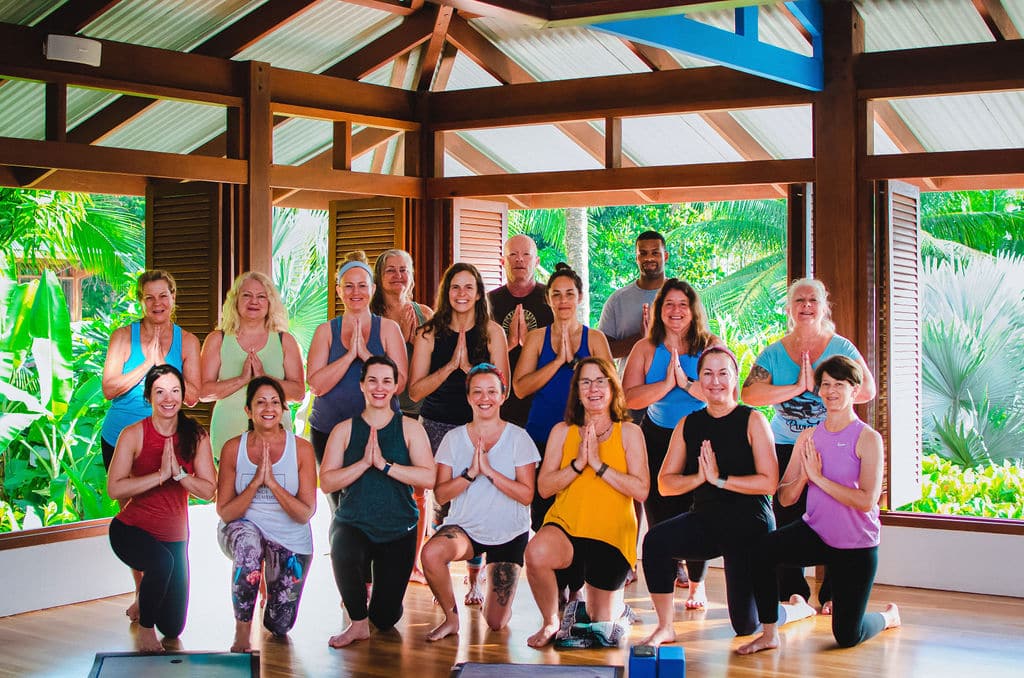
Take the First Steps Toward a Yoga Career That Pays
The difference between a yoga instructor salary that barely covers the bills and one that supports the life you’re imagining often comes down to one thing: the quality and depth of your training.
At Blue Osa in Costa Rica, our 200-hour yoga teacher training and 300-hour yoga teacher training incorporate AYAMA — a methodology rooted in applied anatomy and muscle activation that helps students heal, progress, and stay injury-free — and sets you apart in a crowded yoga market.
That kind of differentiation is exactly what allows yoga teachers to charge premium rates, attract private clients, and build a yoga career that doesn’t depend on teaching 30 classes a week to make ends meet.
Find out how you can become a trained yoga teacher with Blue Osa
Are you still on the fence? We have tons of resources to help you make the best decision for yourself. Sign up for our 5-part series, Is Yoga Teacher Training Right For Me?
About The Author, Yogi Aaron

Yogi Aaron is the founder and creator of Applied Yoga Anatomy + Muscle Activation™ (AYAMA), a revolutionary methodology that challenges conventional approaches to yoga. Using a science-backed approach, he prioritizes muscle activation over traditional stretching.
With over three decades of dedicated study, mentorship, and hands-on experience, he has established himself as a leading expert in yoga therapy, alignment, and pain-free movement.
As owner and operator of Blue Osa Yoga Retreat + Spa in Costa Rica, Yogi Aaron leads transformative programs that combine his expertise in yoga instruction, retreat facilitation, and wellness business operations. His work spans both in-person immersive experiences and digital education through The Yogi Club online platform and the AYAMA™ Certification Program.
Yogi Aaron’s teaching methodology represents a paradigm shift in modern yoga practice. AYAMA focuses on activating and engaging muscles to enhance range of motion, build strength, improve stability, and optimize alignment—while reducing pain and injury risk. This evidence-based approach has positioned him as a thought leader challenging the status quo in the yoga community.
His mission extends beyond the mat: to liberate individuals from chronic pain and guide them toward discovering yoga’s authentic purpose through intelligent, body-informed practice.
Learn more about training opportunities with Yogi Aaron at Blue Osa Yoga Retreat + Spa.
Check Out These Other Popular Posts!



Tags: yoga teacher training
Book/Inquire Now
Got pain? This will help you!

YOU DESERVE TO LIVE PAIN-FREE...
Receive 7 short, simple, and effective practices to alleviate knee, hip, low back, neck, shoulder pain, and more!
All you need is 5 minutes per lesson and it's FREE!
This revolutionary approach to yoga is new, and no one else is teaching this! Since I created Applied Yoga Anatomy + Muscle Activation™ and started teaching it consistently, I've witnessed students heal long-standing injuries, access yoga postures they never thought possible, and tell me over and over again how their body just feels better.
I hope you'll join me on this journey!
~Yogi Aaron
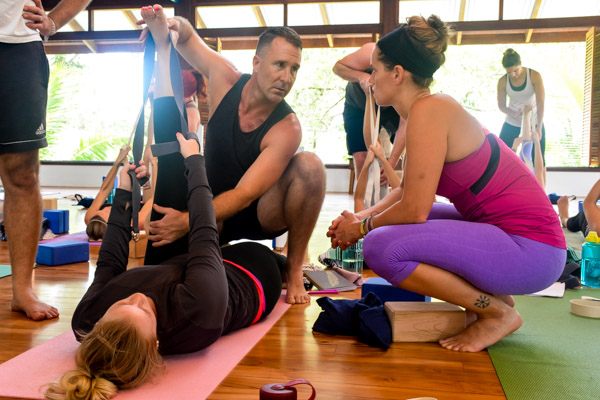
Is Yoga Teacher Training Right For Me?
We Created This FREE 5 Part Series So You Can Get All The Information To Make The Right Choice.
In this series, you will learn:
-
- Am I a candidate for yoga teacher training??
-
- What will I learn in a YTT?
-
- Do I need to have a perfect downward dog to attend YTT?
14-Day 200-Hour Yoga Teacher Training in Costa Rica
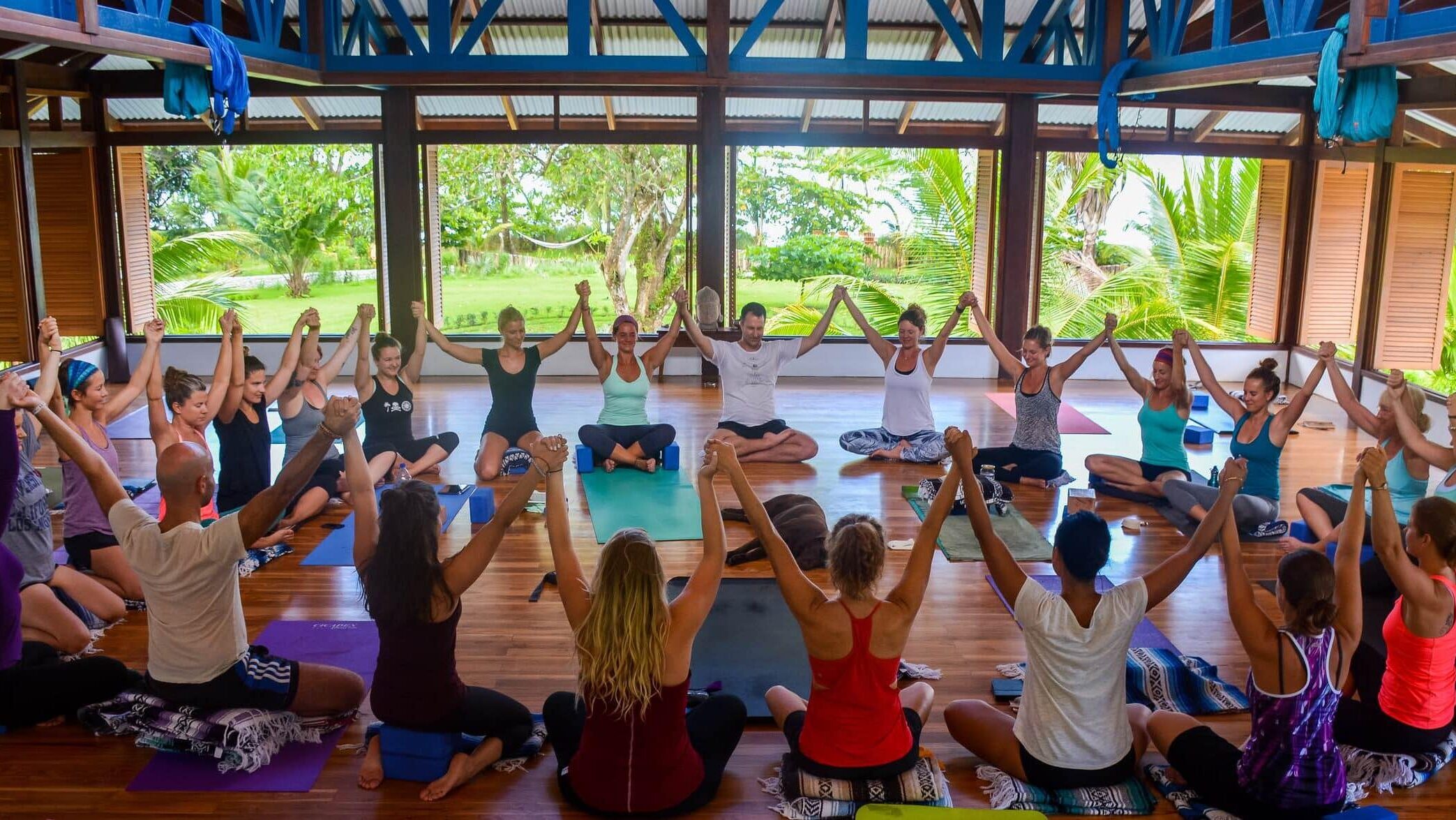
If you are looking for a 14-day 200 hour Yoga Teacher Training Costa Rica Immersion, you have landed in the right place. Join the next one!
300-Hour, 28-Day Yoga Teacher Training
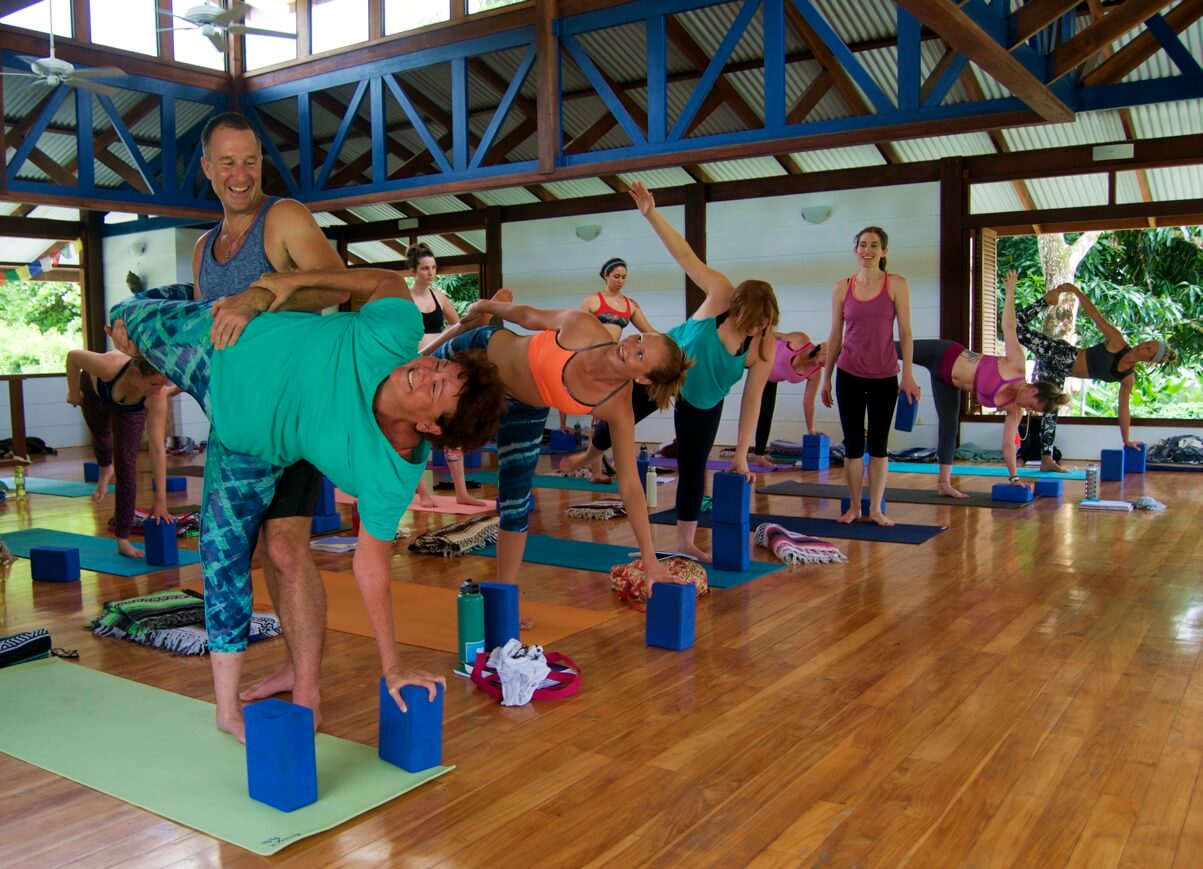
Do You Feel Called To Something Greater?
This 300-Hour Yoga Teacher Training immersion training at Blue Osa will immerse you in yoga for one month.
You will have the specific transformational skills and yogic practices you need in order to connect with your higher purpose.
And more! You will be able to offer these transformative skills to others!
